



Future-Proofing Vessels Through Fuel Flexibility

Decarbonisation is a pressing challenge for the maritime industry, spurred by ambitious targets set by the International Maritime Organization (IMO). For those of us in the sector, the bold aims from global regulators have become all too familiar – 40% carbon emissions reductions against 2008 baselines by 2030, and net zero by or around 2050. Pressure will further mount with the extension of the EU Emissions Trading System (ETS) in 2024, followed by FuelEU Maritime from 2025, which will push fuels to become less greenhouse gas (GHG) intensive.
Vessels are already tracking against tighter emissions standards, thanks to the introduction of the Carbon Intensity Indicator (CII) and Energy Efficiency Existing Ship Index (EEXI), together prompting operators to look at more fuel-efficient ways of operating. But the longer-term existential question remains: how do we ensure vessels are fit for the future?
For the majority, uncertainty around which future fuelling solution(s) are going to be most viable for their vessels is leading to inaction and delay. This watch-and-wait approach will make achieving interim IMO GHG emissions targets hard to achieve. So how do we move the dial forward?
Future-proofing the global fleet
Wärtsilä’s approach to decarbonisation is to explore future fuel opportunities as well as methods to improve efficiency through digitalisation – while also offering solutions that immediately increase fuel flexibility and efficiency. The reasoning behind this approach is simple – given the current lack of clarity around which technologies and fuels will become dominant, investing in fuel flexibility is the most financially viable way to avoid the risk of stranded assets.
To understand why fuel-flexible vessels offer such a compelling option for achieving 2030+ GHG targets, it is important to look first at the current fuelling landscape. Rightly, industry needs to be able to access fuelling solutions that offer the highest possible efficiency with the lowest operational costs and emissions output. As it stands today, there is no single method for achieving net-zero – there is not a zero-carbon fuelling solution suitable for all vessel classes and available globally in significant enough quantities.
Alternative fuels and transition fuels all offer options for significantly reducing emissions – notably LNG, biofuels, methanol and ammonia – and it is uplifting to see the orderbook for vessels adopting these fuels increasing. However, upscaling of infrastructure and supply for these cleaner fuels are needed for widespread adoption to become feasible, and that’s before cost-parity with traditional fuels are brought into the equation.
Investing in ‘fuel-flexible’ engines and fuel tanks that can operate on more than one fuel, however, offers an option for hedging against fast-changing legislation, global disruptions, and costs. It reduces the risk of potentially ‘backing the wrong horse’.
Providing practical solutions
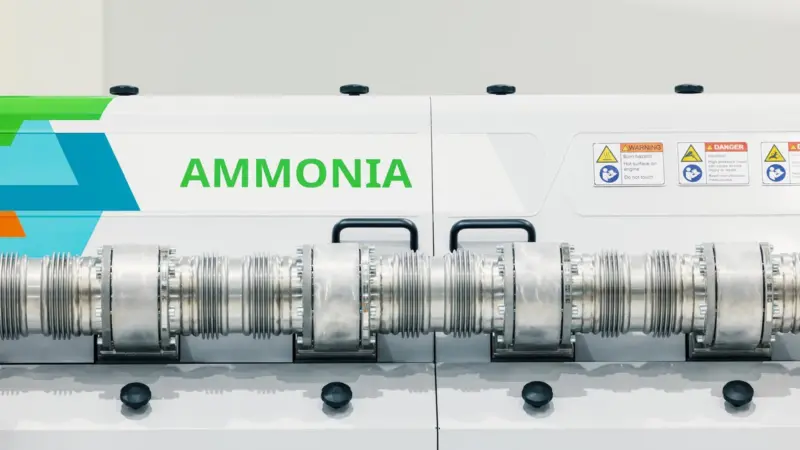
In 2023, Wärtsilä announced the introduction of a range of methanol and ammonia-ready engines – the current front runners as clean alternatives.
No energy converter is more flexible than the internal combustion engine. With a limited exchange of components, today’s marine engines can burn any of the clean fuels expected to become available over the coming years. Storage, handling and fuel supply can be more complicated given the properties of new fuels, but the challenges are manageable, especially if vessels are built with future conversions in mind.
Utilising ‘green’ methanol, for example – a fuel produced using renewable energy and carbon capture – means both the production and propulsion stages are completely carbon neutral. It can also be stored using existing onboard infrastructure meant for conventional fuels, with conversion to methanol also being relatively straightforward and unobtrusive for a newbuild.
Moving the dial forward
With dual-fuel capability, these engines can run on diesel fuels as well as low-carbon or no-carbon future fuels. This adjustment gives ship owners the resilience needed to adapt to evolving market dynamics and regulatory frameworks. Crucially, dual-fuel options enable vessels to switch from one fuel, such as conventional diesel, to LNG or ammonia without any interruption in power, and with fuel conversion technology also increasing the benefits further.
The key point here is that given the modularity of modern engines, as long as ship owners consider storage requirements, they can already be planning to use new fuels on vessels being built today.
Although vessels currently on order that are alternative fuel capable are increasing as an overall percentage – 45% of newbuildings by gross tonnage in 2023, according to Clarkson’s latest Green Technology Tracker – they are a minority in proportion to the overall fleet size. These vessels, however, have the best chance of being competitive in the decades to come over their whole lifecycle. Vessels on order today that lack fuel flexibility may find themselves uncompetitive against their more resilient counterparts in 10 to 15 years. That sounds like a pretty safe bet.
Related Articles
 AMMONIA
 AMMONIA
 AMMONIA