



Germans invest in four new research ships
Plans to build three ships for the Ministry of Education and Research (BMBF) have just been officially approved. A fourth ship was approved and ordered earlier and work starts on her before year’s end.
The most impressive project is for a €450 million ship to replace Germany’s biggest research ship, the 118m long, 25m wide Polarstern from 2017. The double-hulled icebreaker has four KHD RBV 8M540, 3,529kW engines developing 16 knots and has served since 1982. Her replacement is likely to be just as big and sophisticated.
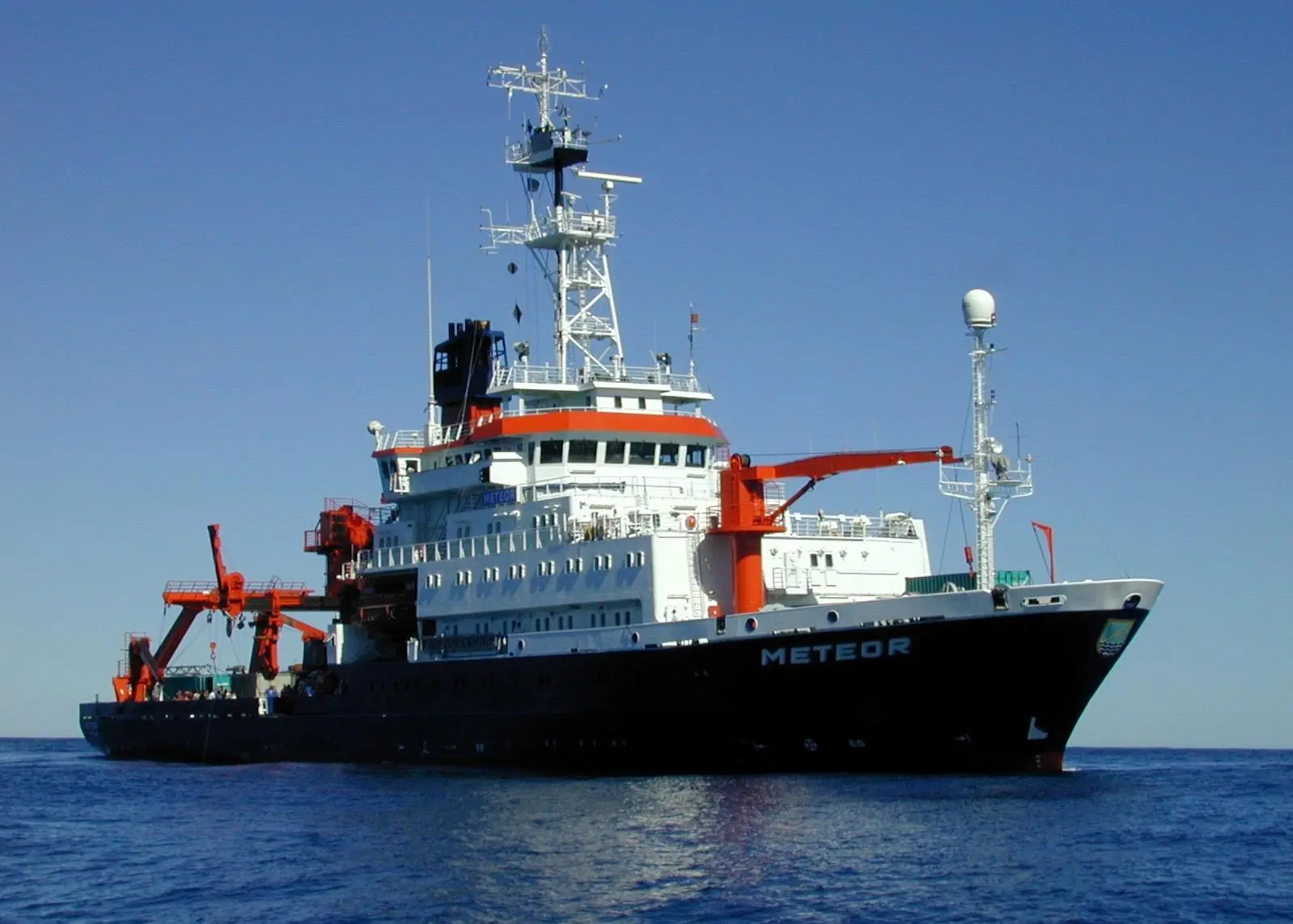
Berlin said it will also spend €160 million on a replacement for the 26 year-old, 97.5m long, 16.5m wide research workhorse Meteor. She has four MaK 6M 322 1,000kW engines and a service speed of 12 knots. Once again, details of her replacement are not yet known.
The third ship will replace one of Germany’s best-known multi-purpose research ships – the 60.8m long, 12m wide Poseidon, now more than 30 years old and powered by three MWM TD-602 V 16 engines each of 550kW providing 10 knots.
Chancellor Angela Merkel revealed the €110 million replacement in Kiel in March saying tenders will be invited this year with delivery due in 2015. However Berlin now says she will not enter service until 2018.
Again, no details were revealed, but a source told The Motorship “apart from the promise that a ship will be built, there are no plans whatsoever”.
Yards have yet to be appointed for Polarstern, Meteor and Poseidon after EU-wide tenders, but the fourth ship – a replacement for the 97.6m long, 14.2m wide Sonne – has already been ordered from Meyer subsidiary Neptun in Rostock. The Motorship was told steel cutting will start in Autumn and keel-laying will be next year on the €124.4 million newbuild, for delivery late 2014 or early 2015.
Reports say the new Sonne will be considerably bigger at 112.4m long with a beam of 20,06m, draw 6.4m and have about 6,400kW propulsion and a top speed of about 15 knots. She will, it is said, also “be more comfortable and more energy-efficient” than her predecessor, which is due to leave service in 2015.
Related Articles
 ALTERNATIVE FUELS & LUBRICANTS
 ALTERNATIVE FUELS & LUBRICANTS
 OPINION