



Hallvard Slettevoll: Converting the unbelievers
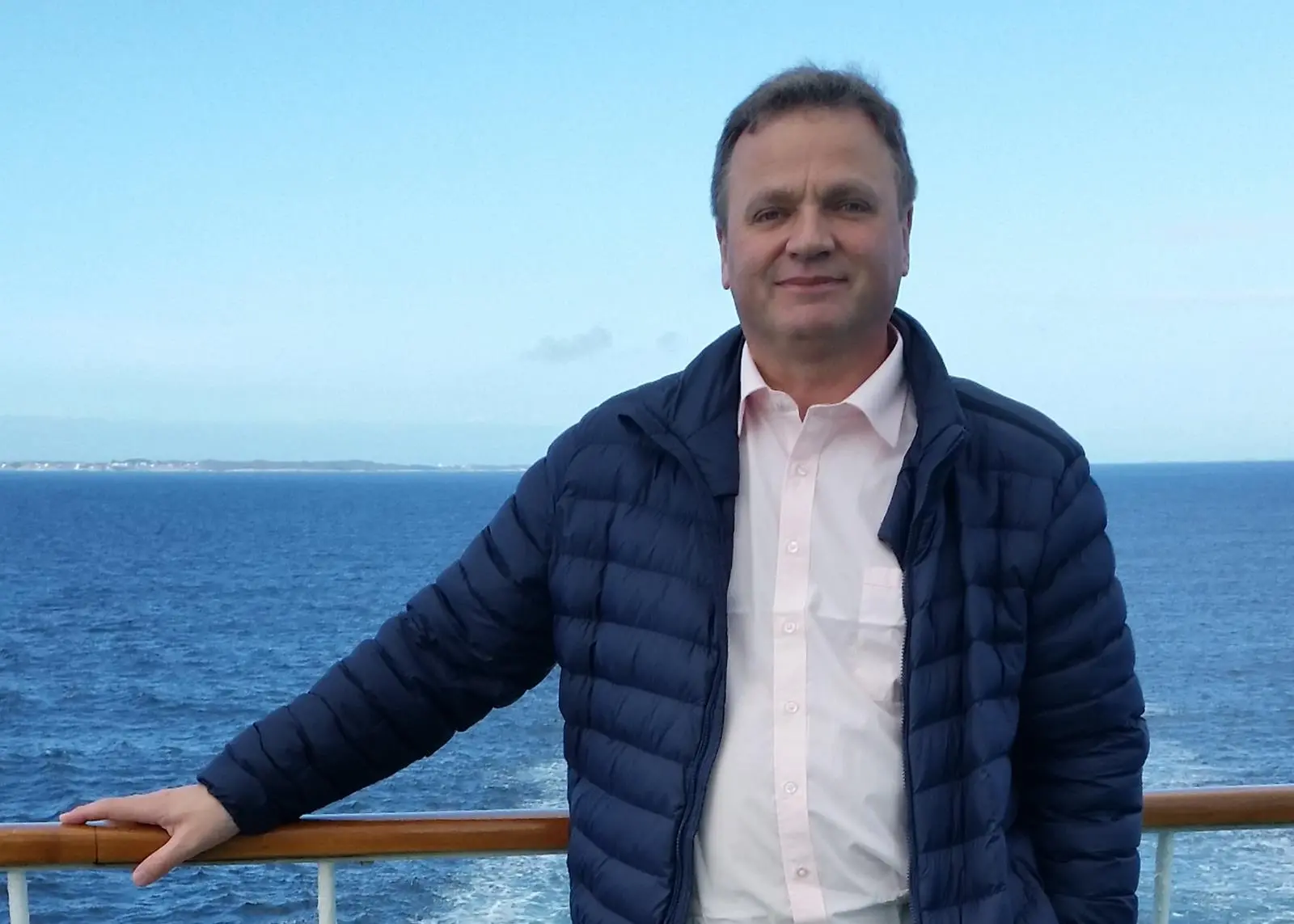
“And if it’s ahead of expectations… it’s very hard to get people to believe you,” he adds “even if the numbers add up.” So, it’s useful that independence (and possibly a certain stubbornness) seems to imbue the sea air around Norway.
Mr Slettevoll explains his own history involved growing up in a village of entrepreneurs, with hours spent amusing himself in the school physics lab or with an old electrician “who did repairs on domestic electrical appliances as well as running a local hydropower plant”. After this quirky, idyllic start he spent five years after university with electrical giant Phillips in Oslo firming up his ideas, “so I certainly had the background for starting this business”. However he still adds “at 25, of course I didn’t know what was letting myself in for”.
In 1997 the first incarnation of STADT’s inverter technology grabbed a contract for the Norwegian coastguard vessel KV Tromsø, direct water cooling played an important part in keeping the design compact. Business continued to pick up with companies like Geo Shipping, Aker, Statoil, Hydro, BP, Bayer AG and TFDS (now Hurtigruten) becoming regular customers.
This last turned out to be pivotal: “If you’re a small company you can have nothing better than an owner like TFDS who gives you real trust – without them we wouldn’t be where we are now,” he says.
Despite this he admits that by the turn of the century certain “shortcomings” had become apparent with the Pulse Width Modulation technology the company had pioneered. He adds -somewhat more colourfully – that his brothers, owners of Sanco Shipping, had told him “there’s no way we want something that complicated onboard our vessels”.
So in 2001 Mr Slettevoll decided to let the PWM solution go, selling up to ABB and freeing the company to follow another, entirely different innovation pathway. This gave rise to “pure sine wave technology” which he says is both “simple and robust… no transformers, no big capacitor banks, no cooling systems – which means there’s far, far less to go wrong”.
But – would the ‘No Loss’ solution gain ground when pitted against the big boys? At the time, betting on “a small company based in a village in Norway… against established, internationally based competition” seemed unlikely even to return the stake money.
It obviously helped that Sanco Spirit and Sanco Star took on the first installations but it could have stopped there if they had been waylaid by common teething troubles. However the tech proved unusually resilient: Star went into service in 2008, Spirit a little later but as far as maintenance is concerned “we’ve never even had to get onboard… not once” he says. This didn’t escape the notice of the charterers: when the pair were leased out to PGS they proved such a hit that when it came to the survey company’s next newbuilds “the yard in Turkey wasn’t given an option – they had to come to us”.
From there “it was like building, stone by stone”. Survey support, purse seiners, research vessels, port authority vessels followed, and then “surprisingly” the company landed a contract for a series of 16 AHTSVs for Malaysian company Nam Cheong which complements its shipbuilding arm with a buy or hire fleet. However, “this contract really wasn’t all that sudden” he admits: “I actually went out to see them several years ago when everyone else seemed to be focusing on Brazil.” Why this yard in particular? “Experience, interest in new technology… and they understand what we do,” he replies.
Despite large yards – like Nam Cheong – being “stuck in the doldrums” for the time being, Mr Slettevoll says there are still growth markets out there for reliable solutions, and it’s useful that the company has it’s fingers in so many pies: “We’ve seen a rise in interest in LNG-electric propulsion” he says as “LNG engines are better used as gensets rather than connected directly to the propellers because they still have a pretty lousy torque characteristics”.
On top of that, there’s the cruise sector, the more sophisticated ‘green’ carriers and even the megayacht industry which is seeing “a big move toward hybrid and electric vessels”. All of these are getting more complex with the rise of multiple power sources and multiple consumers which need to play nicely with each other. More, he adds that “while a lot of ships still have one engine, one propeller, the further you go into extreme regions, the more you need to think about multiple levels of redundancy”.
Mr Slettevoll puts some of the company’s success down to Norwegian mentality: “Norwegian villagers often have a particular affinity with the sea – but we don’t really see it as a border, it’s more a road out,” he says. “So a number of years ago we really went for the international market, not just the local one, and that made a big difference to how we ride the ups and downs.” Another survival strategy has been pairing up with larger entities in order to piggy back into new regions; recently Kongsberg Maritime has proved a valuable associate.
But good times or bad, he says there’s really no excuse for big companies to be less than attentive to a client’s specific needs: “Every ship requires you ‘to look into your customers garden’: be on his side, be a partner – don’t just squeeze him into a service contract.”
By Stevie Knight
Related Articles
 ALTERNATIVE FUELS & LUBRICANTS
 ALTERNATIVE FUELS & LUBRICANTS
 OPINION