



Harnessing the winds of change: NAPA
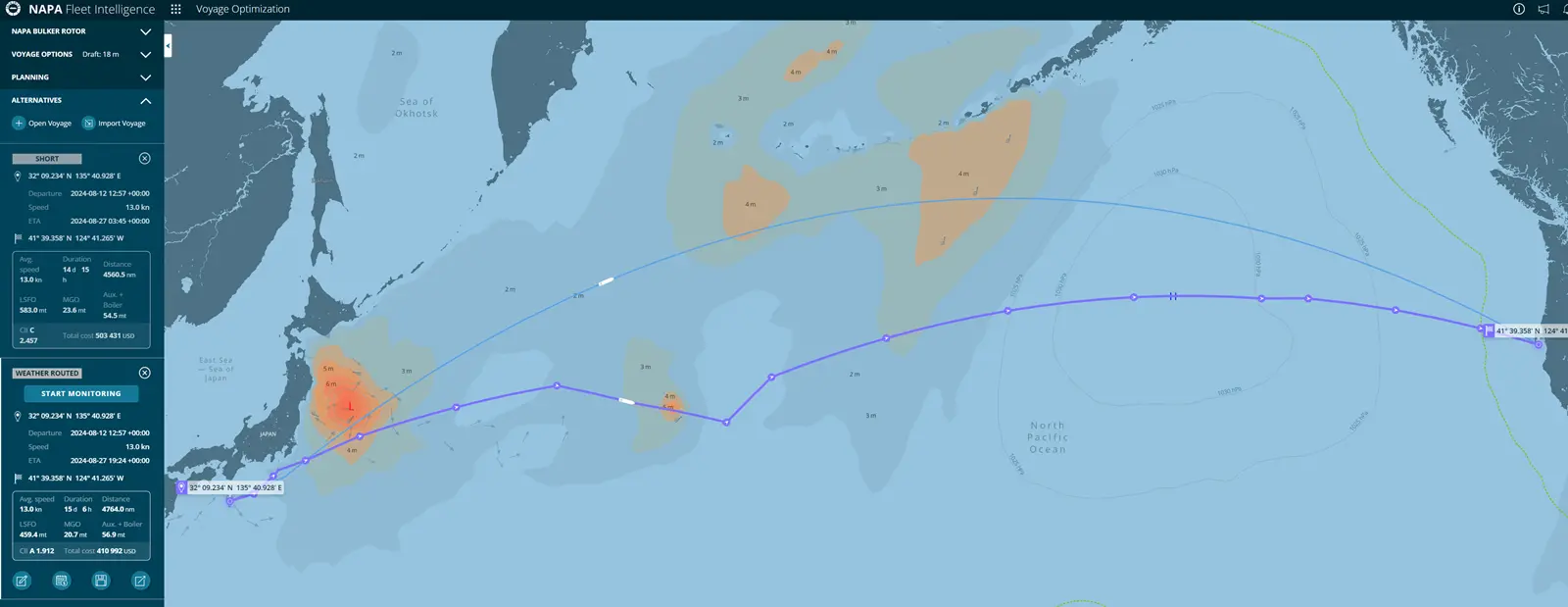
The advent of voyage optimisation platforms has been pivotal in enabling ships to harness the power of the wind more effectively. These platforms, which use real-time data on weather and sea conditions to evaluate and adapt a vessel’s course, ensure that ships can take full advantage of favourable wind conditions and help with maintaining safety and stability. For example, accurate modelling of the impact of different weather conditions on a vessel allows for detailed analysis of the maximum heeling moment from the sail in beam wind conditions. These insights can then allow for fine-tuned adjustments that optimise fuel consumption and reduce greenhouse gas emissions.
Providing comprehensive insights into weather patterns and sea conditions, voyage optimisation tools empower crews to make informed decisions that maximise wind usage and fuel efficiency. This approach not only lowers emissions and maximises efficiency to reduce costs, but also helps ensure safe sailing under varying wind and sea conditions.
3D modelling and data analysis: Paving the way for informed decisions
Beyond real-time voyage adjustments, digital tools such as 3D modelling and data analysis play a crucial role in the planning and implementation of wind propulsion systems. For shipowners considering the installation of new sails or rotor systems, these tools provide critical insights into how such installations might impact a vessel’s structure, cargo capacity, and overall operations.
By simulating different scenarios, shipowners can visualise the potential benefits and drawbacks of wind propulsion, helping them make informed investment decisions. This capability is essential in an industry where the cost of retrofitting and the potential return on investment can vary significantly based on numerous factors, including ship design, operational routes, and existing infrastructure.
Case study: NAPA, Norsepower, and SHI-ME’s joint simulation project
The potential of combining digital technology with wind propulsion was clearly demonstrated in the joint simulation project with NAPA, Norsepower, and Sumitomo Heavy Industries (SHI-ME). The first phase of this study, which integrated NAPA Voyage Optimization with the Norsepower Rotor Sail™, revealed that this combination could lead to significant emissions reductions—up to 28% on average on the transatlantic route between New York and Amsterdam. The use of digital technology allowed the team to predict potential fuel savings and emissions reductions on six popular trading routes. They found that average emission reductions ranged from 17% to 28%, with NAPA Voyage Optimization contributing between 10% to 12% of the reductions. These findings were supported by simulations using real-world data from NAPA’s ship performance models and the Norsepower Rotor Sail’s specifications. By leveraging digital twins—virtual replicas of physical ships—the project accurately simulated and assessed the vessels’ performance across various sea and weather conditions, further highlighting the critical role digital technology plays in optimising wind propulsion.
This collaborative effort not only validated the potential of wind propulsion systems when paired with voyage optimisation but also provided a clearer business case for shipowners to invest in these technologies. As the project enters phase two, further developments in performance modelling and optimisation strategies are expected, providing even more insights into how digital tools can enhance both operational efficiency, environmental sustainability and safety performance in the maritime industry.
Phase two of the study dived deeper into the use of the rotor sails with the aim of improving the operational performance of vessels. It analysed a wider range of vessel responses and weather conditions, and conducted advanced analyses of lateral forces, counter rudder actions and ship movement. Addressing these factors is critical for optimising ship design and enhancing performance under dynamic conditions such as wind, waves, and currents
The collaboration between NAPA, Norsepower, and SHI-ME continues to highlight how digital technology and wind propulsion systems together can accelerate decarbonisation in the maritime industry while ensuring better performance and regulatory compliance. As phase three of the project progresses, further enhancements in performance and new optimisation strategies are expected to emerge using real-world applications of existing findings.
Safety and design: Working hand in hand for efficiency
The integration of wind propulsion and digital technology is not solely about reducing emissions; it is also about ensuring that these solutions are implemented safely and effectively. Safety remains a paramount concern in the maritime industry, and the design of wind-assisted vessels must account for the potential challenges posed by wind propulsion, such as increased heeling moment and changes in stability.
Digital tools play a crucial role in this aspect by allowing for detailed simulations and modelling that can predict how a vessel will behave under different conditions. By incorporating safety considerations into the design or retrofitting process from the outset, shipbuilders and operators can ensure that wind-assisted vessels are not only efficient but also safe to operate.
The business and regulatory case for wind propulsion: A sustainable future
As the shipping industry grapples with the challenges of decarbonisation, the business case for investing in wind propulsion technology becomes increasingly compelling. The findings from the NAPA, Norsepower, and SHI-ME project illustrate that significant emissions reductions are achievable, providing a strong incentive for shipowners and operators to consider these technologies together to maximise their fuel savings. Moreover, with growing international regulatory and public pressure to reduce environmental impact, the adoption of wind-assisted propulsion and voyage optimisation is not just a matter of environmental responsibility; it is a strategic business decision.
The ability to meet stricter environmental regulations, such as the International Maritime Organization’s Carbon Intensity Indicator (CII) and the European Union’s Emissions Trading System (EU ETS), and the upcoming FuelEU Maritime, will be critical for the competitiveness of shipping companies in the coming years.
While the upcoming FuelEU Maritime awards WAPS a special Wind Reward Factor to encourage their uptake and enable compliance, there are also several other compliance strategies to consider. Digital technologies, like NAPA’s FuelEU Maritime module, help streamline this wealth of information to give shipowners and charterers all the facts to make compliance decisions based on data and evidence.
The integration of digital technology with wind propulsion represents a significant leap forward in the quest for sustainable shipping. By embracing these technologies, shipowners and operators can harness the power of the wind more effectively, optimising their operations and contributing to the global effort to combat climate change. With wind propulsion and digital technology leading the way, shipping companies have an unprecedented opportunity to steer the industry towards a future of sustainability and operational excellence. The time to embrace these transformative solutions is now.
Related Articles
 ALTERNATIVE FUELS & LUBRICANTS
 ALTERNATIVE FUELS & LUBRICANTS
 OPINION