



Healing an artificial divide
“It’s an unusual situation for a business: effectively the shipowners control the initiatives, but they don’t pay for the fuel – which is where the savings are,” explains Knut Ljungberg of DNV.
But its an ‘artificial divide’ as both parties would benefit from both lower fuel costs and reduced emissions: its precisely this split that the Energy Efficient Offshore Partners (EEOP) project, led by DNV, seven offshore support companies and two charterers, is challenging.
What’s more, the project shows that many changes can be made the most of with little or no cost. Though they may only yield a few per cent each on fuel savings, together they can bring larger reductions to the fuel bill as well as eco-friendly operation. But these efficiencies exist on both sides of the equation and taking advantage of them “needs a behaviour shift” explains Mr Ljungberg, as the responsibility for the action and the benefit has been separated “and of course companies don’t act without good reason”.
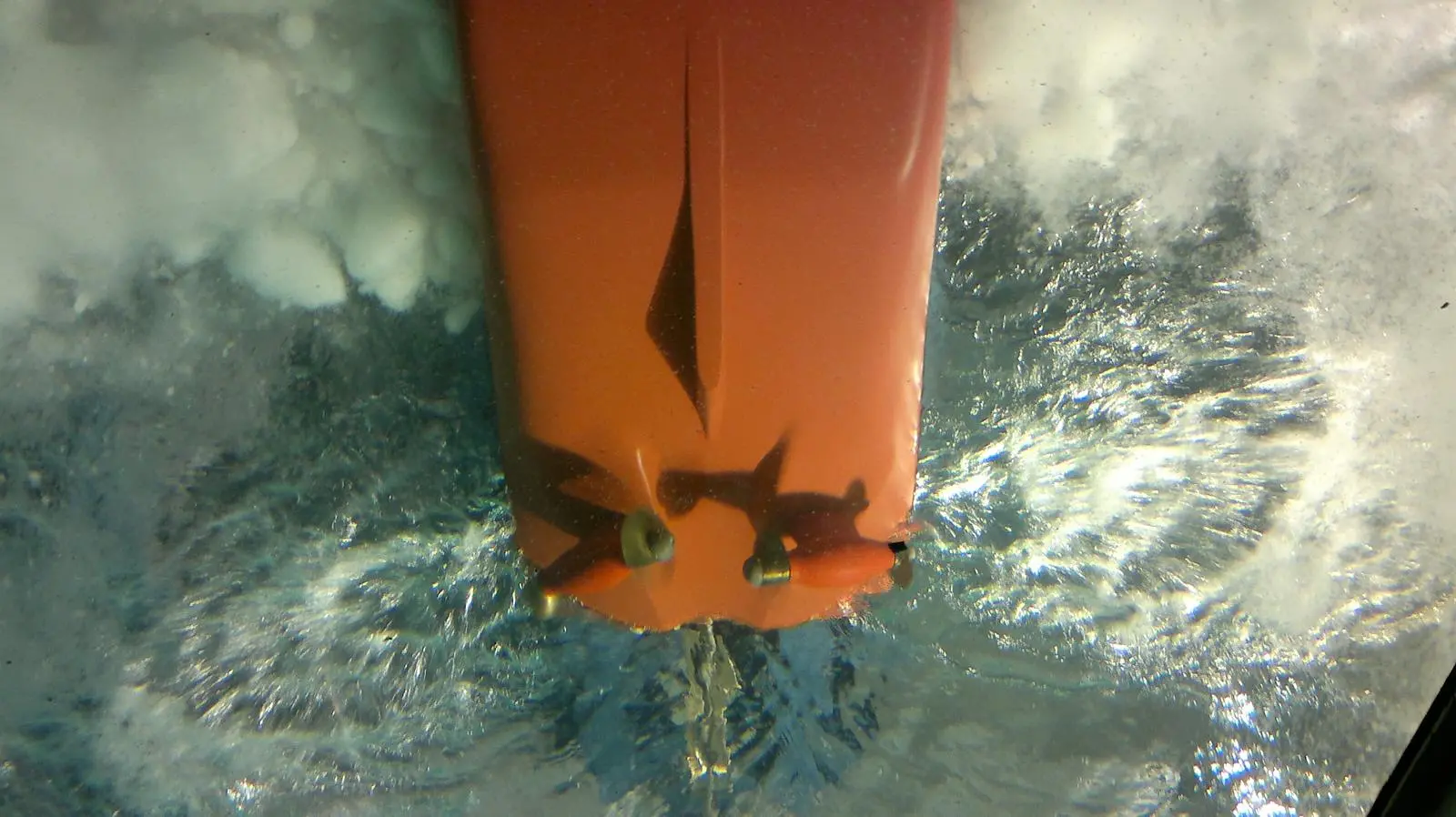
On the shipowner controlled side are low or no-cost measures like improving the engine loading and optimising the propulsion system, which together yield more than 3% savings. Trim, draft and autopilot adjustments, plus a look at the propeller rpm and pitch add another 1% saving, while a power consumption campaign to increase the focus onboard yields another 0.5%, and all together these total a 4.6% efficiency gain.
There’s another slice of efficiency running at between 4% and 5% that’s ship owner controlled but these have some cost: things like propeller polishing, hull cleaning, and investment in weather routing systems. Plus of course you have the more sensitive question of emissions in ports, and so there’s more than the cost-saving case for shore power which shaves another 0.3% off the bill.
On the other side of the equation, you have the charterer controlled items; these cover activities like logistics planning and levelling out the humps in speed – the kind of thing that happens if the boat races to a site only to be hanging around waiting when it gets there, which can add around 6% to the fuel bill. (Just as a note, DNV has erred on the side of caution with these figures, explains Mr Ljungberg).
Mr Ljungberg explains that the Best Practice Guidelines, which DNV hopes to make an industry standard, gives a framework for effective communications with the rig. For example, scheduling in certain visits ahead of time and calling up the rig to make sure it is ready to accept the support boat will make some improvement to fuel management issues.
Of course the rigs tend to be pretty demanding and there will always be certain times when the rig has overriding authority ‘and needs something now…’, says Mr Ljungberg, but well-defined communications and procedures will generally allow for a clear support operation window and this will help minimise the scramble to get out to site.
Mr Ljungberg points out that if you regularise the rigs demands on one hand, on the other you can heal this artificial split between owners and operators by introducing agreements with incentives, so-called ‘green’ or ‘environmental’ contracts.
DNV’s research involves both owners and charterers from companies such Statoil, Solstad Offshore, Havila, Eidesvik, Gulf Offshore Norge, Siem Offshore, Farstad, ConocoPhillips and BOA Group, which between them have around 180 vessels at their disposal: “Our estimates put these issues at potential savings around NOK500m – US$87.4m – per annum, which is both a lot of emissions and a lot of money,” says Mr Ljungberg.
Each owner has now nominated a vessel to help pilot an unusual incentive scheme (running from summer to autumn this year) which leaves the charterers – not the owners – paying for items like their own propeller polishing twice a year, plus passing on a share of the calculated savings to the owners.
Why would they do this? Well, firstly the charterers stand to benefit from the improved operation for vessels under contract, and secondly, they get to influence the schedule. The point is, says Mr Ljungberg, that since the benefits come from gaining efficiency, “what you are actually doing is rewarding people for doing the right thing”.
It’s important to note that the charterers don’t have to prove the savings themselves, but in the first instance they do have to trust that those savings that DNV has outlined will take place – which is where DNV’s reputation for good, solid research comes in.
“We hope that these three things, the Best Practice Guidelines, the communication framework and the efficiency incentive scheme, will create some movement forward into resolving what has been an industry issue,” says Mr Ljungberg. He adds: “This is about changing behaviour,” after all, if it were determined purely by logic, it would be happening already.
By Stevie Knight
Related Articles
 PROPULSION
 GENERAL NEWS
 HYDROGEN