



HHI-EMD to market oxicats from 2023
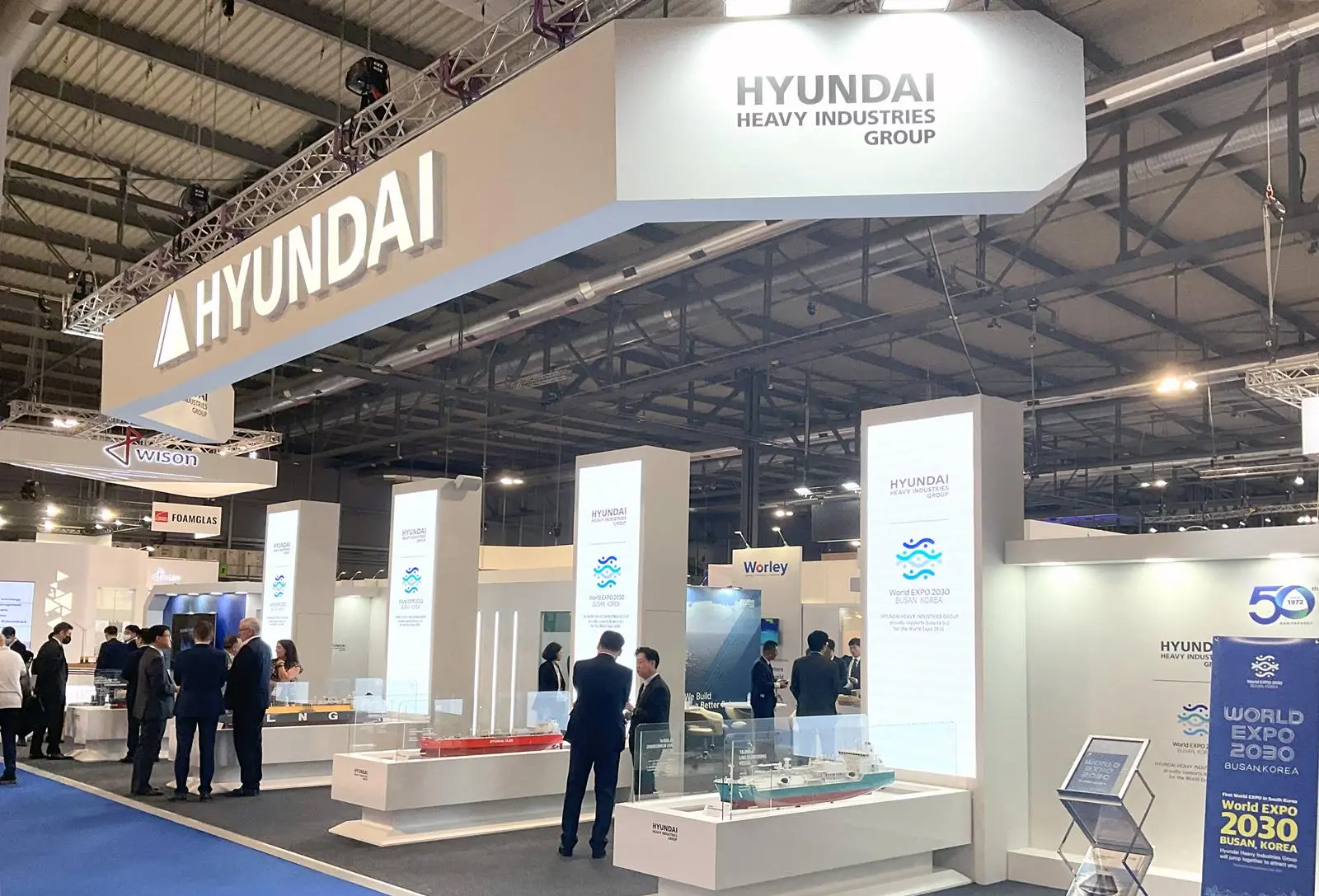
Speaking at the First mover in De-carbonization prepared by HHI-EMD webinar, senior engineer Minjin Kim, noted that orders for dual-fuel LNG newbuildings received by HHI have increased from 6% (10 vessels) in 2018 to 59% (127 vessels) in 2021.
The group envisages increasing demand for both LNG and ammonia as decarbonization fuels, however both need after-treatment systems. For LNG, these systems will reduce methane slip, especially for 4-stroke Otto cycle engines.
HHI has various solutions for methane slip including in-cylinder technology that can reduce emissions by up to 50%, exhaust gas recirculation systems that can reduce emissions by over 40% and oxicats that can reduce emissions by up to 90%. The company envisages its new high performance oxicats will be combined with exhaust gas recirculation systems in a hybrid configuration in 2024 for specific engine models, with the oxicat solution itself expected in 2023.
For ammonia, existing commercialized selective catalytic reduction (SCR) catalysts will need to be optimized and new technology or catalysts will be required to counter ammonia slip and N2O emissions. The specific details of how much NOx, ammonia and N2O emissions there will be is still uncertain, as engines are still being developed, but the ability to lower N2O emissions could be key to the success of these engines, says Kim.
Appropriate catalysts are currently being developed, and 2- and 4-stroke ammonia engines with after-treatment will be tested in Q1 of 2024.
RPB tech preferred to amine-based absorption
HHI-EMD is also working on an onboard carbon capture system as a continuation of its exhaust gas treatment technologies.
HHI is developing a system based on rotating packed bed (RPB) and ultrasonic re-boiler technology which it expects to be available by 2025. A 30% reduction in CO2 emissions is achievable with the ultrasonic re-boiler and the RPB system reduces the installation footprint by 75%.
Although amine-based absorption is a proven technology, it has a large footprint, excessive energy consumption and high OPEX. Other existing methods also have drawbacks. This is likely to be a short-term solution for GHG emissions before alternative fuels are taken up, says Kim.
Related Articles
 CARBON CAPTURE
 CARBON CAPTURE
 ALTERNATIVE FUELS & LUBRICANTS