



High casualty levels still cause concern
When shipping activity slowed dramatically as the worldwide recession began to bite, marine insurers hoped to see a significant drop in the casualty graph, particularly as many ships were laid up or lying idle awaiting orders. Indeed, a recent report argued that maritime safety had benefited, citing less demanding and strenuous schedules, reduced speeds and tougher port state control inspections as well as other factors.
However, in April 2011 the influential International Union of Marine Insurance (IUMI) rather torpedoed these assumptions by stating that major casualties at sea continue at a disturbing level. In fact, the number of incidents reported in 2010 up to then was following the negative trend of the previous four years, according to IUMI’s annual statistics covering vessels over 500gt.
Up to late April there were 623 serious losses reported for 2010, a similar figure to 2009. This means that 2010 joins the five worst vessel loss years in the last 17.
Patrizia Kern (Swiss Re), who heads the facts and figures committee, one of IUMI’s seven technical committees, said that even ahead of a full picture of the year from claims reports and files, there was no doubt that the failure to stem the high level of casualties was causing great concern. “When IUMI’s annual conference is held in September, our committee will undoubtedly report higher 2010 figures for total losses and serious (or partial) losses.”
Total and serious losses
Total losses for last year stood at 63, similar to the figure reported by IUMI 12 months ago for 2009. Since last year’s report the outcomes for 2008 and 2009 have deteriorated. The number of reported total losses has increased for 2008 from 89 to 96, and for 2009 from 67 to 86. This suggests that 2010 will be similar to its preceding two years.
At this early stage of development, nearly 600,000gt has already been reported as lost in 2010, against nearly 645,000gt in 2009. Weather continues to be the major cause of total losses, followed by groundings.
The number of dry bulkers and tankers which suffered total losses continues to be low relative to the world fleet, but there appears to be a trend of losses to larger vessels. The size of the average dry bulker has risen from 19,000gt in 2008 to 23,000gt in 2009 and 32,000gt in 2010. For tankers, the average has risen from 8,000gt to 11,000gt and then to 36,000gt in 2010.
Worryingly, the number of major incidents remains consistent with the trend over the previous four years, and the back year figures continue to deteriorate.
Machinery the culprit
Marine underwriters were not surprised to hear that incidents involving machinery and engineroom continue as the leading cause of serious or partial losses, accounting for 35.7% of cases over the last five years. Half of all such losses occurred to vessels over 20 years of age.
But in spite of all these gloomy figures, the IUMI stats tell a different story if they are viewed over a 17-year period, graphically illustrating just how far we have come in terms of improved vessel design and construction and the many other factors which affect maritime safety.
In 1994, for example, total losses were around the 175 mark, since when, apart from two of three blips, there has been a steady decline to where we are now between 80 and 100. Likewise, in the same period the gross tonnage lost has dropped from around two million to less than three-quarters of a million.
Reverting to IUMI’s April stats, it was stated that China continues to have the largest shipbuilding order book by number of vessels (41%) and by tonnage (38%), with South Korea still in second place.
A total of 7,277 vessels are currently on order, only slightly down on the number reported last year. Dry bulkers account for 45% of the book, followed by tankers (20%) and containerships (16%). However, Clarkson Research Services in its report for IUMI states that, going forward, the order book will be influenced by delays, cancellations and the renegotiation of contracts. Thus, there is considerable uncertainty. (IUMI’s commentary and accompanying graphics can be viewed on www.iumi.com)
Stretching the limits
Meanwhile, London underwriters are distinctly uneasy about the significant increase in the number of giant cruiseships, LNG carriers and containerships, which they say is prompting a dramatic shift in the risk profile of the marine hull property market which has yet to be addressed by underwriters.
A marine insurance conference hosted in London by law firm Clyde & Co analysed the potential impact of a “nightmare scenario”, examining the possibility of a collision between a boxship carrying potentially toxic material and a giant passenger ferry or cruiseship (the largest of which currently in service can accommodate 8,250 passengers and crew). Insurers are only too well aware that the growth in giant or mega vessels is not being factored into their pricing.
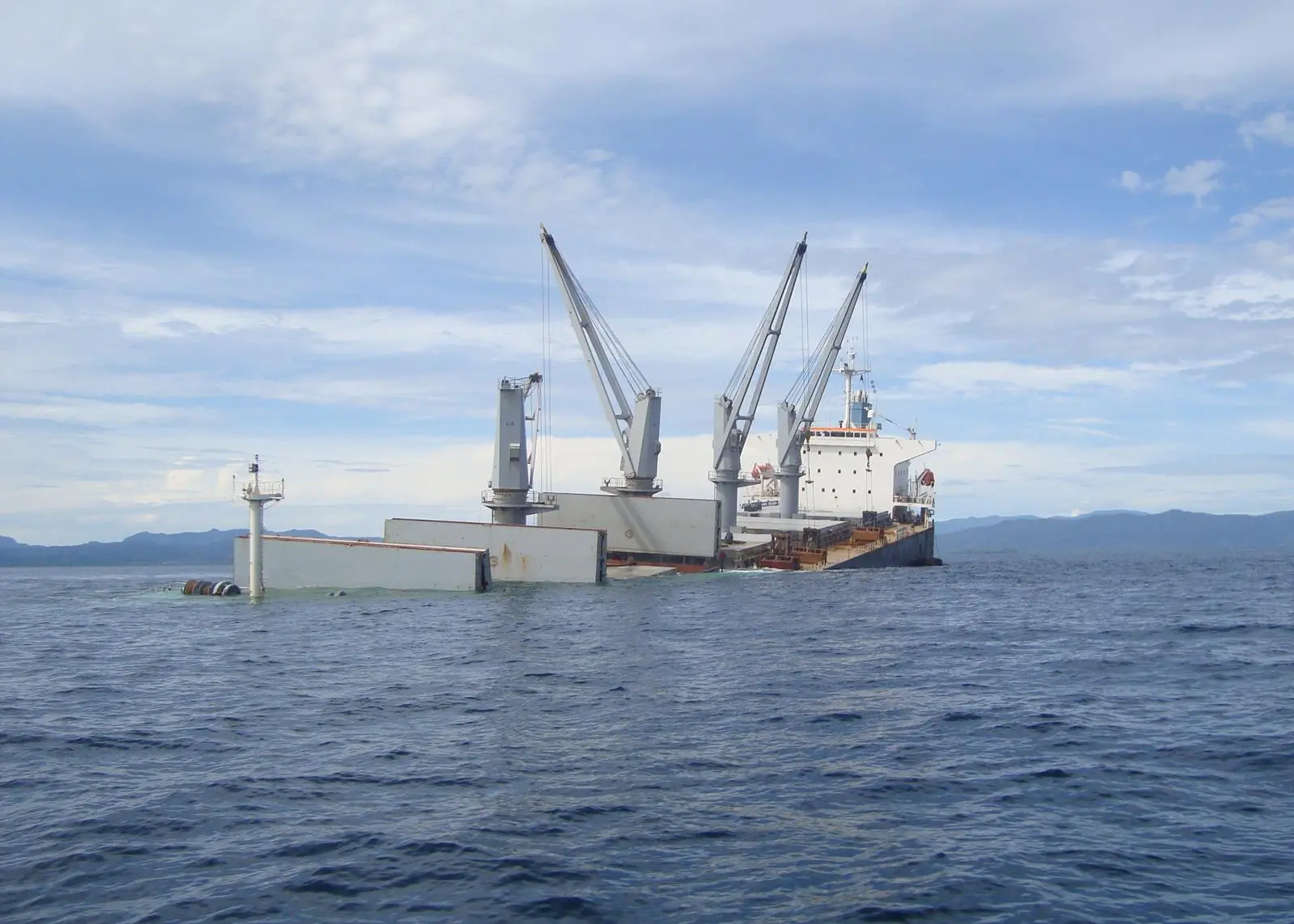
A grounded bulk carrier – bulkers currently account for 45% of total casualties
Total losses, 1994-2010, by tonnage, vessels > 500gt (IUMI)
Related Articles
 ALTERNATIVE FUELS & LUBRICANTS
 ALTERNATIVE FUELS & LUBRICANTS
 OPINION