



How Cool Carriers flourished while others withered
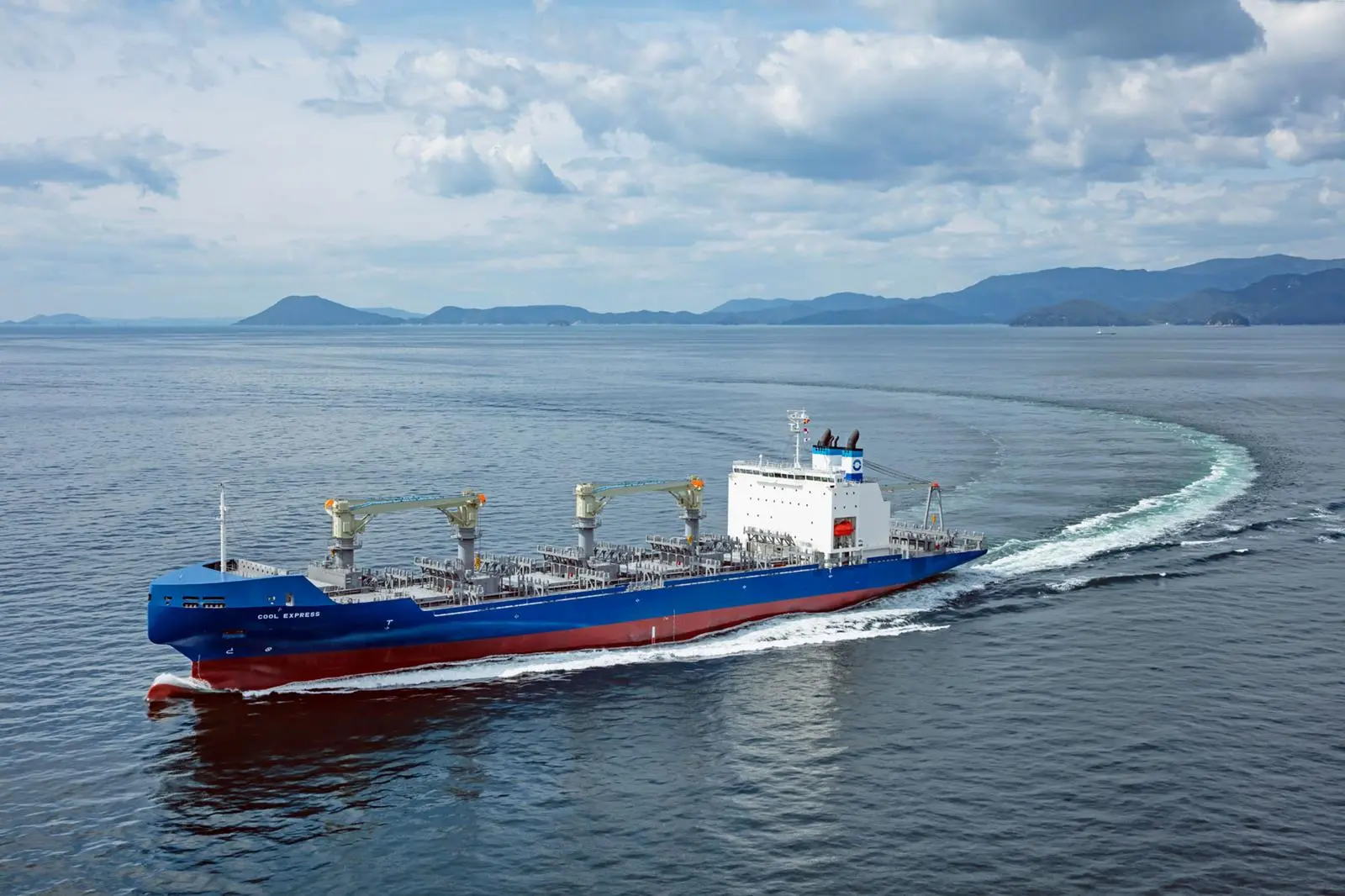
Through it all, the Swedish company has retained its identity, blending flexibility and tradition with strong Japanese partnerships and a steady focus on its specialist niche.
Chief Operating Officer Glenn Selling reflects on the evolution of Cool Carriers with a mixture of pride and realism. “It’s difficult to leave shipping,” he admits. “It’s a fantastic world.” When he began in the 1980s, Europe and Japan teemed with operators, and the major banana producers ran their own fleets. “There was a huge number of reefer ships, operators, colleagues, competitors. Today, there are very few.”
The contraction was driven, inevitably, by containerisation. “The container lines came in with deeper pockets than us,” Selling says. “They took market share, and their technology improved too.” Smaller shippers found containers more convenient, while the specialised reefer trade held onto the big banana and citrus clients — those requiring precise temperature control and faster, direct services.
Where others faded, Cool Carriers grew through a wave of consolidation. Competitors sold out, went bankrupt, or merged under Cool’s umbrella, losing their names but preserving their expertise within the group.
Japanese ties
Japanese partnerships have long been a cornerstone of the company’s resilience. Cool Carriers was once partly owned by NYK and retains deep connections in Japan. “The Cool Carrier register has always been Swedish,” Selling explains, “but for many years we were partly owned by NYK and later fully owned. Eventually, NYK wanted to get out of reefers to focus on tankers, dry cargo and passenger ships, so our present owners bought the carriers and the ships. But we still have those Japanese links, especially when it comes to shipbuilding.”
Those ties are tangible. The company’s modern fleet — and its next generation of newbuilds— all come from Japanese yards. “We have ten more ships coming between now and 2028–29,” Selling says. “They’re all built in Japan, with Japanese ownership behind them. It’s like buying a Toyota — you know what you get.”
Cool Carriers’ longevity also rests on what Selling calls its “dedicated and direct service.” The company is part of the 360 Quality Group, a standard that champions high-end handling and logistics for perishable cargo. “We have no hubs, no delays,” he explains. “That’s crucial for fresh produce. When you go to Tesco and see nice fresh kiwifruit from New Zealand, that’s because we move it directly, without transhipment. It means a longer shelf life.”
The Cool Carriers business model blends tradition with a form of asset-light agility. “We are not shipowners as such,” Selling clarifies. “We work with third-party owners who handle crewing and technical management. We take the ships on long-term hire and operate them as if they were our own. We’re commercial operators.”
This arrangement shapes how the company approaches technical innovation. “We walk hand in hand with the owners and shipyards,” he says. “They lead on things like hull coatings, propellers, or fuel trials. We’re deeply involved, but it’s not us inventing new technologies — we adopt and apply what’s proven.”
That said, Cool Carriers has been proactive in sustainability and emissions reduction. “All of us now report annual carbon emissions,” Selling says. “We’re working with owners on alternative fuels, propeller upgrades, slow steaming, hull paint that reduces drag — everything that can lower emissions. Even our leased container fleet is being renewed with more emission-friendly units using ammonia-based refrigerants. Ammonia is carbon-free but dangerous if mishandled — flammable and toxic — so it requires care. But from an emissions point of view, it’s excellent.”
Cool Carrier’s USP
Amid all this, the company has had to balance operational precision with commercial pragmatism. In an increasingly containerised world, Cool Carriers remains relevant because of its flexibility. “It’s a niche trade,” Selling says. “We are not bound to call certain ports. We go wherever the fruit is, wherever the customer wants us between A and B. If a client wants to delay a ship one day for market reasons, to arrive Monday instead of Sunday, we can do that. You can’t do that with a container line — it’s like a bus, has to follow a fixed schedule”
That agility paid off spectacularly during the pandemic. While most global shipping faced turmoil, Cool Carriers thrived. “The pandemic was, in fact, a benefit for us,” Selling admits. “Container lines had their equipment stuck in China, while our ships traded as usual.” But the success came at a human cost. “I felt sorry for the seamen. They were out for one and a half, even two years, because they couldn’t go home. But from a health point of view, they were in the safest place on earth — no one else came aboard.”
In New Zealand, strict rules meant crews weren’t allowed on deck during loading, which created some risks. “The captains couldn’t supervise the stevedores directly. But we had to trust them — and it worked well.”
Cool Carriers’ close relationship with major clients like Zespri, the world’s leading kiwifruit producer, proved its worth. “Zespri have always been clever,” Selling says. “They don’t have all their eggs in one basket. They split their logistics fifty-fifty — half with container lines, half with specialised reefers. Cool Carriers and FCC cover their 50 % to EU and the Far East, respectively and the container lines the balance 50%. During the pandemic, Zespri could keep exporting as normal, unlike South Africa or Argentina.”
While the pandemic was a commercial windfall, it also reaffirmed Cool Carriers’ strategic importance. “Suddenly we had new customers — and very old customers coming back because they had no other options,” Selling says. “It was fantastic.”
As global regulation tightens, Selling is pragmatic about the challenges ahead. “There’s a regulatory tsunami coming,” he says. “It’s a challenge for everyone, not just us. We have to be involved, to have an opinion. Some ships are very modern, but they’re a small percentage of the world fleet. Everyone must adapt.”
The company’s new generation of ships is one example of adaptation. Five have already been delivered, with ten more on the way — all designed around a concept Selling calls a “small revolution.” The new vessels feature high-cube height decks, echoing the evolution of container design. “The standard height in reefers has always been about 2.2 metres,” he explains. “Container lines introduced high-cube containers at 2.5 metres, giving space for two extra layers of cartons. Now our ships have the same high-cube deck height, so clients don’t need to repack cargo just because it’s coming on our ships. It’s a big step — something that should have happened twenty years ago.”
The new “Snow-type” vessels revive a legacy. “In the 1970s, the Salén Group built a number of Snow ships and later Winter ships,” Selling recalls. “Those ships are long gone, but we decided to renew the names for this new generation. The design is completely new — new hulls, new machinery — but the names connect us to our heritage.”
The Snow-types, he explains, will redefine efficiency and cargo flexibility for Cool Carriers, and perhaps reclaim some trade from container lines. “They will change the trading pattern. We will definitely take back some business. It’s evolution, really — and continuity.”
As for the delay in adopting such designs earlier, Selling is blunt: “Money. The market didn’t attract investors before. But some years ago, steel prices dropped, the yen-dollar exchange rate improved, and Japanese pension funds and banks decided to invest again — not just in reefers, but in dry cargo and tankers too. They came to us, asked if we wanted to join, and we said absolutely.”
Crystal ball time
Looking ahead, Selling remains optimistic about the reefer sector’s future — and about Cool Carriers’ place within it. “We already have five newbuilds in service and ten more coming,” he says. “We’re keeping our role in the reefer industry. The Snow-type is part of that, but so is the way we work — close to our customers, flexible, reliable, and always with quality in mind.”
After forty-five years in shipping, Selling knows better than most how unpredictable the business can be. Yet his conclusion is steady and understated: “The industry keeps changing, but there will always be a need for what we do — fast, direct, and dedicated transport for perishable goods. We’ve adapted before, and we’ll do it again.”
Related Articles
 INTERVIEWS
 CONVENTIONAL FUELS & OILS
 GENERAL NEWS