



Hydrogen hedge: Rolls-Royce Power Lab sees benefits of parallel approach
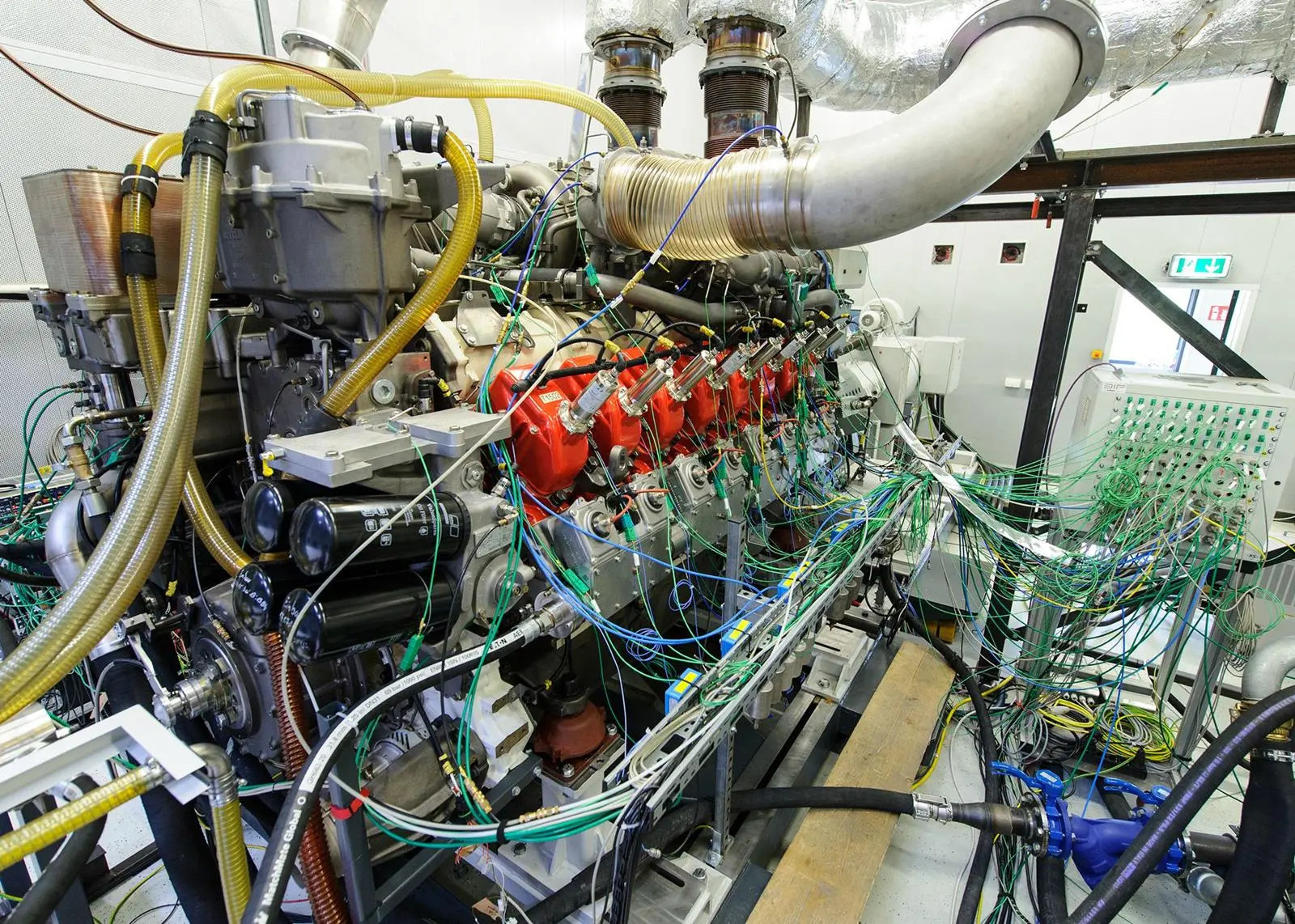
The tests had originally been scheduled to begin in 2020 but had been impacted by the coronavirus pandemic.
The tests were among a ‘basket’ of solutions that the company was developing within a new dedicated Power Lab unit, which has been set up to develop innovative and net zero carbon drive and energy solutions.
Alongside a focus on synthetic Power-to-X fuels, such as hydrogen, methanol or synthetic LNG, the engine designer was also ramping up research into fuel cell solutions for both the stationary and marine markets.
Hydrogen engine research
Turning to the initial focus of the Power Lab, Riegger noted that alternative fuels was “the biggest topic”, along with the addition of PEM fuel cell technology to the portfolio.
Riegger previously revealed that Rolls-Royce Power Systems had successfully concluded endurance and component tests alongside single-cylinder tests at its R&D site in Magdeburg and in collaboration with Technische Universität München.
The current engine tests represented a lower power density than gas powered versions show. However, the company had continued to make progress with the impact of ageing on the behaviour of hydrogen, as well as emissions reduction.
By undertaking research into the two main technological branches of hydrogen-fuelled propulsion in parallel, Rolls-Royce Power Systems would be well positioned to offer solutions to meet market demand.
It was unclear whether the market would adopt (hydrogen-fuelled) fuel cell technologies or whether hydrogen-fuelled reciprocating engines would gain a market share.
A reformation process converting methanol into hydrogen fuel aboard a vessel offered a potential solution to containment issues, for example.
The research that the engine designer was undertaking into hydrogen safety, handling and containment was applicable to both technologies, Riegger noted.
A renewed focus on fuel cells
Fuel cell technology is not a new area of research for Rolls-Royce Power Systems. Rolls-Royce developed significant experience working with fuel cells during the ultimately unsuccessful attempts to commercialise molten carbonate fuel cell (MCFC) technology. Between 1999 and 2011 Rolls-Royce installed 26 high-temperature MCFC fuel cells systems for power generation in various industrial companies and health institutions with an average of 22,000 operating hours each.
“We invested a lot of time and effort carrying out trials of MCFC also aboard the Viking Lady a decade ago. But the difference is that we can now leverage the multi-billion dollar investments by automotive manufacturers in (PEM) fuel cell technology.”
Rolls-Royce Power Systems plans to start up a PEM fuel cell-based demonstrator unit at its Friedrichshafen research centre at the beginning of next year.
“We have operated a vessel with a PEM fuel cell installation on Lake Constance, and have gained some operational experience,” Riegger noted, adding that a number of technical obstacles needed to be addressed, including designing fuel cells with greater durability to meet the different power demand profile of marine vessels compared with automobiles. The efficiency of the fuel cells was a separate issue.
“It’s not a case of simply sticking a few automotive fuel cells into a vessel,” Riegger noted drily.
Technical challenges for marinizing fuel cells included preventing salt water from entering the fuel cell, owing to the effect of the sodium on electrical conductivity, along with ensuring the hydrogen fuel supply meets the purity thresholds of PEM membranes.
Looking further ahead, Riegger noted that several PEM fuel cell installations aboard vessels were underway but the technology was some way from being a commercial solution.
Cost considerations were currently a barrier but economies of scale were likely to lead to a fall in unit costs as production ramps up.
“I’m completely convinced we’ll see the same decline in unit costs for fuel cells that we saw ten years ago with PV units and five years ago with Li-Ion batteries,” Riegger noted.
Power Lab – more than an accelerator
“Power Lab is about the technologies of the future. As a company, we believe decarbonisation will be a topic for the whole economy, and will drive demand for carbon-neutral technologies, such as Power-to-X or fuel cells.”
However, Dr Riegger was quite clear that the Power Lab was more than a technology incubator. In fact, the development of the technology only formed one strand of the Power Lab concept.
“We are also establishing the “boundary conditions” of the technology and seeking to develop business models (within Rolls-Royce Power Systems’ overall strategy) to ensure that the technology can be commercialised.”
To put it another way, Riegger added, we are taking a broader holistic perspective of the introduction of new technology, rather than narrowly focusing on the development of technical solutions without considering the economic aspects.
The idea is to develop technical solutions, confirm the business case and ultimately introduce the technology as separate units within Rolls-Royce Power System. “This was the approach we followed with the Microgrids technology, which was established as a separate business unit at the beginning of 2020,” Riegger noted.
Riegger added that the company was continuing to develop solutions for its portfolio of reciprocating engines, but that they would be focused on lowering emissions and improving fuel consumption.
Related Articles
 ALTERNATIVE FUELS & LUBRICANTS
 ALTERNATIVE FUELS & LUBRICANTS
 ALTERNATIVE FUELS & LUBRICANTS