



IMO advances LPG and H2 guidelines
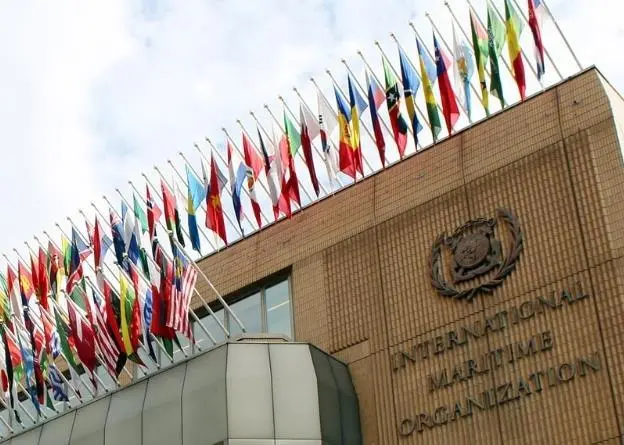
The interim guidelines to address safety provisions for ships using LPG fuels were finalised at the meeting, reports Lloyd’s Register.
The guidelines follow the goal-based approach and are expected to be approved at MSC 107 in June 2023. They provide details on changes to the design requirements for the pressure relief system of LNG fuel tanks to ensure that the system has sufficient capacity. They also include changes aimed at addressing leaks during bunkering operations at the connection between the bunker system and the bunkering manifold.
Ships built from 1 January 2026 will be required to have automatic ventilation of the gas supply pipe between the master valve and the double block and bleed valves, and between these valves and the consumer, when the master gas fuel valve is automatically shut down.
Requirements for liquid level gauging were modified to increase alignment between the IGF Code and the IGC Code.
Additionally, a draft MSC Circular was agreed which will provide a unified interpretation that the use of flanges during fuel transfer shall be minimised. There should be no single common flange where a failure could overcome primary and secondary barriers to result in a gas leak.
Guidelines on safety when using liquid or compressed hydrogen as fuel were further developed as were guidelines for the safety of ships using ammonia as fuel. These guidelines will be developed to be read in conjunction with the IGF Code.
For hydrogen, the guidelines should aim to prevent uncontrolled loss and accumulation although this would be difficult to achieve in practice due to the small size of the molecules.
Lloyd’s Register provides more details here.
Related Articles
 AMMONIA
 HYDROGEN
 HYDROGEN