



IMO exclusive: “Ammonia not unique but toxic and we need to be careful”
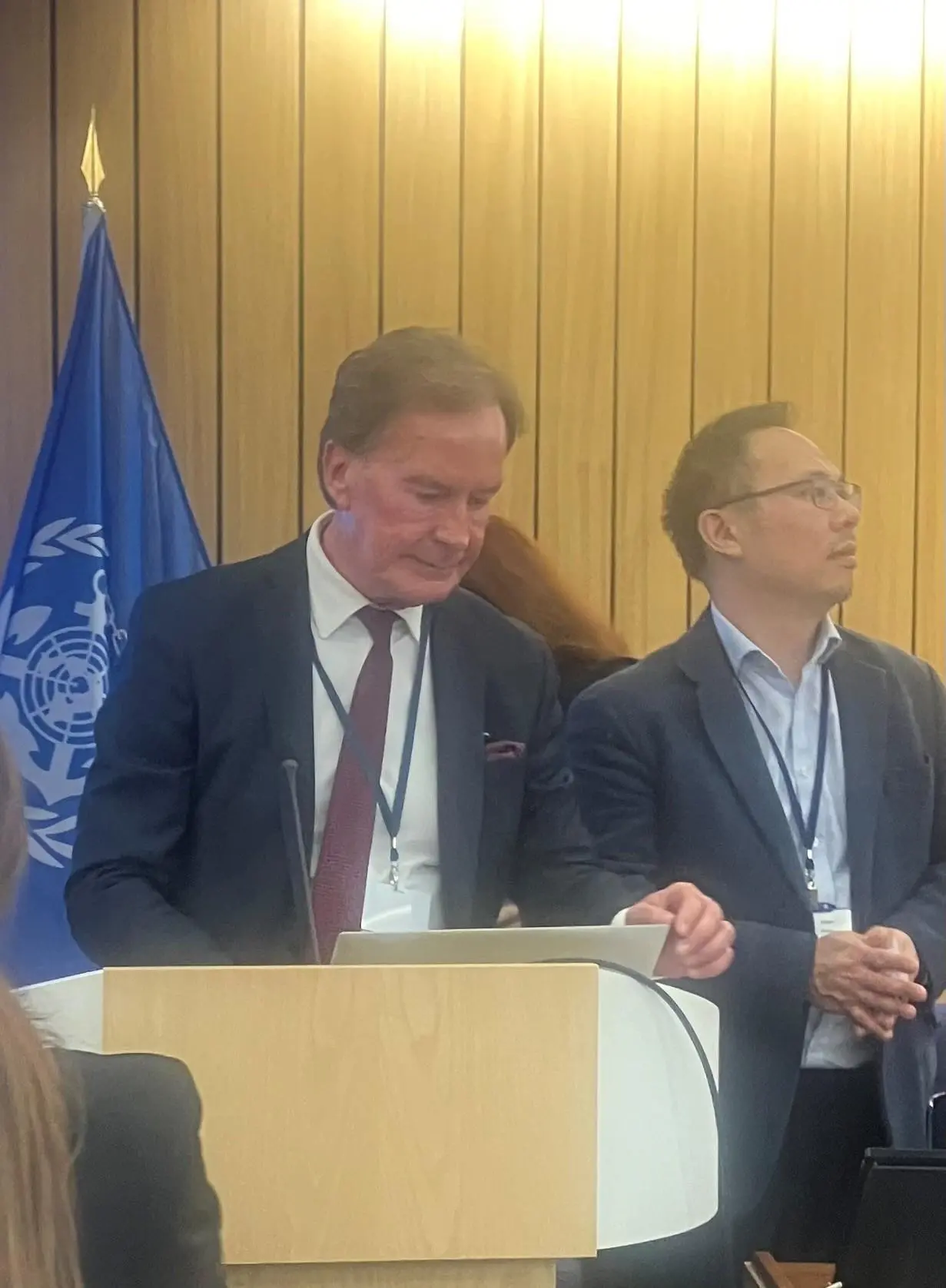
“As an ex-Seafarer, we’ve got a lot of convincing to do and we either do it safely or won’t do it at all,” states Matt Dunlop (pictured), group director of sustainability and decarbonisation at V.Group and strategic partner to the Mærsk Mc-Kinney Møller Center for Zero Carbon Shipping, speaking at the International Maritime Organization’s headquarters in London.
The transition to ammonia as a marine fuel presents significant challenges, particularly regarding crew training and safety and Dunlop highlighted the importance of addressing the human element in this shift. He has been working to qualify ammonia as a safe and viable fuel, focusing on training and competence development.
The industry has long handled ammonia safely as a cargo and in shore-based manufacturing, but integrating it as a fuel requires new protocols, procedures, and training regimes. Reports co-published by the Lloyd’s Register Maritime Decarbonisation Hub and Mærsk Mc-Kinney Møller Center for Zero Carbon Shipping will outline the necessary steps, including minimum competency and training standards for seafarers. These reports are aimed at both regulatory bodies, such as the IMO, and operational stakeholders, including ship operators, managers, and training organisations.
Industry-wide surveys (click here) have indicated that seafarers and shore-based personnel require greater clarity on ammonia’s properties, risks, and emergency response strategies. The social acceptance survey conducted as part of the project revealed that education is a key concern, with seafarers emphasising the need for appropriate training to handle ammonia safely. The research findings have been integrated into the upcoming reports to ensure that training standards meet industry needs.
A fundamental aspect of ensuring safety is the management of change within vessel operations. Operators must integrate new policies and procedures into their safety management systems, with a strong emphasis on the shore-side interface for training. While the gas and chemical shipping sectors have experience handling hazardous cargoes, bulk carrier and container vessel operators will need additional education and training to bridge knowledge gaps Dunlop explained.
Training providers will play a crucial role in delivering the necessary skills to the workforce. Dunlop stated there are an estimated 800,000 seafarers requiring upskilling in the coming years, trainers must possess the knowledge and capability to effectively educate crews.
“Ammonia can be made safe, but we really need seafarers to have a full understanding, regardless of rank and board,” said Dunlop.
He went on to say that existing training frameworks, including those for LNG, provide a foundation, but ammonia’s distinct characteristics necessitate a complete revision of current methods.
Dunlop and his colleagues are calling on the IMO to incorporate these findings into the revision of The International Convention on Standards of Training, Certification and Watchkeeping for Seafarers (STCW) convention and code. The forthcoming ammonia competence and training project report will offer detailed guidance to support these discussions, ensuring that the industry moves forward safely and efficiently. With continued collaboration and commitment, ammonia can be integrated as a viable and secure marine fuel, but only with the appropriate training and safety measures firmly in place. But what should be remembered, as Dunlop aptly reminds us is: “ammonia is actually not that unique, but it is toxic, and we need to be careful.”
Related Articles
 AMMONIA
 AMMONIA
 AMMONIA