



Integrated Design Track For Wind Propulsion
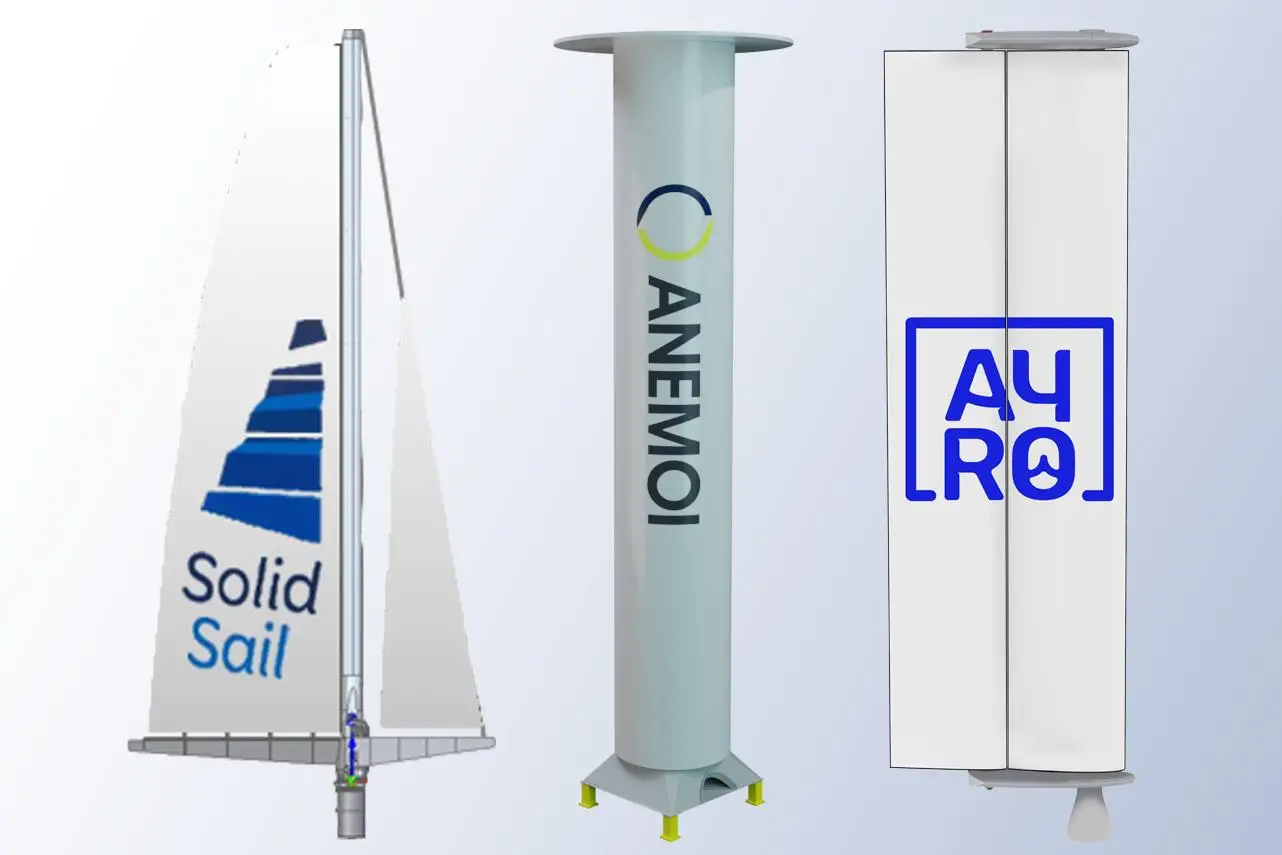
The Optiwise endeavour, signifying “optimised wind supported vessels”, aims to achieve substantial energy savings by adopting an integrated approach to the development of ships incorporating sail-assist systems.
The rationale for the project is that wind propulsion has to date been mostly applied without considering or re-assessing the overall vessel design and operations, albeit for practical reasons, thereby limiting attainable efficiency gains.
The parties to Optiwise expect to realise average energy savings of between 30% and 50% when compared to equivalent, conventionally powered vessels, while ensuring operational feasibility in a realistic wind climate.
The anticipated gains are substantially in excess of the improvement parameters laid down for qualification of project financial sponsorship under the EU’s Horizon Europe research programme.
With a budget of EUR5.1m ($5.4m), Optiwise has a three-year work timeframe, to be conducted by a cross-industry partnership. Coordinated by MARIN, the study consortium includes three designers and producers of sail-assist propulsion solutions, namely the French companies AYRO OceanWings and Chantiers de l’Atlantique and UK-based Anemoi Marine. The latter is making recourse to UK government funding.
Optiwise has the overarching goal of devising and employing holistic design and control methods for what are described as ground-breaking new ship concepts. The ultimate, specific deliverables from the project are open guidelines for integrated system optimisation with wind propulsion, and ‘smart’ measurement and control arrangements to promote the most effective operation. The guidelines will be demonstrated by way of experimental model tests, bridge simulations, and measurements on a full-scale wind propulsion unit ashore.
Some 15 or more ships fitted with auxiliary sail propulsion are currently trading. Operational use cases entailing systems developed by the three specialist participants in Optiwise will form a basis for the study. These cases, embracing a tanker equipped with AYRO OceanWings, a passenger vessel with the Solid Sail system from Chantiers de l’Atlantique, and a bulk carrier fitted with Anemoi Rotor Sails, will provide a salient sample of the world fleet using such technologies. This approach should give added relevance to, and the broadest applicability for, the methods formulated under the project.
The various work packages feature extensive simulations, bringing together disciplines such as aerodynamics, hydrodynamics, ship routing and energy management. Particular attention will be paid to ensuring realistic operational scenarios for the developed, integrated designs, complemented by basin tests to examine seakeeping and manoeuvring performance, bridge simulations to assess crew operations, and land-based wind propulsion thrust measurement and control tests.
Other partners in the undertaking include the Dutch arm of Wartsila, Swedish research body SSPA, and Antwerp-headquartered Euronav, which deploys one of the world’s largest fleets of crude carriers.
Konstantinos Papoutsis from Euronav acknowledged the huge challenge faced by the maritime industry to reduce greenhouse gas (GHG) emissions in line with IMO ambitions, and the associated regulatory advance. “Zero emission fuels are assumed to be the main solution. However, sufficient and affordable supply of such fuels is highly uncertain for the foreseeable future, which means that energy saving on board is expected to be increasingly important, both environmentally and economically” he observed.
In reference to Optiwise, Mr Papoutsis said “We expect that the knowledge built through such R&D efforts will benefit the waterborne industry in its decarbonisation journey.”
“Wind propulsion is so far mostly applied without re-considering the overall ship design and operations,” suggested MARIN project manager Rogier Eggers. “Whereas that fits within a ‘business as usual’ scenario, it does limit the attainable savings. With Optiwise, we are building on R&D already under development among the consortium partners in the last years, and re-thinking the design process and energy management of ships with wind propulsion, while still making sure that these ships conform to common operational and regulatory requirements.”
“We thereby expect to enable and showcase much higher savings than what can be seen in the present market applications,” added Mr Eggers.
Related Articles
 ENERGY SAVING DEVICES
 ENERGY SAVING DEVICES
 AMMONIA