



Is ammonia the first truly green ship fuel?
This goal necessitates carbon-free fuels, bringing ammonia into focus. Ammonia (NH3) burns without producing CO2, making it a viable green fuel. International congresses and development partnerships are advancing the topic, and companies like HEROSE are prepared with valves designed for ammonia use.
The idea of ammonia-ready ships is gaining traction. Shipowners see this as a way to future-proof their investments, as ammonia ensures carbon-free operation under stricter future regulations. To adopt ammonia as a ship fuel, three key components are needed: engines capable of burning ammonia, tank systems that can handle it, and supply infrastructure at ports. Discussions with engine manufacturers, fuel system suppliers, research institutes, and industry experts suggest progress is being made, particularly for ammonia use in combustion engines and fuel cells.
Ammonia facts
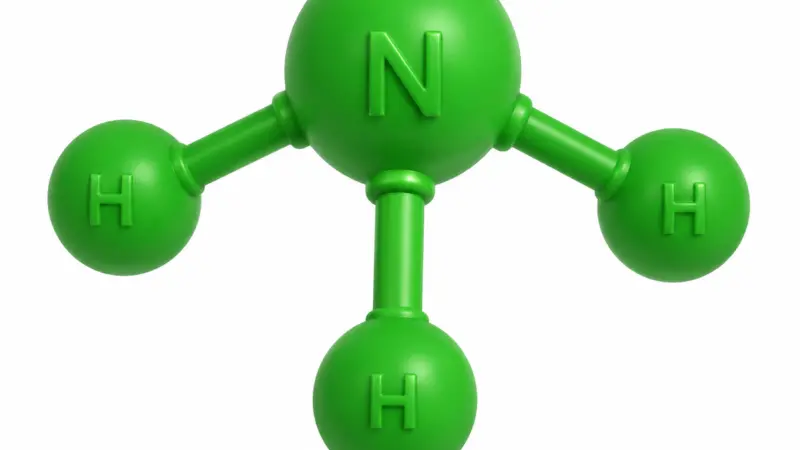
Annually, around 200 million tons of ammonia are produced globally, primarily for fertilizers. Ammonia production consumes about 2 % of the world’s energy output. The Haber-Bosch process, where nitrogen and hydrogen gases react at high pressure and temperature over an iron catalyst, is the most common production method. Ammonia is gaseous under normal conditions, liquid at -33 °C, and can be liquefied at 20 °C under 9 bar pressure. It is toxic but detectable by humans at very low concentrations. Combustion of ammonia yields only nitrogen and water, but its low flammability requires a pilot fuel for combustion. Ammonia’s heating value is 5.2 kWh/kg, approximately half that of diesel, necessitating larger tanks.
The history of ammonia
Ammonia has a history as an energy storage and fuel source dating back to 1872, with trams in New Orleans using it. Belgian buses ran on ammonia during World War II, and a Chevrolet Impala was ammonia-powered in 1981. Recent years have seen global efforts to establish ammonia as a green fuel, with projects in England, Australia, and the European ShipFC project, which includes Fraunhofer Institute participation. Green ammonia, produced using renewable energy, is intended for motor combustion or fuel cells. However, only gray ammonia is currently available, with green ammonia production just beginning.
Perspectives on ammonia
Opinions on ammonia as a fuel are divided. Proponents see it as an ideal future fuel due to its carbon-free combustion and low emissions, and its production from various renewable sources (Power-to-X). It has established infrastructure and handling experience, though it requires significant expansion. Critics cite ammonia’s toxicity and poor combustibility as concerns. Despite these issues, ammonia offers many advantages over other alternative fuels, such as use in combustion engines, gas turbines, and fuel cells. Compared to hydrogen, ammonia is easier to handle, requiring less pressure and lower liquefaction temperatures.
Engine manufacturers’ fuel plans
Engine manufacturers initially viewed LNG as the future fuel, now considering it a stepping stone to ammonia. LNG engines are already in use and can incorporate bio-methane and hydrogen. Methanol engines, like those on the ferry Stena Germanica, are also in operation. Current technology can meet the 2030 emission targets, but achieving the 2050 goal requires carbon-free fuels, making technology increasingly complex. Ammonia can be used in various engine types, including diesel, gas, and dual-fuel engines, with market readiness expected in three years. The IMO is working on integrating ammonia and hydrogen into the IGF Code, laying the groundwork for ammonia as a ship fuel.
Fuel system and tank technology
The cost of fuel systems, particularly tanks, is a significant factor. Ammonia’s relatively simple liquefaction and storage requirements make tank systems cheaper. Future fuel systems may initially use LNG, with the capability to transition to ammonia. This requires components compatible with both fuels. Current planning includes systems for bunkering, storing, loading, and using ammonia, awaiting regulatory and supply developments.
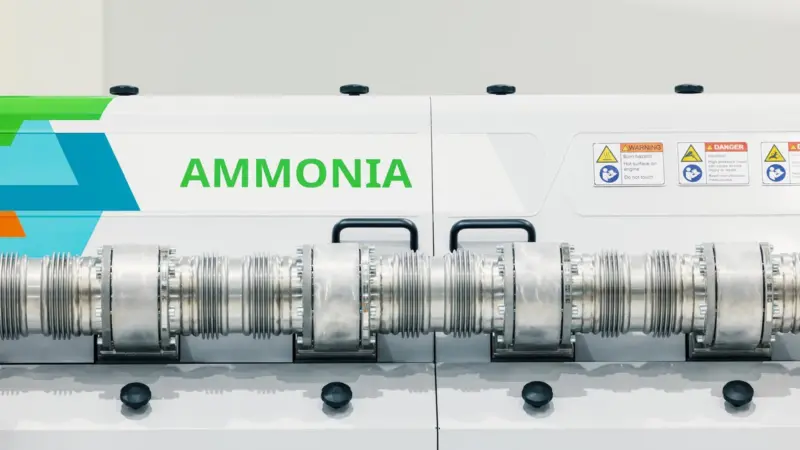
HEROSE provides valve solutions for handling ammonia, including retrofitting existing LNG valves for ammonia use. The company supports the maritime industry’s shift to green fuels with products designed to withstand the corrosive nature of ammonia, ensuring safety and efficiency in new and existing fuel systems. HEROSE is looking to play a part in the transition to greener shipping practices needed to make the ambitious net zero target set by the IMO.
Related Articles
 AMMONIA
 AMMONIA
 AMMONIA