



Japan and Singapore explore green hydrogen supply chain
The three companies anticipate sourcing clean, carbon-free hydrogen from outside of Singapore and plan to transport it using Chiyoda’s SPERA Hydrogen™ technology based on the liquid organic hydrogen carrier Methylcyclohexane. This carrier, produced from toluene, was chosen because of its compatibility with existing industrial infrastructure and because it can be used to safely store hydrogen under ambient temperature and pressure in large quantities for long periods.
Methylcyclohexane can be in a liquid state from -130°C to 100°C, can be carried by chemical tankers and is already widely used, for example, as a solvent for correction fluids. It results in a volume of approximately one 500th that of hydrogen at ambient temperature and pressure. After dehydrogenation, the toluene can be repeatedly recycled for producing Methylcyclohexane.
Sembcorp plans to test the blending of green hydrogen with natural gas via its domestic power generation assets and also plans to supply carbon-neutral hydrogen to local customers for fuel, chemical feedstock and other applications.
Two-nation partnership
Japan agreed to support Singapore’s energy transition through its Asia Energy Transition Initiative announced in May 2021. Singapore’s Long-Term Low-Emissions Development Strategy calls for emissions from the country’s expected 2030 peak to be halved to 33 million tons of CO2 equivalent by 2050, with a goal to achieve net-zero emissions as soon as possible in the second half of the century. The nation is expecting hydrogen to play a significant role in achieving this goal.
In October, the Singapore Government awarded SG$55 million to support 12 research, development and demonstration projects on low-carbon energy technology solutions as part of its Low-Carbon Energy Research Funding Initiative. Noting that, at this point, hydrogen is too expensive to be used widely, several of the projects will will look at developing easier ways to transport hydrogen and one, involving Chiyoda, Sembcorp and Mitsubishi will explore systems to reduce the costs of extracting hydrogen from methylcyclohexane.
The process to extract hydrogen from the methylcyclohexane molecule requires high-performance catalysts and is energy intensive. The research proposal being funded aims to improve the performance and reduce the cost of existing SPERA Hydrogen catalysts from Chiyoda and design new reactors of better heat transfer, therefore reducing the cost of importing hydrogen using this carrier. A comprehensive financial model to assess the cost of the hydrogen supply chain in Singapore will also be developed.
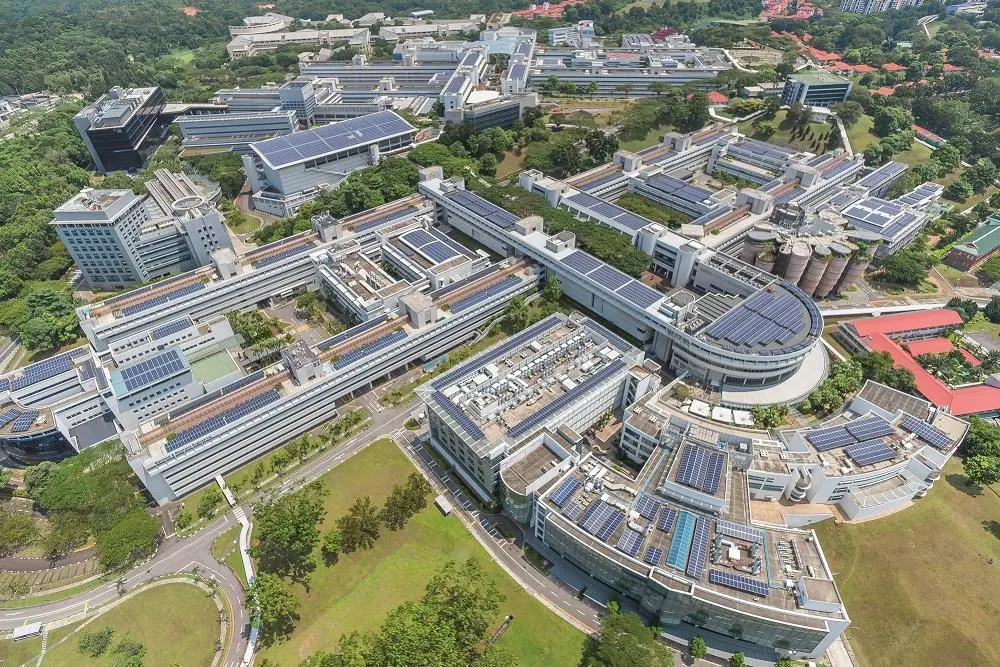
Prof Xu Rong of Nanyang Technological University will be the lead investigator and collaborators include Chiyoda, PSA Corporation, Sembcorp Industries, City Gas, Jurong Port, Singapore LNG Corporation and Mitsubishi Corporation.
Related Articles
 ALTERNATIVE FUELS & LUBRICANTS
 ALTERNATIVE FUELS & LUBRICANTS
 ALTERNATIVE FUELS & LUBRICANTS