



Japanese LR2 tanker hybrid sail feasibility study
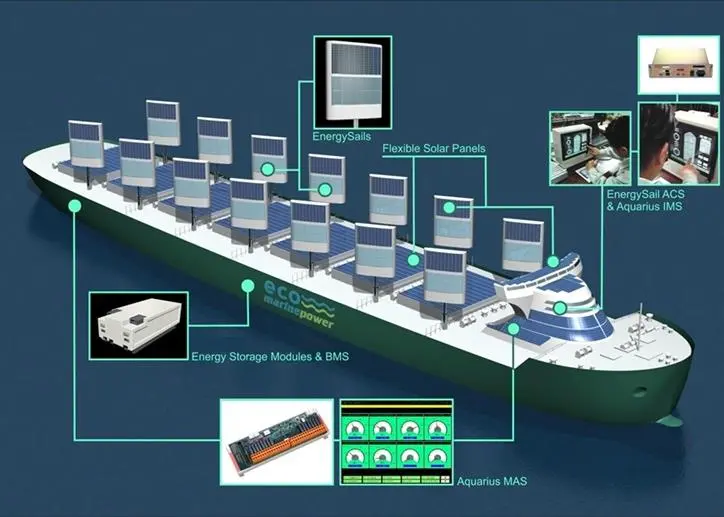
The study is being undertaken in co-operation with the ship owner and will investigate how various technologies can reduce fuel consumption and emissions on-board the 240-metre long vessel.
The feasibility study is being carried in various stages and includes investigating installation locations for marine-grade solar panel and frames. The project, which began in 2019, is expected to conclude by early 2021.
The company expects a full installation of EnergySails with photovoltaic panels would lead to annual fuel and emissions reductions of up to 10%. The feasibility study may deliver lower energy savings.
The project aims to use the energy generated from the Aquarius Marine Renewable Energy (Aquarius MRE®) solution to optimise fuel consumption from the vessel’s main engines and gensets, the company confirmed. The project had not yet involved the engine manufacturer in the project.
The retrofit of the system aboard the “eight-nine year-old” LR2 tanker also includes the installation of marine batteries and an energy management system, along with an automated alarm and monitoring system.
The consortium also includes the battery supplier The Furukawa Battery Company, along with partners Teramoto Iron Works Co. Ltd., KEI System Ltd., and Fuji Trading Co., Ltd.
The feasibility study will apply Computational Fluid Dynamic (CFD) modelling to analyse the airflow around the ship. EMP is also investigating which marine-grade solar panels would be the most suitable for the project and also the feasibility of adding further equipment including low power LED lighting and other power saving devices.
Related Articles
 BATTERIES, SUPERCAPACITORS, FUEL CELLS AND OTHER ENERGY STORAGE TECHNOLOGY
 BATTERY HYBRIDS & FULL-ELECTRIC VESSELS
 BATTERY HYBRIDS & FULL-ELECTRIC VESSELS