



K Line selects kite system for more bulkers
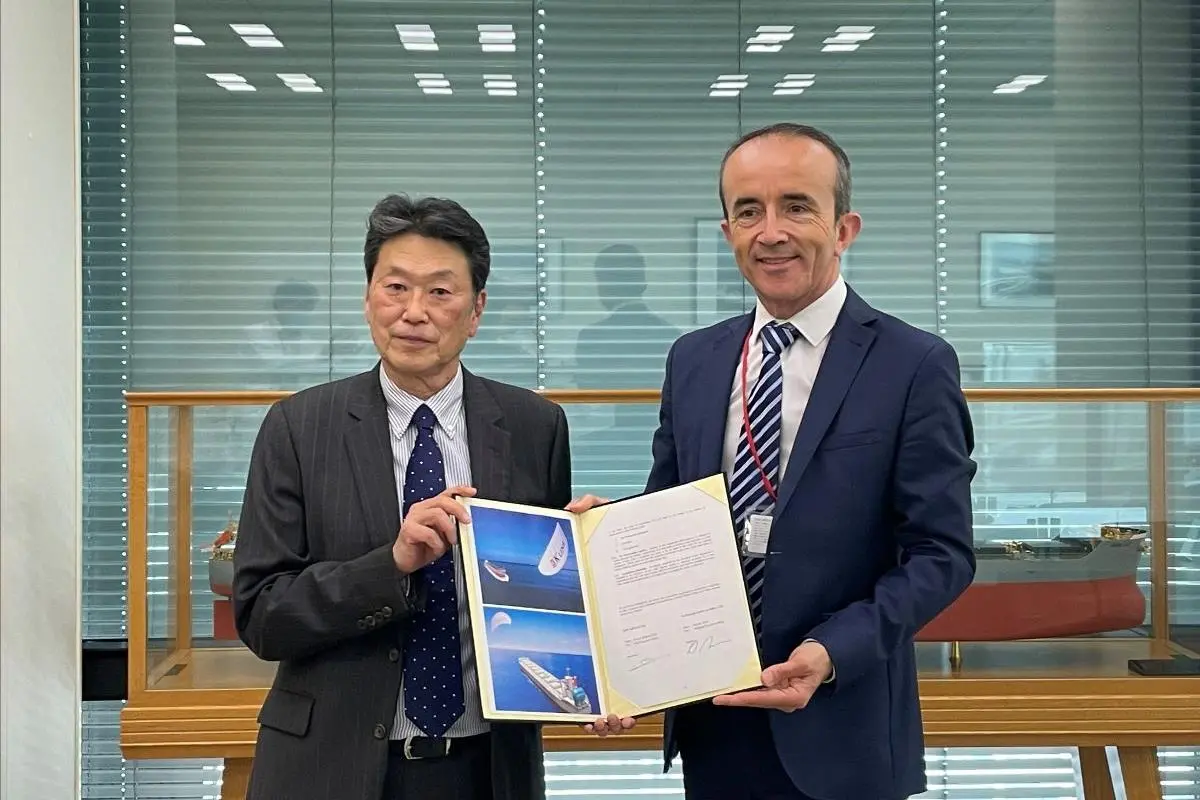
The order comes after the automatic kite system is already being fitted on two of the company’s Capesize bulkers. The additional units will be installed on three post-Panamax bulkers and are expected to reduce CO2 emissions by more than 20%.
The first Capesize bulker is expected to be operational with the Seawing in December 2022.
In addition, K Line and Airseas have signed a technology development agreement for the effective utilisation of the traction power from the Seawing based on renewable energy. The aim is to maximize the performance of the Seawing by integrating it with K Line’s ship operational technology which uses Kawasaki’s Integrated Maritime Solutions.
The Seawing will be mounted on the bow of the vessel and is unfolded by simple operation from the bridge. Its hardware consists of three parts:
The bridge equipment – oversees the operation and monitoring of Seawing, as well as the EcoRouting system which optimises the ship’s route according to the weather forecast while maintaining the planned arrival time.
The deck equipment – enables the automated take-off and landing of the parafoil wing. It consists of a mast, trolleys, winches, and a storage space. The wing is pulled out of the storage by the trolley system, before being inflated at the top of the mast for take-off.
The flying equipment – includes the parafoil wing, a flight control pod and an umbilical cable, controls the automated and optimal flight of the wing. The wing is linked to the pod, which in turn is linked to the ship via the umbilical cable, handling traction, transferring data and providing power to the pod. During the flight, the pod steers the wing to maximise the power of the system and ensure safety.
K Line aims to be net zero in GHG emissions by 2050.
Related Articles
 ENERGY SAVING DEVICES
 ENERGY SAVING DEVICES
 AMMONIA