



KIEL BOOSTS COLD-IRONING NETWORK
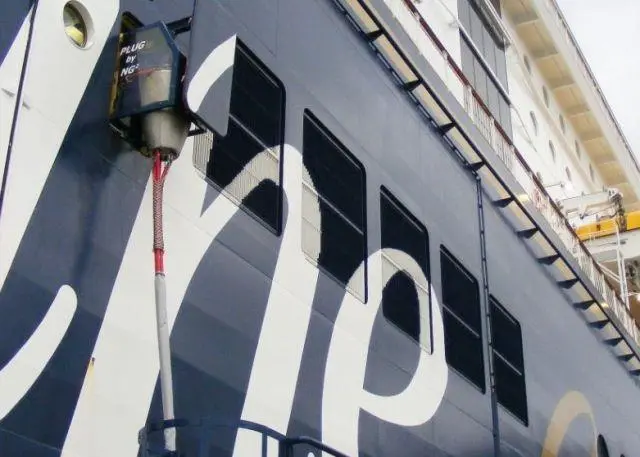
The project, based on the proprietary Siharbor solution, will provide 16MVA of power, enabling two large ships to be supplied simultaneously. Kiel has ferry connections to Scandinavia and the Baltic states, and is also an important departure point for cruises. The system is expected to be ready for test operation within the 2020 cruise vessel season.
Siharbor is designed to provide a fast, simple and flexible connection from the shore grid to the 50/60Hz onboard network, obviating the need for ships to run generators in port and thereby reducing the environmental impact from exhaust emissions, noise and vibration. It is expected to cut annual CO2 emissions by more than 8,000t
The scheme will support cruiseships docked at the Ostseekai and ferries at the Schwedenkai, and allies with Kiel’s Blue Port concept encompassing sustainable and future-orientated development. On completion, 60% of the energy demand of ships using the port will potentially be covered by shore power drawing energy from renewable sources.
The installation will comprise a single substation with four Geafol cast resin transformers, four air-insulated medium-voltage Nxair switchgears as well as one 16MVA frequency converter. The transformers, with rated powers of 6MVA and 16MVA, have been conceived for challenging environmental conditions, such as the salt-laden atmosphere of ports.
For uninterrupted, efficient supply to moored vessels at the two berths, Siemens’ Siplink arrangement, employing a frequency converter and control software, will synchronise and connect the local distribution grid and onboard medium-voltage networks, automatically taking over the power supply within a few minutes.
With this setup, it will be possible to feed two ships at the same time with the requisite 60Hz onboard frequency by means of one shore power system.
The city of Kiel has an ambitious roadmap aimed at becoming CO2-neutral by 2050, and the port’s investment in quayside power outlets supports the strategy. Kiel has an average of some 170 cruiseship calls per annum.
An important milestone in implementing the Blue Port programme was the creation by Siemens of ‘cold-ironing’ facilities at the Norwegenkai Terminal nearly two years ago. Since activation, the system has been delivering electricity to Color Line ferries on a daily basis, and is reckoned to have helped slash CO2 emissions by about 1,000t.
The German industrial group has also constructed a 12MVA turnkey onshore power supply at Hamburg’s Altona cruise terminal.
Related Articles
 PROPULSION
 GENERAL NEWS
 HYDROGEN