



Kotug launches dual-fuel escort tugs
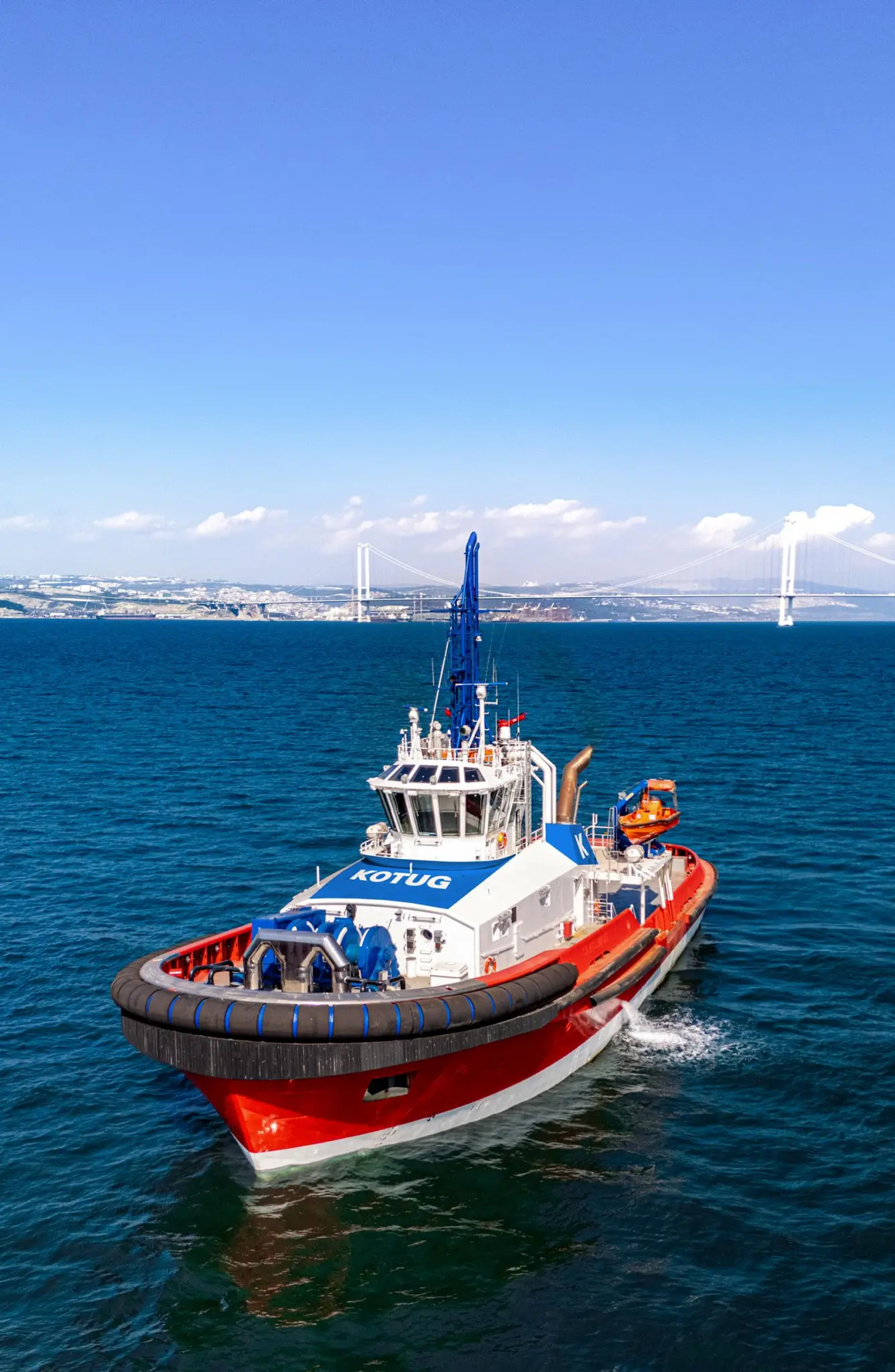
The vessels, named SD AISEMAHT and SD QWIY AANITSA SARAH, will operate in British Columbia in support of the Trans Mountain marine operations and are designed to set new standards in low-emission towage.
Built by Sanmar Shipyards and designed Robert Allan Ltd, the 44-metre vessels are reportedly the world’s first large purpose-built dual-fuel methanol-powered escort tugs. With 115–120 tonnes of bollard pull, they rank among the most powerful escort tugs operating in Canada.
According to Kotug, ‘the vessels are equipped with dual-fuel engines capable of operating on diesel or methanol, enabling substantial reductions in CO₂ emissions when supplied with renewable methanol’, and are fully compliant with IMO Tier III standards. The company said the propulsion system integrates advanced emission control technologies, shaft alternators and energy management systems to optimise efficiency and reduce fuel consumption.
Kotug highlighted that a mechanical cross-link system allows a single engine to power both azimuth thrusters during transit, reducing fuel use and engine hours. The vessels also feature hull coatings designed to minimise underwater radiated noise, helping protect marine ecosystems along Canada’s west coast, including whale habitats.
The new tugs include onboard oil spill response systems with skimmers and recovered oil storage, alongside firefighting capabilities to enhance emergency readiness in the Salish Sea. Kotug described the vessels as purpose-built rather than retrofitted, stating this approach was necessary to combine performance, safety and sustainability at escort scale.
The vessels also reflect collaboration with the Sc’ianew First Nation, with names honouring the community and symbolising shared responsibility for traditional waters. Kotug said the partnership represents ‘mutual respect, environmental stewardship and shared responsibility’, alongside opportunities for local engagement and knowledge exchange.
Kotug described the launch as a milestone project, positioning the vessels as a forward-looking response to maritime decarbonisation while maintaining high operational capability.
Related Articles
 METHANOL
 METHANOL
 2-STROKE & 4-STROKE