



Law aims to shake up Russian shipbuilding
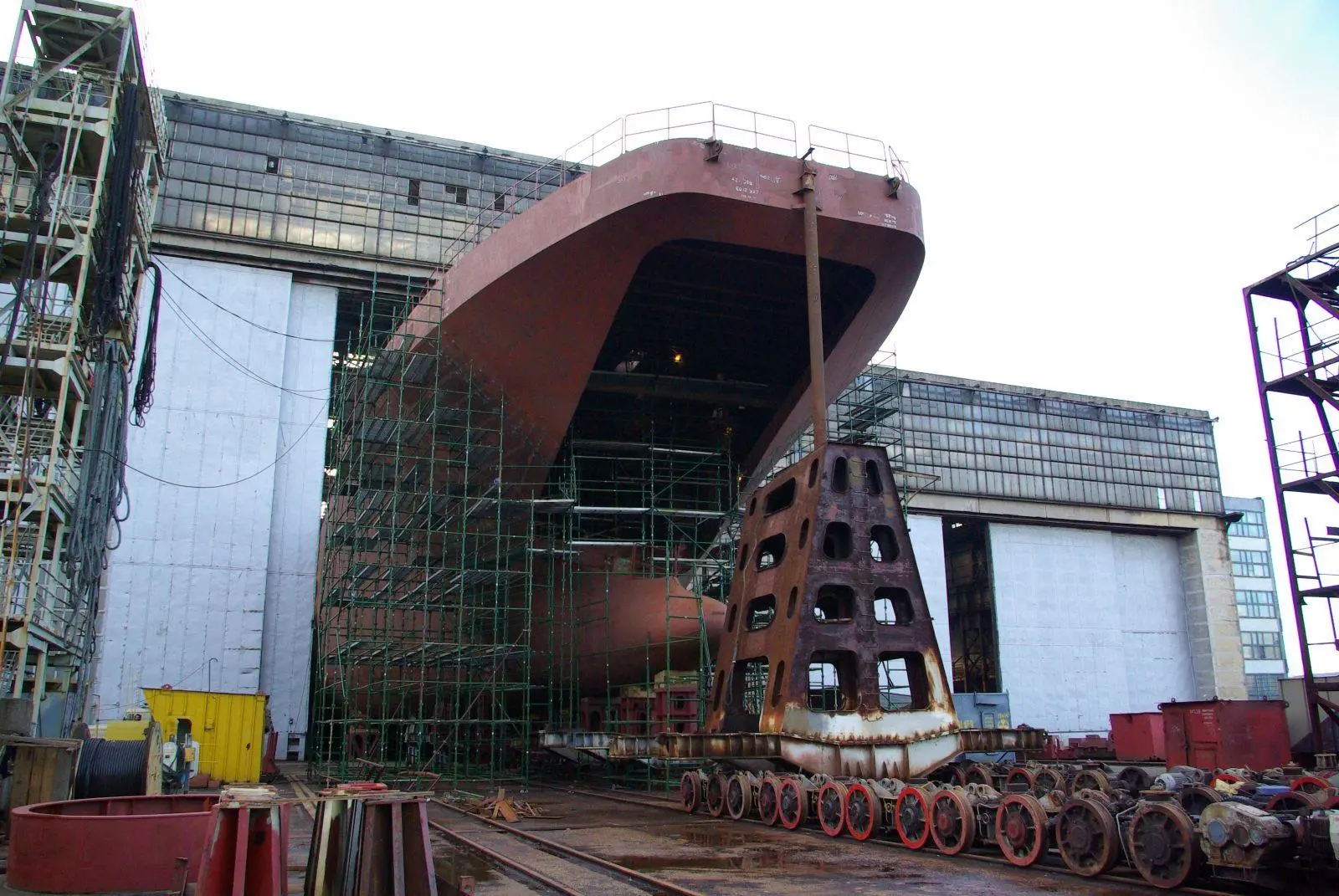
Eugene Gerden writes: The Russian shipbuilding industry has experienced difficult times in recent years. Since 2000 Russian shipowners have only ordered about 6% of vessels from domestic shipyards, the majority of orders going to foreign shipbuilders perceived as offering good value for money.
The industry has not yet recovered from the deep crisis, caused by the collapse of the USSR and numerous economic recessions in post-Soviet Russia. During the period 2002 to 2008 the capacity utilisation of the Russian shipbuilding industry grew by only 10%-15%, compared to the 1990s, and is currently estimated at just 25%-30% of total capacity.
In terms of annual volumes of civil shipbuilding, Russia is now far behind not only the Asian giants including China, South Korea and Taiwan, but also such countries as Ukraine, Croatia and Vietnam.
Each year Russian transport companies place orders for ships abroad worth about $1 billion. Currently the share of Russian manufacturers in the total volume orders of domestic shipowners remains low, less than 5%. According to Vitaly Artyukhov, dDirector of the Center Institute, one of the country’s leading research centres in the field of shipbuilding, Russia experiences a shortage of merchant ships, amid a continuous process of aging and reduction of the domestic fleet. The average age of Russian ships has reached almost 20 years.
The situation remains difficult despite the fact that since 2007/2008 the industry has begun a recovery process, resulting in the establishment of the United Shipbuilding Corporation (USC) in 2007. This company consolidated Russia’s largest shipyards in several shipbuilding holdings and created conditions for an increase in domestic production of merchant ships. The newly established corporation was divided into three sub-holdings on a geographical basis: Western Shipbuilding Center (St. Petersburg), Northern Center of Shipbuilding (Severodvinsk) and The Far Eastern shipbuilding center (Vladivostok).
At present the Russian shipbuilding industry comprises more than 168 enterprises, which employ about 160,000 people. Major capacities (75%) are concentrated in the Northern and Western regions of Russia. In addition, there are more than 100 private companies involved in ship repair.
Military ships still dominate the industry’s sales structure with a share of about 70%. Products and services for commercial shipbuilding is estimated to represent a share of some 30% of total output.
New Law
According to Igor Levitin, Russia’s Transport Minister, the new law is expected to create all the necessary conditions to stimulate the development of Russian shipbuilding and shipping, through increased effectiveness of existing shipyards and providing support for building of new yards.
Under the new law, the government plans to significantly reduce the tax burden on shipowners whose ships sail under the Russian flag, to exempt crew members from part of the insurance contributions, as well as to implement other measures, in order to create equality in terms of competitive conditions for Russian shipping companies against foreign owners. There are plans to abolish VAT (currently 18%) on the construction of all types of vessels in Russia and raise duties on the import of technology and marine equipment (currently 10%), if similar products are not produced in Russian territory, as well as to exempt from tax on profits for cabotage.
Additional plans involve creating conditions for concessional lending to the Russian shipbuilding industry. In 2010 the average lending rates in the industry were 13.5%-18%, while the loan term was limited to five years. In comparison, interest rates for the shipbuilding industry in Japan do not exceed 1% -3% per year.
The government believes that these measures will help to stimulate construction of sea-going, and especially river, vessels in Russia. In the latter case, over the past 20 years, almost no river vessels were built in Russia, a fact which gives serious concern of the Russian government.
The bill also involves establishing nine shipbuilding zones with special customs and tax regimes. The establishment of such zones, which are expected to be located in Russia’s largest coastal cities such as Vladivostok, Severodvinsk Murmansk, St. Petersburg, Kaliningrad, Novorossiysk and some others, should help Russian shipbuilders to more efficiently implement new production technologies and to reduce the tax burden.
According to Roman Trotsenko, president of the United Shipbuilding Corporation, Russia plans to follow in the steps of the Asian countries, such as China and South Korea, which established special shipbuilding zones to support of large-ship building as early as the 1960-1970 decade.
As part of the plans, the government is ready to make huge investments in construction of new shipyards, designed for large-tonnage shipbuilding, which should be competitive in the world arena. For instance, several new modern shipyards, which will focus on the construction of new commercial ships, are expected to be built in Western and Far East centres.
In the case of the Western centre, a new shipyard, which will specialiee in construction of various types of vessels, including ice breakers, is expected to be built in the city of Primorsk (St.Petersburg region). The total cost of the project is estimated at nearly 38 billion RUB ($1.1 bilion).
In this regard, implementation of the bill should create conditions for increased orders in domestic shipbuilding and related sectors, in particular metallurgy, and mechanical engineering.
Moreover the government expects that the adoption of the new law will help solve one of the most acute problems in the industry – lack of staff. At present most of the industry’sworkers are aged 50 years or above, while the influx of young professionals to the industry is virtually zero. In addition, most shipowners are currently unhappy with the methods and technologies used by domestic ship builders and repairers, most of which are simply outdated.
Rishat Bagautdinov, chairman of Volga Shipping, one of Russia’s biggest transport companies commented: “The adoption of the law allow is expected to allow domestic shipyards to increase investments in the modernisation of their capacities, to reduce production costs and to increase productivity. The law was designed, based on the experience of the current leaders of the world’s shipbuilding such as South Korea, China and Japan, which, in contrast to some European countries, in recent years have not refused further support of their shipbuilders”.
As for modernization of capacity, at present the level of equipment in Russian shipbuilding leaves much to be desired. Most of the shipbuilding methods and capital facilities are outdated and need updating. The largest shipyards were built more than 65 years ago and do not meet modern standards. New high-performance equipment, including lines for the processing of large sheet sizes up to 4.5m x16m is not available. In addition, the lack of heavy-duty shipbuilding cranes (600, 900, 1,200 tons and more) does not permit the currently-favoured methods of large-block modular ship construction.
There is also a shortage of modern load-out facilities for building ships of more than 80,000 dwt and which have a width more than 35m. Those shipyards with dry docks of 360m x 60m, which were built during the Soviet times and equipped with heavy-duty cranes, passed into Ukraine ownership after the collapse of the USSR.
According to Vladimir Alexandrov, general director of the Admiralty Shipyard, one of Russia’s oldest and largest yards, located in Saint Petersburg, the demand of the Russian merchant fleet for new commercial ships and marine engineering by 2020 is estimated at 1400 vessels, of which about 650 will be high-tech vessels, needed for the development of the continental shelf.
Russian analysts believe that the domestic oil and gas industry will be the main customer for new ships. This is reflected by recent statements of Russia’s prime-minister Vladimir Putin, who said that the development of a new line of marine equipment for the extraction and transportation of hydrocarbons, produced on the shelf, including offshore platforms, LNG tankers, ice-class ships and ice-breakers, is expected to become one of the major areas of activity in Russian shipbuilding in the near future.
Currently the bill is under consideration by the government and may enter into force in the first quarter of 2011.
Federal target programme
If everything goes ahead the new law will complement measures already implemented in the country’s ‘Development of the Marine Civil Engineering in Russia by 2016’ programme, which was specially developed to bridge the technological gap between Russian shipbuilding and Western and especially Asian competitors. Successful implementation of the programme will help develop high technology vessels, based on the latest scientific developments.
As part of the programme, several of Russia’s leading design bureaus, such as Rubin, Northern Design Bureau, Malachite, and Almaz, will focus on development of new technologies and mechanisation and automation of manufacturing processes for shipbuilding. There also plans to modernise most of the domestic equipment for bench testing complex marine systems.
The programme involves implementation of 138 R&D projects in seven technological areas. Among these are further development of marine engineering technologies, designed for work on the continental shelf; the development of technologies in future marine engineering as well as new technologies for construction and repair of marine equipment; creation of technologies for the development of marine electronic equipment and control systems.
The total cost of the programme is estimated at 136.4 billion rubles ($4.5 billion), of which 90.6 billion rubles ($3 billion) is expected to be invested from the federal budget. Up to 70% of all the funds will be invested in funding science and research activities.
Related Articles
 PROPULSION
 GENERAL NEWS
 HYDROGEN