



LEVEL PLAYING FIELD NEEDED FOR CARBON CAPTURE TECHNOLOGY MARKET
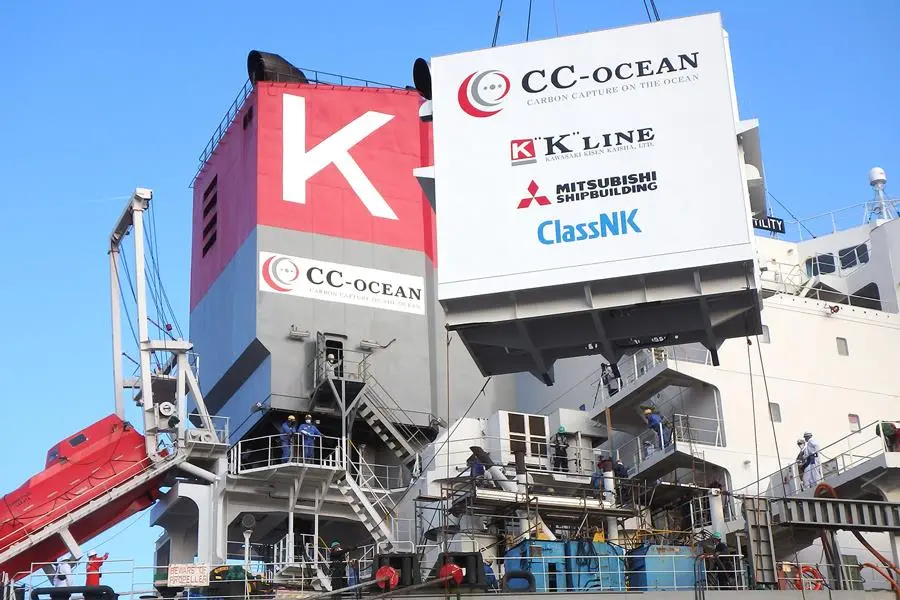

Mitsubishi Heavy Industries (MHI) and ‘K’ LINE are at the forefront of the industry with testing underway for a first onboard carbon capture and storage (CCS) system aboard the bulk carrier Corona Utility. Through the ‘CC-Ocean’ (Carbon Capture on the Ocean) project, the MHI Group aims to contribute to building a CO2 value chain with its wide range of technologies related to carbon capture, transportation, compression and recycling.
There are challenges still to be overcome. The new demonstration plant on the Corona Utility will only capture a small portion of the carbon from the exhaust of the vessel’s 2-stroke diesel engine. Height restrictions and securing the space for CO2 tanks will be the main constraints when systems are installed at larger scale, and if the exhaust gas contains SOx, a scrubber will also be required. A spokesperson for Mitsubishi Heavy Industries says future plans include working on ways to make the system more compact by lowering the height of the absorption system by splitting it into two parallel units.
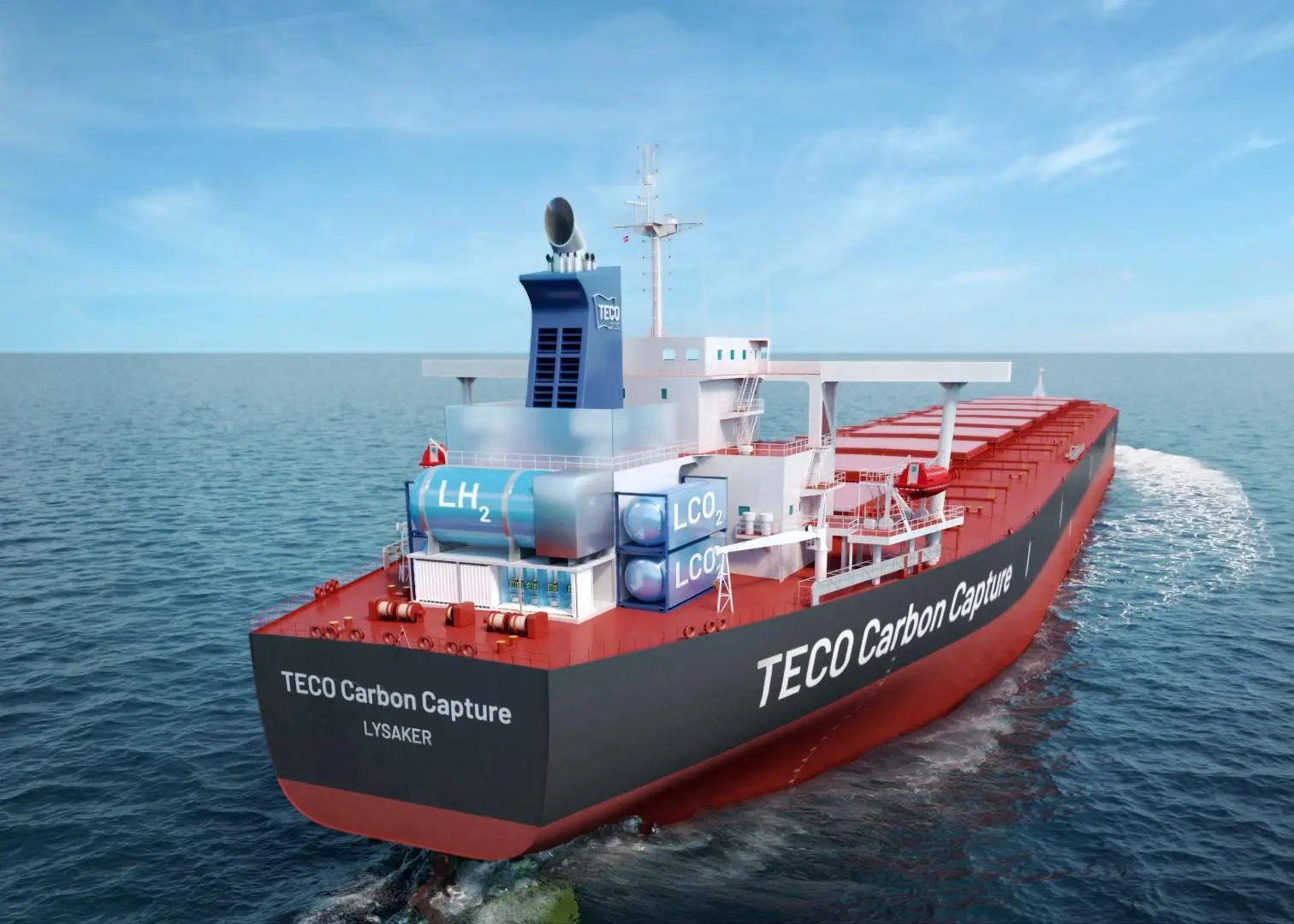
A growing number of other projects around the world are undergoing technical feasibility and testing. TECO 2030 has chosen two technical solutions to explore in detail. One involves cryogenic capture by cooling the exhaust gas to freeze out CO2 which is then liquified. TECO 2030 has signed a Memorandum of Understanding with Chart Industries to jointly develop the cryogenic capture option using the Cryogenic Carbon CaptureTM (CCC) technology developed by Sustainable Energy Solutions (SES) for land-based applications and acquired by Chart Industries in December 2020.
The second solution uses an amine-based solvent capture, a common technology used in land-based carbon capture systems. “The main challenge onboard is the footprint of the equipment,” says Stian Aakre, CEO. “It’s basically a scrubber, but rather than using seawater you are using an amine solution and rather than having a conventional scrubber tower, we are looking into an alternative design which is much more compact.”
The technology will be incorporated into TECO 2030’s Future Funnel concept and could reduce CO2 emissions by 30-40% by 2030, therefore having a large impact on a ship’s Energy Efficiency Index (EEXI) and Carbon Intensity Index (CII). However, it’s too soon to make any conclusions about economic viability, says Aakre. He notes that the technology is suited to both 2- and 4-stroke engines burning diesel, heavy fuel oil or LNG, including boilers. “The three main challenges are size, energy consumption and cost, and we are heavily dependent on the legislative landscape to create a level playing field.”
LNG vessels feature in several technology developers’ plans, as the availability of both heating and cooling onboard can enhance the energy efficiency of the processes. But there are other potentially attractive opportunities. As a researcher at the Swedish Environmental Research Institute has pointed out, the opportunity for negative greenhouse gas emissions exists when combining carbon capture with the use of renewable fuels which are fossil-free, such as liquid biogas.
Research developments
Research is continuing into the potential for capturing CO2 from diesel engines, and an international research team has modelled a system capable of removing 94.7% CO2 from the exhaust of a 3,000kW diesel engine. CO2 absorption rates on land are often between 80-95%, says Professor Volker Hessel of the University of Warwick, UK, and University of Adelaide, Australia. The researcher’s rate of 94.7% is therefore high, but still needs to be proven experimentally. The work was conducted with his postdoctoral researcher Dr Nguyen Van Duc Long as well as a team of researchers from South Korea and further develops an approach taken by researchers at TNO in The Netherlands who reported a CO2 removal of 90%.
In both systems, the exhaust is put in contact with a CO2 capture solvent in an absorption column. The CO2-depleted gas is released to the atmosphere from the top of the absorber, and the CO2-rich solvent is pumped into a stripper column and heat from the engine exhaust gas is used to regenerate the amine and free the CO2. The free CO2 is produced at the top of the stripper column as a gas and is then liquefied.
To date, the amine MEA has typically been used as the solvent to remove CO2 from land-based exhausts, as it reacts quickly and has good absorption capacity. However, Hessel says that MEA has the disadvantage of having a high energy requirement for the reverse reaction (desorption), as well as high corrosivity, toxicity and susceptibility to degradation through reactions with other chemicals. Both research teams instead modelled a combination of MEA and PZ, a di-amine capable of more rapid kinetics and low degradation rates than MEA.
Hessel and South Korea team’s proposed absorber configuration modelled the use of MDEA-PZ as the solvent, an intercooler, multiple feeds to improve CO2 capture, and a square scrubber to save space. The stripper operating pressure was used to reduce compressor duty for the CO2 compression prior to liquefaction.
“Our process has high productivity (1348 kg/h) whilst saving up to 18.3% and 100.0% in terms of compression duty and stripper duty, respectively,” says Hessel. “Furthermore, the compressor power is reduced by 3.7% by utilizing a two-stage compressor in the liquefaction unit. The proposed configuration was able to achieve savings up to 80.3% and 42.1% in terms of the total operating cost and total annual cost, respectively. The results also demonstrate that total annual CO2 emissions were reduced by up to 85.7%, compared to the earlier research.”
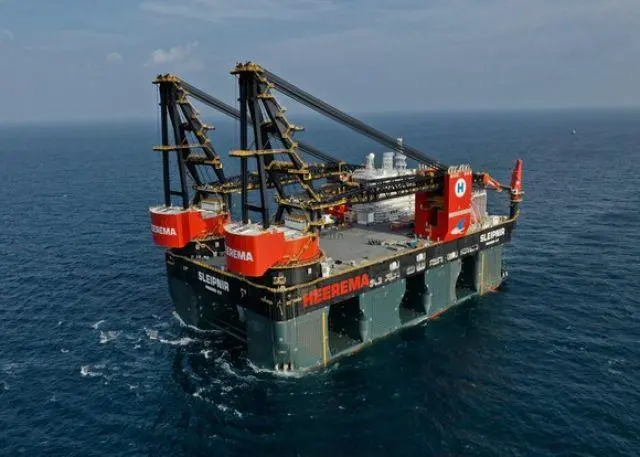
Dr Juliana Monteiro, a co-author of the earlier study, is now focusing on LNG-fuelled ships as she says they have a better business case than other vessel types, even though the technology is also applicable to engines running on other fossil-based fuels. Now, for the EverLoNG project, she is part of a team that will prototype a system onboard Heerema Marine Contractor’s Sleipnir semi-submersible crane vessel and an LNG carrier operated by Total. With an updated design, the total cost of CO2 capture, liquefaction and onboard storage for Sleipnir is estimated at EUR115/ton CO2. Sleipnir has 12 LNG fuelled engines divided over four engine rooms. Taking into account the operational profile of the vessel, a conceptual design has been developed which consists of four absorbers and a single desorber, which is able to capture 72.5% of the CO2 emissions over the vessel’s whole sailing profile.
A main difference between land and shipboard CO2 capture is the constantly varying load on the capture plant on a ship. Solvent based CO2 capture is expected to be able to deal with these variable loads. Additionally, initial experiments suggest that the rolling motion of a ship does not have a negative influence on the CO2 capture rate. As for cost, the researchers have found a relatively strong economy of scale when considering the cost of capture, liquefaction and temporary onboard storage. The costs are mainly CAPEX dependent.
Commercial deployment of EverLoNG technology is expected from 2025 onwards, and part of the project aims to develop the required infrastructure and regulation for the uptake of onboard carbon capture.
Commercial challenges
Charles Haskell, Lloyd’s Register Decarbonisation Programme Manager, says that while there are a range of processes that can be used, from membranes, chemical absorption or solid absorption, the technology readiness of these systems is low and further development would be required before commercial viability of the technology can be ascertained. “The efficiency of the system would need to be determined to factor into any carbon pricing metrics that are used in the future if CCS is accepted by the regulators,” he says.
“Another key commercial consideration is the ability to store the CO2 that is captured. If we looked at a 15-day voyage with a power demand of 40MW, this would require 14.4GW of energy. Burning heavy fuel oil would require approximately 503m3 of storage for the fuel and 1417m3 for the storage of the CO2. For LNG this would require 947m3 of storage for the fuel and 985m3 of storage for the CO2. Both of these cases assume removal of all of the CO2. So considerable additional storage shall be required onboard, potentially resulting in lost cargo space.”
The next challenge is the disposal of the CO2. A supply chain needs to be in place. “For tramp shipping this may prove difficult, as it may not be feasible for the ship to carry waste CO2 for long periods. For major ports, there would need to be the infrastructure in place and thus additional space. There are limited requirements to repurpose the CO2 for other applications, so safe storage underground would be required to which the cost of the removal and storage would need to be evaluated.
“So, whilst CCS on board may be suitable for certain applications as a means for adapting today’s technologies to reduce the carbon impact of shipping, there are still several obstacles to overcome. Technology needs to be proved as viable and scalable for both the vessel and the safe storage, the investment case would need to be comparable to the cost of future fuels, including the cost of the supply chain, and the policy (community acceptance) would need to account for any CO2 removed and safely stored for CCS to become commercially viable in comparison to the other options of net-zero and zero-carbon fuels.”
A specialised fleet
It is anticipated that the liquefied CO2 produced from onboard carbon capture systems will either be sequestered or will be a used as a feedstock to produce synthetic carbon fuels such as methane or methanol. Dan-Unity CO2, a company founded by the Danish-based shipping companies Evergas and Ultragas, is readying a project that demonstrates how these two goals can be achieved. It has partnered with Icelandic Carbfix to offer transport and storage of CO2 by 2025.
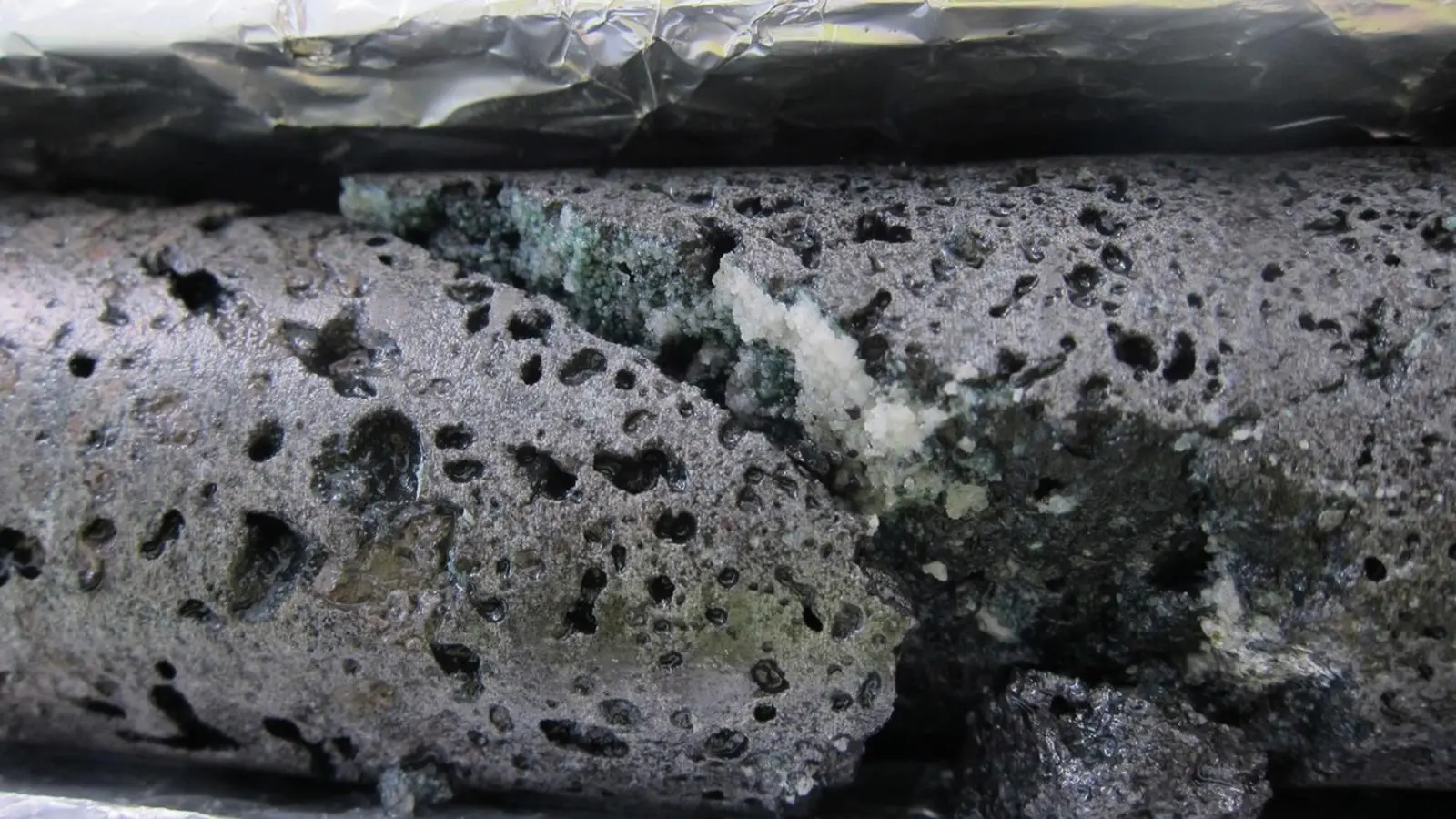
Carbfix estimates that Iceland has capacity of 2500 giga tons CO2 – more than 55 years of the entire globe’s emissions. “The Carbfix technology provides a safe, permanent and economic alternative to conventional carbon capture and storage solutions by imitating and accelerating nature’s way of CO2 mineral storage,” says Edda Sif Pind Aradóttir, CEO of Carbfix. “By dissolving CO2 in water and injecting it into underground basaltic formations, the CO2 turns into stone in less than two years.”
Captured CO2 will also be used for Power-to-X fuels, and once a specialised fleet of vessels is built, they will carry CO2 to storage in Iceland or in offshore depleted oil fields at sea or to Power-to-X plants. The companies claim that a single vessel can achieve the safe and cost-efficient transport of 450,000 tons CO2 annually. The vessels will be purpose-built, and thus not capable of any other trades. Consequently, longer term contract commitments are required to initiate newbuilding projects. “The technology and experience are in place. Capture, transport and storage are all proven concepts; thus, what it takes to start building the needed vessels is to secure the regulatory framework including CO2 taxation,” says Steffen Jacobsen, CEO of Evergas.
Policy challenges
2021 has been a breakthrough year for the recognition of carbon capture and storage (CCS) as a viable tool for upstream companies to decarbonise operations, but Angus Rodger, from the Asia Pacific upstream research team at Wood Mackenzie, believes the regulatory, commercial and technical hurdles still to be overcome are significantly underestimated and a gulf is growing between OECD countries with ambitious decarbonisation goals that are starting to actively facilitate CCS projects and the rest of the world. “Such facilitation takes two key forms: CCS regulation and government funding. CCS projects require government policy and support to proceed. However, most countries lack the requisite legal and fiscal legislation framework on sequestration, licensing, carbon accreditation, incentives and ultimate liability for leakage risk,” says Rodger.
“The future direction of carbon pricing will be crucial,” he says. “The scale and uncertainty of the costs is significant, and with so few projects developed in recent years, benchmarks are few and far between. For the time being, then, CSS remains a cost, but as carbon prices rise, that will change. Early movers may gain a valuable strategic advantage, but it won’t be easy.”
Related Articles
 CARBON CAPTURE
 CARBON CAPTURE
 ALTERNATIVE FUELS & LUBRICANTS