



Liquid Wind estimates e-methanol lifecycle emissions
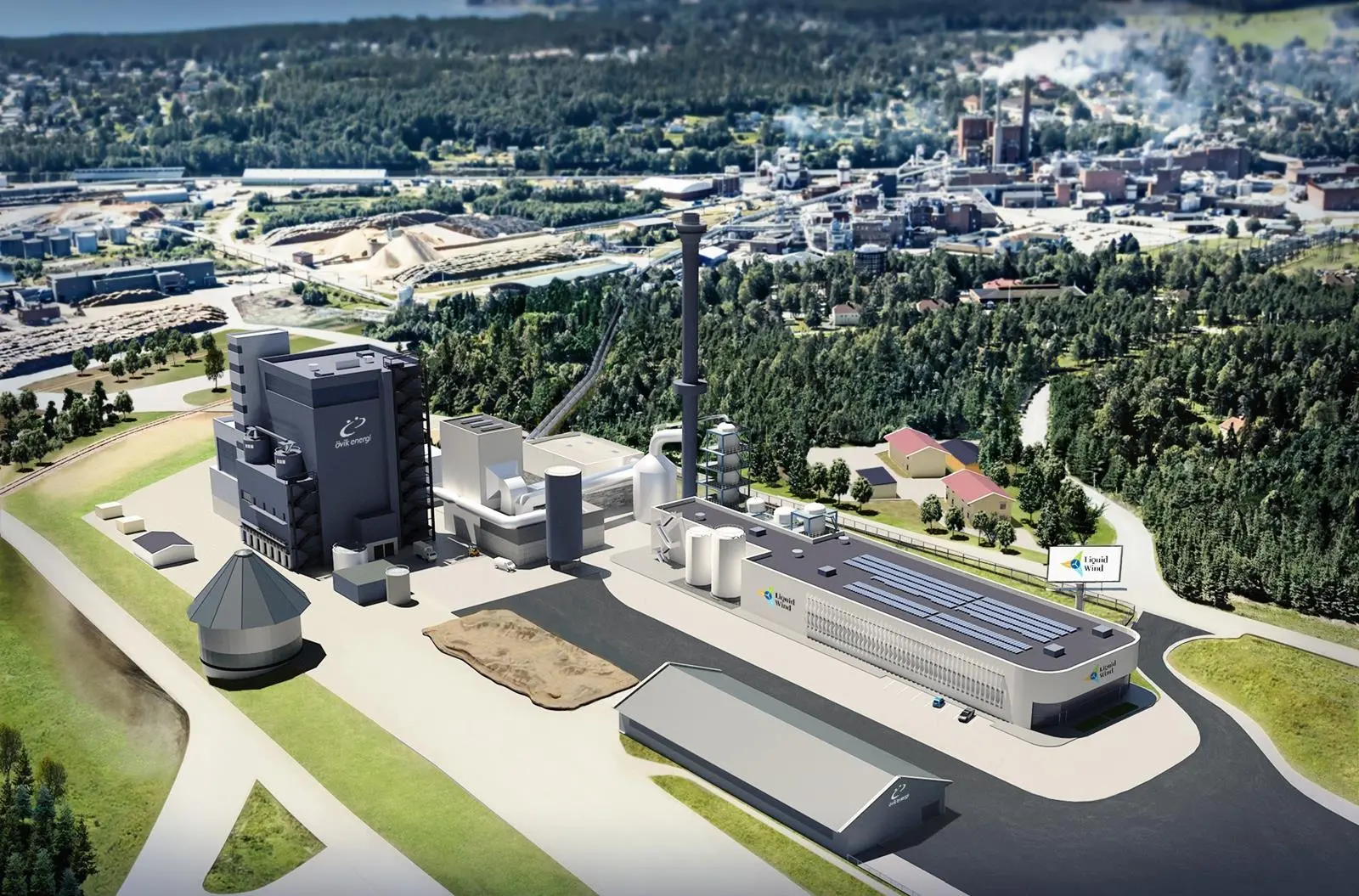
To meet the growing demand for carbon neutral fuel and the need to reduce CO2 emissions, Liquid Wind is developing FlagshipONE, a commercial-scale renewable e-methanol facility which will capture CO2 emissions from a biomass combined heat and power plant.
To quantify the environmental benefit, Liquid Wind performed an internal lifecycle analysis (LCA) to determine the emissions of the e-methanol to be produced at FlagshipONE in Sweden, considering all stages of the e-methanol lifecycle and identifying the GHG reduction potential compared to conventional fuels.
FlagshipONE will have an electrolyser capacity of around 70MW and is expected to produce 50,000 tonnes of e-methanol per year based on renewable hydrogen and biogenic CO2. The electrolysis producing the hydrogen will be powered by onshore wind.
The well-to-gate emissions of FlagshipONE e-methanol (life-cycle emission when leaving the production facility) are relatively small, at around -1.3 kg CO2eq per kg of e-methanol produced. About -1.4 kg of CO2 is from capturing the carbon and is credited as negative emissions.
When the scope is expanded to include the use phase, well-to-wake, the emissions of transport and combustion are considered. The captured CO2 is re-emitted, which results in a net positive climate change potential of about 5 gCO2eq/MJ.
Considering life cycle emissions, fossil-based fuels emit around 85-90 gCO2eq/MJ, which results in a reduction of about 94% when replaced with wind-based e-methanol.
Liquid Wind has used Material Energy Flow Analysis (MEFA) to determine the carbon inventory of its production process. The MEFA has a modular approach, which handles the complexity of the system by carrying out an input-output analysis for each production step, which are investigated individually. All direct and indirect material or energy flows for each module are captured and include the scope 1 and 2 emissions.
Other e-methanol production projects include one in Denmark and one in Southeast Asia.
The results are contained in a white paper produced by Liquid Wind ahead of a webinar to be held on 28 April.
Related Articles
 ALTERNATIVE FUELS & LUBRICANTS
 ALTERNATIVE FUELS & LUBRICANTS
 ALTERNATIVE FUELS & LUBRICANTS