



LNG ships aim to set standard for low emissions
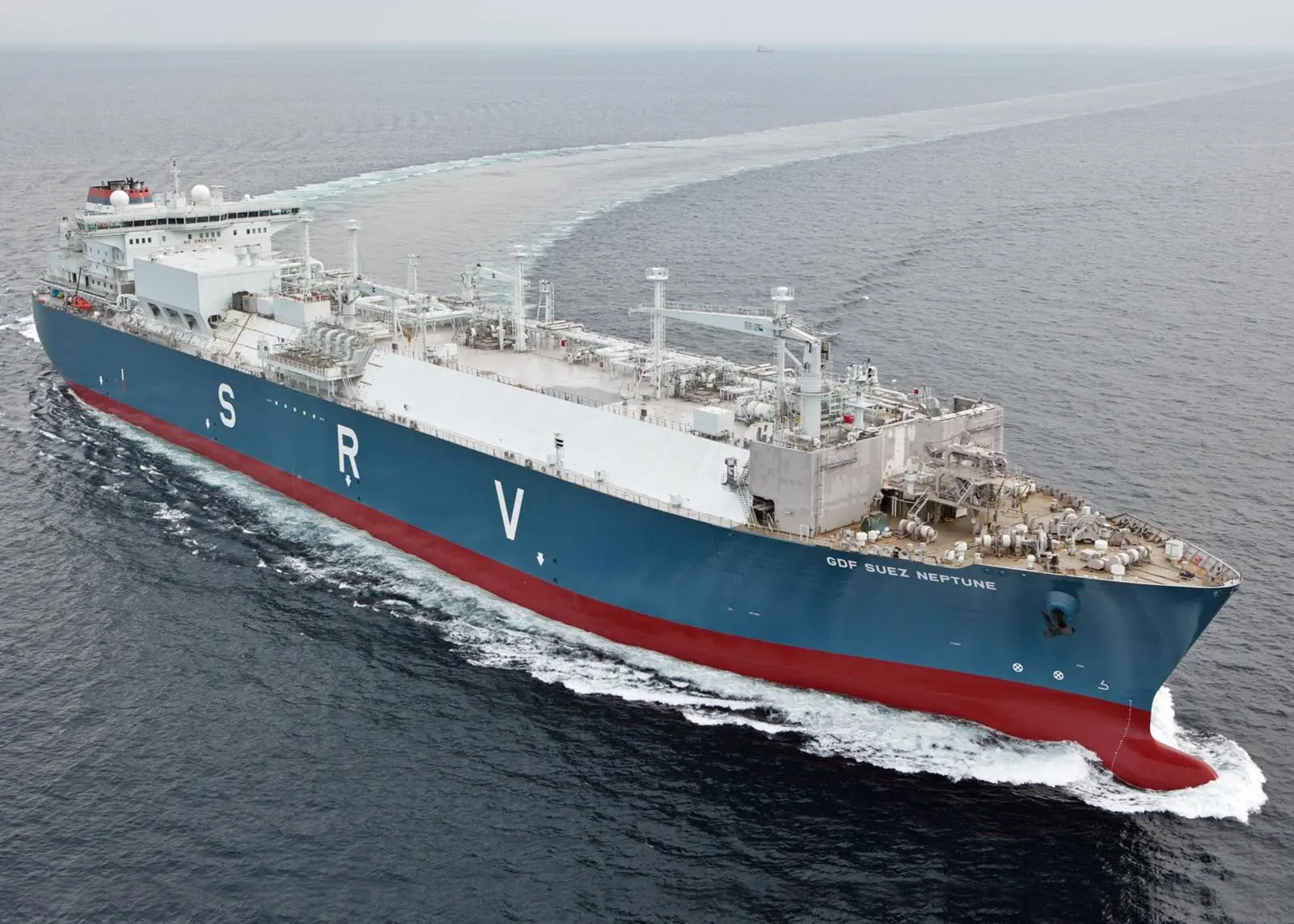
Höegh LNG (together with partner Mitsui OSK Lines), claims to have proven its environmental credentials with two new shuttle and regasification vessels (SRVs) for GDF Suez. The vessels have many technological characteristics that distinguish them from other vessels of their type.
Höegh LNG’s president and CEO, Sveinung Støhle, says that the SRVs GDF Suez Cape Ann and GDF Suez Neptune demonstrate the company’s approach to sustainable shipping. “In our view, it is not enough merely to comply with applicable regulations and the demands of the charterer – we have an obligation to take a more proactive approach to utilise the best available proven technology to improve our environmental and safety performance,” he says.
Höegh LNG has been responsible for the development of the SRV system, an offshore natural gas terminal concept, since 2001. The SRVs are equipped to store, transport and vaporise LNG, and to send out natural gas via the turret buoy which is connected to a subsea pipeline by means of a flexible riser.
Ship of the Year
Proof of the viability of this concept is evident in the latest new builds GDF Suez Cape Ann and GDF Suez Neptune which recently won Lloyd’s List Asia ‘Ship of the Year’ award. This award is established to honour ship owners who make a conscious effort to enforce environmentally friendly operations and safety measures onboard their vessels.
According to Höegh LNG’s COO, Stephan Tschudi-Madsen the SRVs exceed the demands of the charterer and international and local environmental regulations. “The design of these vessels is a representation of the pride we take in our crew safety and environmental performance aboard our vessels,” he says.
The SRVsare 283m length oa, with a beam of 43.4m and a depth to upper deck of 26m. The vessels have a tonnage of 96,153gt each. They were built by Samsung Heavy Industries in Geoje Island, Korea, are jointly owned by Höegh LNG and Mitsui OSK Lines and are managed by Höegh LNG for GDF Suez under 20-year time charter agreements. The vessels will discharge natural gas under high pressure directly into the designated US Environmental Protection Agency- permitted GDF Suez Neptune LNG deep water port, offshore Massachusetts, but can operate world-wide as conventional LNG carriers.
Safeguarding the marine ecosystem
The vessels operate on a closed loop regasification system with an intermediate loop, which complies with US requirements and entails a minimal impact on the environment. Closed loop systems have no intake/discharge of seawater in the regasification process, which means that they do not harm the marine ecosystem by either taking in marine life into the plant or discharging cold water affecting the existing life. Also, this system is claimed to ensure there is zero risk of pollution from potential leaks in the seawater pumps and regasification system reaching the marine habitat.
Both vessels have been classed with DNV’s ‘Clean’ notation and also have the classification society’s ‘Green Passport’, covering all environmental issues throughout the vessels’ lifecycle from construction to recycling.
Dual fuel concept
Another feature of the vessels is the fuel system. The SRVs are both tri-fuel. This concept means that they are capable of being fuelled by MDO, HFO or natural gas. Dual fuel engines when running on natural gas are more environmentally friendly than engines that run on HFO as they virtually eliminate SOxand particulate matter emissions.
Emissions reduction
The regasification boilers onboard the SRVs are gas-fired, with low-NOx burners, and both vessels are equipped with selective catalytic reduction (SCR), keeping NOx below 5ppm. The SCR units fitted on the power generators reduce the NOx emissions of the vessels by 0.2 g/kWh, while the current IMO requirement is around 13 g/kWh. The oxidation catalysts installed on the power generators reduce the CO emissions to below 0.165 g/kWh. By comparison, the current EU requirement for diesel engines (road traffic) is 4 g/kWh.
Höegh LNG has invested in an advanced biocide-free silicone-based anti-fouling system, developed by International Paint, an environmentally friendly coating solution which helps reduce fuel costs and reduces carbon output.
Safety first
Although the LNG industry prides itself on its impressive safety record, safety remains an important concern for any ship owner. One safety feature of the SRVs is the closed loop system with an intermediate water/glycol loop, which prevents the risk of freezing in the heat exchangers and reduces the likelihood of natural gas leakage into the steam system/vessel’s systems.
Building the vessels to meet DNV’s Comfort class contributes to improved conditions for work and rest, thereby reducing the risk of fatigue-related accidents impacting the environment. The DP Class I contributes to enhanced operational safety when the SRVs on are the buoy, reducing the likelihood of accidents impacting the environment.
Strengthened tanks
LNG vessels are typically classified by their cargo containment designs and Höegh LNG has chosen what it describes as the “strongest membrane tanks ever built” – a reinforced GTT MkIII containment tank design with a capacity of 145,000m3.
The GDF Suez Cape Ann and GDF Suez Neptune are fitted with Hamworthy regasification skids for a total maximum output capacity of about 21 million standard m3 of natural gas per day. The vessels are also capable of operating as standard LNG carriers.
Smooth operations
Both of the vessels underwent an extensive re-gas commissioning at Neptune deep water port and the results were said to be positive. Vice president and head of fleet management at Höegh LNG, Pål Gunnulfsen, says: “The approach and connection to the buoy is a sophisticated operation, but thanks to extensive advanced training, the experience of our onboard personnel and strong technical back-up during the operation, it all went very well. Commissioning of the re-gas plant has been completed for both vessels and we have successfully discharged natural gas directly from the vessel into the gas grid in Massachusetts through the deepwater buoy.”
Gunnulfsen added: “Contractors being present during commissioning have stated that these commissioning operations have been among the most effective and successful that they have experienced.”
Beyond compliance
These high-technology vessels are believed to demonstrate what can be achieved in the LNG transportation market to reduce emissions and protect the environment while retaining optimum operability and efficiency. Støhle says that the company will continue to take a pro-active approach to environmental challenges as it develops specialised tonnage to serve more areas of the LNG supply chain.
“As our organisation continues to grow, we will continue to build on our culture which values responsible operations, and invest in the systems and training to support our crewmembers’ efforts to minimise our environmental footprint and ensure safe operations,” says Støhle. “This will not only help strengthen our competitive position in a highly regulated industry, but allow us to take pride in the fact that we operate one of the cleanest, safest fleets in the LNG industry.”
Related Articles
 ALTERNATIVE FUELS & LUBRICANTS
 FUELS & LUBRICANTS