



Localisation requirements for UK offshore wind could help rebuild local supply chains
Toby Mumford of Wight Shipyard Co has little patience for special pleading or for complaints about challenging market conditions.
The shipyard itself reflects the character of its leadership team, with a dynamic self-starting character, far removed from traditional stereotypes of slow-moving commercial British shipbuilders.
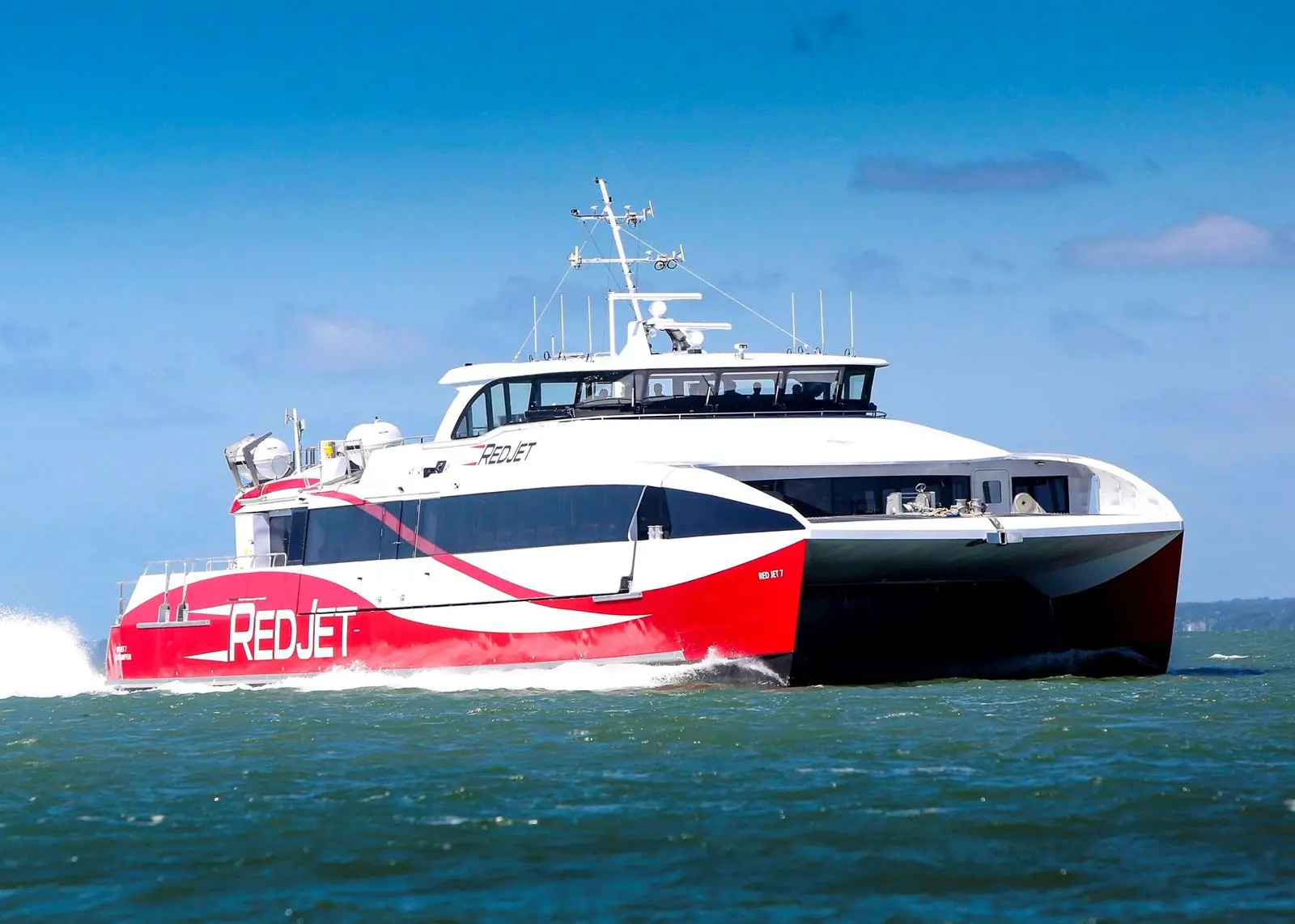
Since the yard opened in 2016, it has specialised in the smaller high-speed passenger ferry and crew transfer vessel (CTV) markets, successfully competing for tenders in the UK and overseas.
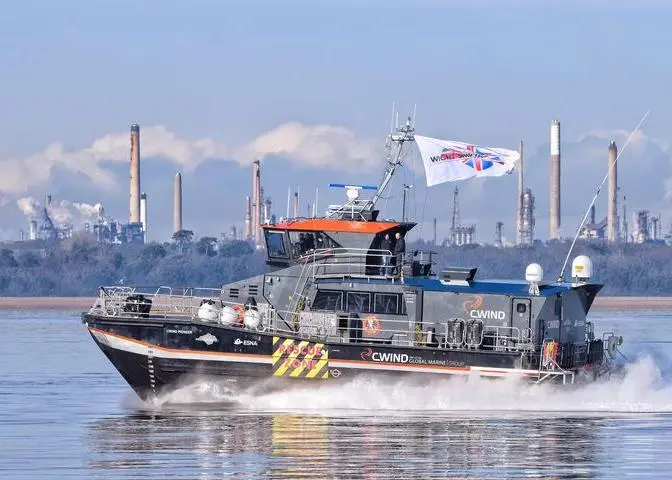
The yard has rapidly developed technological expertise in a number of fields. Mumford is particularly proud of the yard’s most recent build, the world’s first Hybrid SES CTV (Surface Effect Ship, Crew Transfer Vessel), which travels 50% faster than a traditional CTV, while using hovercraft technology to reduce fuel consumption by 33%. “Global Marine and CWind have shown real foresight in the build of this vessel which is leaps and bounds more efficient than its competitors,” Mumford said.
The vessel is perfectly suited to the requirements of the offshore wind industry and oil and gas sector. The former represents a particular opportunity for the UK shipbuilding sector, Mumford noted. The UK is expected to attract investment of around £50bn into the offshore wind sector in the North Sea over the coming decade, which will see output rise to close to 40GW.
The government has already recognised the potential benefits of developing local supply chains in the northeast of England, introducing localisation requirements for components used in offshore wind farms, such as blades.
Mumford noted that the expansion of the offshore wind sector will create significant demand for vessels, and wondered aloud why the government wouldn’t introduce limited requirements for localisation for the vessels serving the sector, citing Norway’s experience with similar requirements for its oil and gas sector.
“I’m not calling for a Jones Act, and there are capacity constraints for larger wind turbine installation vessels, but I think that specifying minimum UK content in vessels serving UK wind farms would be a very good starting point.”
Mumford offered a combative response to outdated perceptions about the competitiveness of UK shipbuilders.
“We can only speak for ourselves, but we are winning contracts in a highly competitive international market. In 2019 we went head to head with one of the words largest shipbuilders for a contract for four vessels for Malta, which we won through fuel efficient designs. We are about as far away as you can get from a 1960s era British large scale shipyard struggling with managed decline.”
Indeed, as a relative newcomer into the UK shipbuilding market, Wight Shipyard Co has brought with it the discipline of commercial best practice from other industries. “Cost control and accurate scheduling are simply ‘par for the course’,” Mumford said. “Our COO Joanna Daly comes from an aerospace background so has brought best practice across to shipbuilding sector, which is, as far as I am aware, a first in our industry.”
The longer-term advantages of building up local supply chains would outweigh any short-term boost to the Treasury although HMRC returns around 36% of the purchase cost to the treasury via tax takes. “These factors aren’t taken into account when they weigh up whether vessels should be built in the UK or abroad,” Mumford noted, adding “this lack of joined up thinking is killing the industry.”
Instead of favouring domestic yards, Mumford notes that UK-based ship operators are in the curious situation of being disadvantaged in accessing trade finance rates. “The current government finance offering for newbuild vessels is run by UK Export Finance. As such there is currently no equivalent for UK companies looking for government finance.
“This puts us in the bizarre position of giving better financial support to companies operating vessels from outside the UK to those based in the UK. For example, if a Dutch company wanted to operate CTVs in the North Sea, they could access UKEF and get the good finance rates while a UK company wouldn’t be able to so would have to pay more for their finance.”
As exports account for the majority of Wight Shipyard Co’s orders, Mumford offered warm words for the UKEF’s activity for export countries, although he noted European competitors offer faster completion times compared with UKEF deals.
Mumford noted that while trade finance rules have a significant impact on individual projects, the market as a whole is undergoing significant changes. Just to pick one recently announced change, the EU recently unveiled plans to introduce onshore power supply (OPS) across all the bloc’s core TEN-T ports by the end of 2025, while the UK is currently consulting around introducing similar requirements. This will alter the technological requirements of the passenger ferry market.
However, the requirements don not seem to take into account differences between urban mass transit vessels or short-range ferries and vessels plying longer routes. “The technology just isn’t there for longer range fully-electric voyages. This sounds obvious but isn’t always looked at.”
In addition to the technological barriers, Mumford noted that the were economic and infrastructure issues around the introduction of electrification into passenger ferries.
One of the specific issues was overcoming the higher Capex cost of electric vessels, which has been recognised by a number of OEMs as a barrier to adoption. Turning his attention from the international to the UK domestic market, Mumford noted lags well behind market leaders such as Norway in offering subsidies to encourage the building of electric vessels.
“While government tenders coming out may make the right noises about wanting hybrid, most of them don’t have sufficient funding to allow hybrid to become a reality. The Government needs to lead by example and put the extra funding forward rather than wait for the private sector to make the changes first.
Turning back to the wider market, Mumford noted that the availability of high power shore connections was also a prerequisite for hybrid projects.
“We are now looking at a number of other hybrid projects. Interestingly, high powered shore power availability is a requirement to make these really efficient.” The UK is expected to announce its own guidance on the provision of high power shore connections in 2022, The Motorship notes.
Mumford noted that there were a range of other solutions that could contribute towards greenhouse gas reductions, including alternative fuels, while aluminium hulls also offered specific advantages in terms of reduced fuel consumption.
“We are involved in a number of studies looking at both electric propulsion and hydrogen propulsion. While Hydrogen looks brilliant from a technical perspective, it is currently prohibitively expensive for a commercial operation.”
Wight Shipyard Co as a yard will continue to build to its clients’ requirements. “Our intention is to keep leading the way building the lightest vessels we can with the most efficient hull lines. This means, regardless of which direction the market takes in terms of propulsion, our vessels will remain at the forefront.”
Related Articles
 ALTERNATIVE FUELS & LUBRICANTS
 ALTERNATIVE FUELS & LUBRICANTS
 OPINION