



Making the most of experience: Henrik Uth
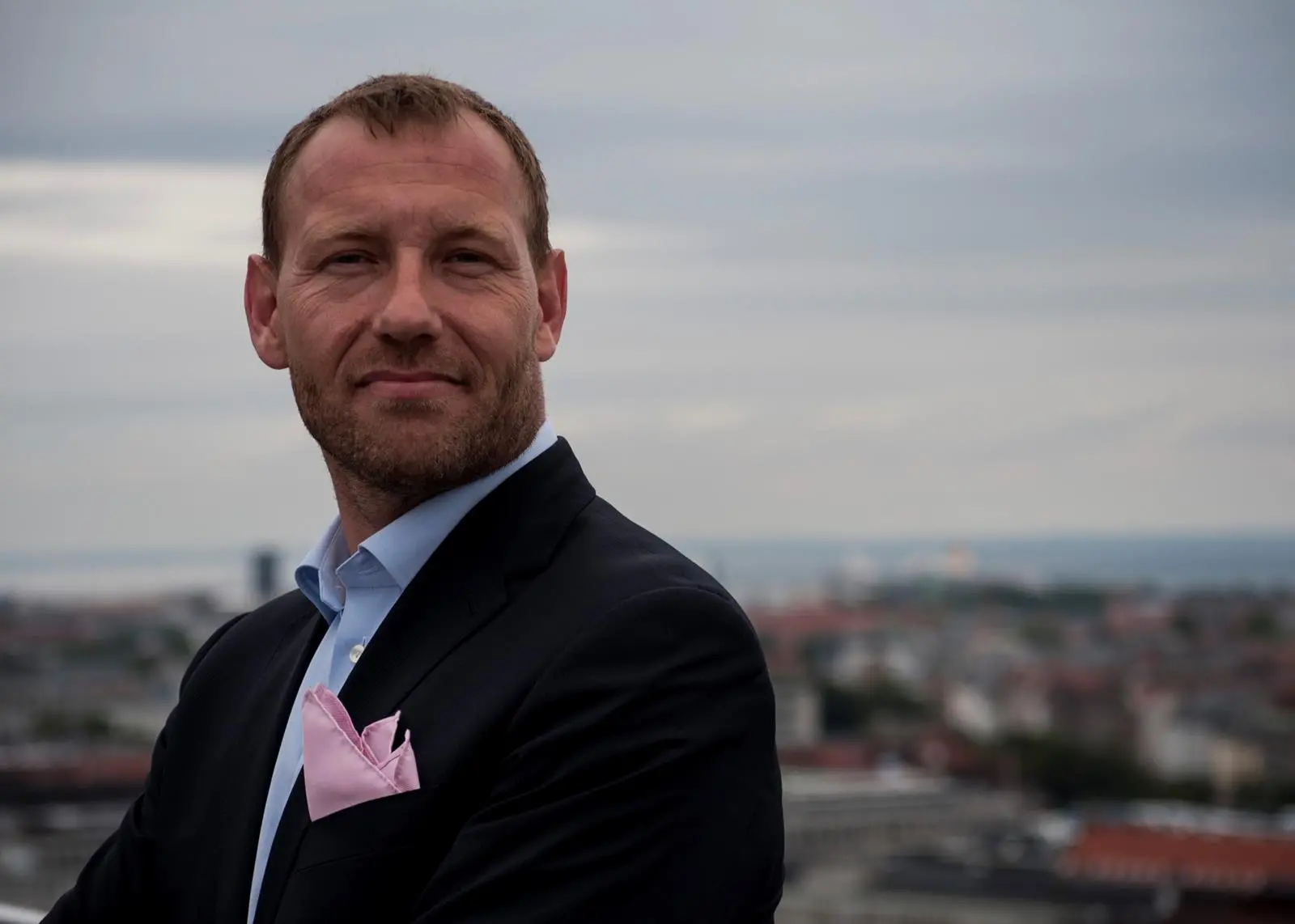
He points out that the fundamental attitude of a captain “who is first and last responsible for his ship” adds drive to the landside team. On the other hand it also needs shaping to the realities of management: “I came ashore in 2001 and Maersk’s training programme, aimed at getting experienced seafarers involved in the office at managerial levels, was a real eye opener,” he says.
It was needed. Far from a cosy desk job, his role as Maersk’s global liner security officer couldn’t have come at a more demanding time as it fell into the wake of the US 9/11 attack and so Captain Uth was soon swept up, lobbying in Brussels, Washington and Denmark to find a workable solution to the security challenge. He admits he knew it was never going to be easy as “you can’t make everything like Fort Knox, then you’d have no clients”. But getting to a negotiated, balanced outcome grew his awareness of another drive: “Feeling that I made a genuine difference, all round the world, had a big impact on me.”
Likewise, his next role as Eastern Mediterranean Area operations manager for Maersk Line in the early 2000s also made a deep impression. The region crosses cultural and national boundaries, and while Capt Uth was busy starting up and developing liner operations in a dozen different countries the arena entered into one of its periodic fits of turmoil: “We had lot of varied nationalities and backgrounds, Europeans, Israelis, Egyptians and so on. But it was truly fantastic to watch people transcend their personal and even religious agendas, right in the middle of political crisis and military action.”
Following this was a “rewarding” period in Hong Kong in addressing the challenge of helping seafarers in mainland China gain competence. But Henrik Uth had been slowly chewing over that initial understanding that seafarers are more than a commodity to be moved between ships.
“Back in the really old days of the industry the captain was fully accountable for the vessel, reporting directly to the ship owner,” he says. “However, over the years this role has been eroded and the captain has become in many instances barely more than an administrator.” The search for a way to re-empower the crew resulted in a novel idea: taking the phrase ‘buy in’ literally, Mr Uth spearheaded a new company that made special classes of shares available only to personnel. “Giving more authority goes hand-in-hand with accountability and this gives you a better ship,” says Mr Uth.
Following an interlude with Nakilat-SvitzerWijsmuller in Qatar, Mr Uth settled down with the Survey Association, where his insight is proving, once again, extraordinarily valuable in the arena of loss prevention, something he says he much prefers to ‘investigation’ as it attempts to stave off potential accidents rather than mop up later.
“We have to get smarter about how we learn,” he says, “There are still far too many big incidents, and we need to do more than react afterward.” Further, he’s aware of a common, knee jerk reaction that comes down to “fire the captain and the problem is solved”. He points out: “Instead of just blaming the crew you need to peel the layers off and be aware that they may have been under pressure from shore to operate in a particular way,” he says.
Given this, he has a practical alarm to sound. While there’s always pressure to push the operational envelope in the face of tightening margins, there’s a lurking danger in every win: “For example, if you successfully lengthen the maintenance round and then go on without re-establishing the original sequence, it can too easily become the new norm with the effect of eroding the planned safety factor,” he explains.
This ‘normalisation’ of deviance is an issue: “Owners and crew alike have to realise there are the right places to compromise and the wrong ones… Exception management is a necessity, and this involves letting everyone know that it is actually an exception. Not the rule.”
Lastly, he says vessel management has to evolve along with harsher, deeper waters, and owners are increasingly seeing the value of independent advice that takes in the ship as a whole, not just a series of parts.
But of course, once again the crew are at the heart of the dynamic interaction: “Procedures and people as well as machinery are under stress from industry shifts these days,” he says, making the point that harsh environments and turbulent economies both have an impact on shipboard – and landside – survival.
Related Articles
 ALTERNATIVE FUELS & LUBRICANTS
 ALTERNATIVE FUELS & LUBRICANTS
 OPINION