



MAN ES advances its onboard CCS strategy through EverLoNG project
Simply put, decarbonising shipping can happen through fuel choice, exhaust management and efficiency gains, says Johannes Lauterbach, head of business development and digitalisation for MAN’s four-stroke marine division. MAN is ensuring that it is a central player in all three.
“All three levers face challenges in terms of technology readiness. In addition, nobody really knows how the fuel prices will develop. There’s still some uncertainty, even if it’s less than it was five years ago, and we believe that it is good to be involved in every development and support all the pathways necessary for decarbonisation,” says Lauterbach.
CCS technology has already been proven effective in various industries, and the increasing number of CCS projects around the world indicates its growing popularity and feasibility as a solution for reducing emissions. MAN believes that CCS technology could become a pathway to reducing shipping’s carbon footprint, although the technology is still at an exploratory stage.
Lauterbach started fielding inquiries about CCS several years ago, and they are starting to intensify now in the wake of greater certainty about EU and IMO regulatory ambitions. “One of the challenges we see relates to the price of the equipment, and CCS is definitely not going to be suitable for every vessel. There needs to be storage space for CO2 somewhere, and for every tonne of fuel, there is roughly three tonnes of CO2 that needs to be put somewhere. That will, of course, have some impact on the viability of the system, aside from the equipment cost itself.” Reactor height can also be an issue for smaller vessels.
LNG-powered vessels are attractive targets as they have a cooling source readily available for liquifying the captured CO2 ready for storage. Vessels powered by 4-stroke engines also potentially have a capture efficiency advantage due to the higher exhaust gas temperature compared to 2-strokes. However, 2-stroke engines can be tuned slightly differently or heat can be made available from other sources if required, so Lauterbach does not see this as a significant challenge.
Marinising the equipment and ensuring it meets class requirements is a challenge for the industry, Lauterbach says. So is scaling the systems. “For stationary applications, like refineries and cement plants, the capture rate is extremely high. Basically, the smallest units they have would be the largest needed on the largest of ships.”
Despite the challenges, as one of the main pillars of decarbonisation, CCS also has great potential both in the newbuilding and retrofit market, particularly for cargo, special ships, LNG carriers and perhaps cruise ships and ferries.
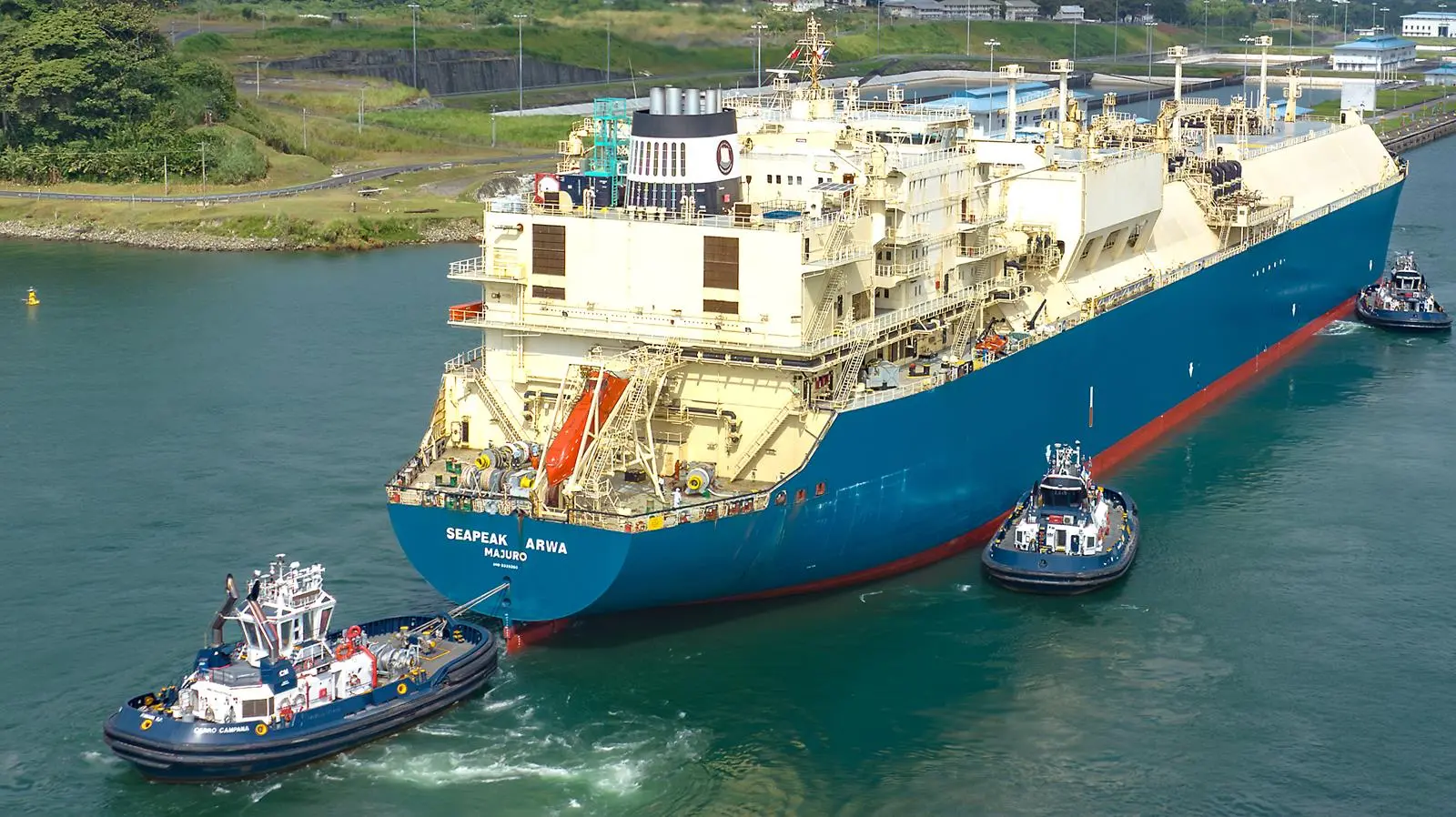
One of the specific aims of EverLoNG is to take MEA amine-based absorption technology produced by Netherlands-based Carbotreat from TRL 4 to TRL 7. A pilot demonstration has already been carried out on board the 2008-built, 165,500m3 LNG carrier Seapeak Arwa on charter to TotalEnergies.
The carbon capture system was initially installed in September 2023, and a 1,000 hour demonstration of the plant concluded successfully in February 2024. The initial results indicate that carbon capture rates of at least up to 85% are achievable.
The trial included capture, liquefaction and onboard storage, a milestone for the project and the industry. EverLoNG project coordinator, Marco Linders, senior research scientist at TNO, says a current focus for understanding the results from Seapeak Arwa is the performance of the carbon capture solvent, as it too, like the captured CO2, will have a logistics component related to offloading and replacement when required. Operational results will be made public later in the year. For now, he shares that vessel movement has not been a problem for carbon capture operation – in fact, in lab testing where vessel movement was simulated, it improved CO2 stripping rate by increasing contact between the solvent and the exhaust gas.
With the involvement of consortium members from class, the project partners believe that the risks associated with onboard CCS installations are credible but well understood, with well-established safeguards and design principles available from other parts of the marine industry, like LNG fuelled vessels.
Now the carbon capture unit has been transferred to the semi-sub crane vessel Sleipnir operated by Heerema Marine Contractors. This second round of testing will include around 500 hours of operation, a detailed evaluation of the cold recovery system used to liquify the CO2, and an expansion of the logistics scope of offloading and transporting the CO2 captured and stored in a container.
Sleipnir has 12 MAN 8MW dual-fuel LNG 8L51/60DF 4-stroke engines divided into four engine rooms. The pilot CCS installation raised questions as to whether all the exhausts could be combined, and for the trial it was agreed that only the exhaust from one engine would be used for input into the carbon capture unit. An analysis for a full-scale system, however, found that it was technically feasible to combine the exhaust gas streams from all four engine rooms into one carbon capture system.
The carbon capture unit will be set to operate, as it did for Seapeak Arwa, in a large range of engine loads. “We will be checking how we can further optimise, for example, NOx emissions,” says Lauterbach, as they can affect solvent performance. He considers that many shipowners are likely to install SCR systems to control NOx levels in the exhaust, even if it is not required for other reasons.
The CO2 liquefaction system will also be a major focus in the Sleipnir trial. Mass and heat balance calculations have been conducted to analyse Sleipnir’s operational profile, considering different parameters that include engine power, CO2 condensation pressure, LNG tank saturation pressure, the number of boil-off gas compressors running, and the use of two different water mixtures in the recovery system with distinct freezing points. The primary objective of these calculations was to determine the maximum mass flow rate of gaseous CO2 that could be completely liquefied using the available cooling power from LNG vaporization and superheating.
On paper, at engine loads ranging from 5% to 100% of rated capacity (96MW), around 70% of total CO2 coming from the engine exhaust gases could be liquefied by the recovery system. However, at lower engine loads this capacity decreases substantially, especially when the boil-off compressors are running simultaneously. This will be put to the test once Sleipnir is operational in the North Sea.
Linders says that the reality of seeing CO2 captured on the LNG carrier has been a triumph for the project so far. Lauterbach agrees. “You actually see some steel and not just on paper. I think what is also becoming clear is that we can’t just take an engine from somewhere, a propeller and a CCS system and push them together to work. It’s important to think about what the goals are and how the overall system fits into that purpose. It’s not a standard one size fits all solution. You need to adapt the plant to the operational conditions you expect. Taking a systematic approach has been important in the past, and it is again relevant in this context.”
The EverLoNG project is funded through the ACT programme (Accelerating CCS Technologies, Horizon2020 Project No. 691712). The EverLoNG consortium partners are TNO, TotalEnergies, Heerema, Carbotreat, Conoship International, VDL Carbon Capture, Scottish Carbon Capture and Storage, Anthony Veder, SINTEF, AKP, Bureau Veritas, Lloyd’s Register, Los Alamos National Laboratory, Forschungszentrum Jülich, DNV, Nexant, and MAN Energy Solutions.
| • | Develop strategies for reducing shipping’s CO2 emissions by at least 70% |
|---|---|
| • | Demonstrate effectiveness of onboard carbon capture on LNG-fuelled ships, |
| • | Evaluate impact of onboard carbon capture on ship infrastructure, |
| • | Demonstrate emission reduction potential of onboard carbon capture |
| • | Improve cost-effectiveness of onboard carbon capture |
| • | Evaluate cost of offloading, transport, utilisation and/or storage in different CCUS chains |
| • | Develop offloading strategies that guide onboard post-treatment of CO2 and port infrastructure requirements |
| • | Establish a CO2 Shipping Interoperability Industry Group |
Related Articles
 CARBON CAPTURE
 CARBON CAPTURE
 ALTERNATIVE FUELS & LUBRICANTS