



MAN ES completes first 4-stroke miscibility test
The world’s first miscibility test for two different lubricating oils for use on a 4-stroke engine was recently successfully concluded, Dr Holger Gehring exclusively told The Motorship on 8 February.
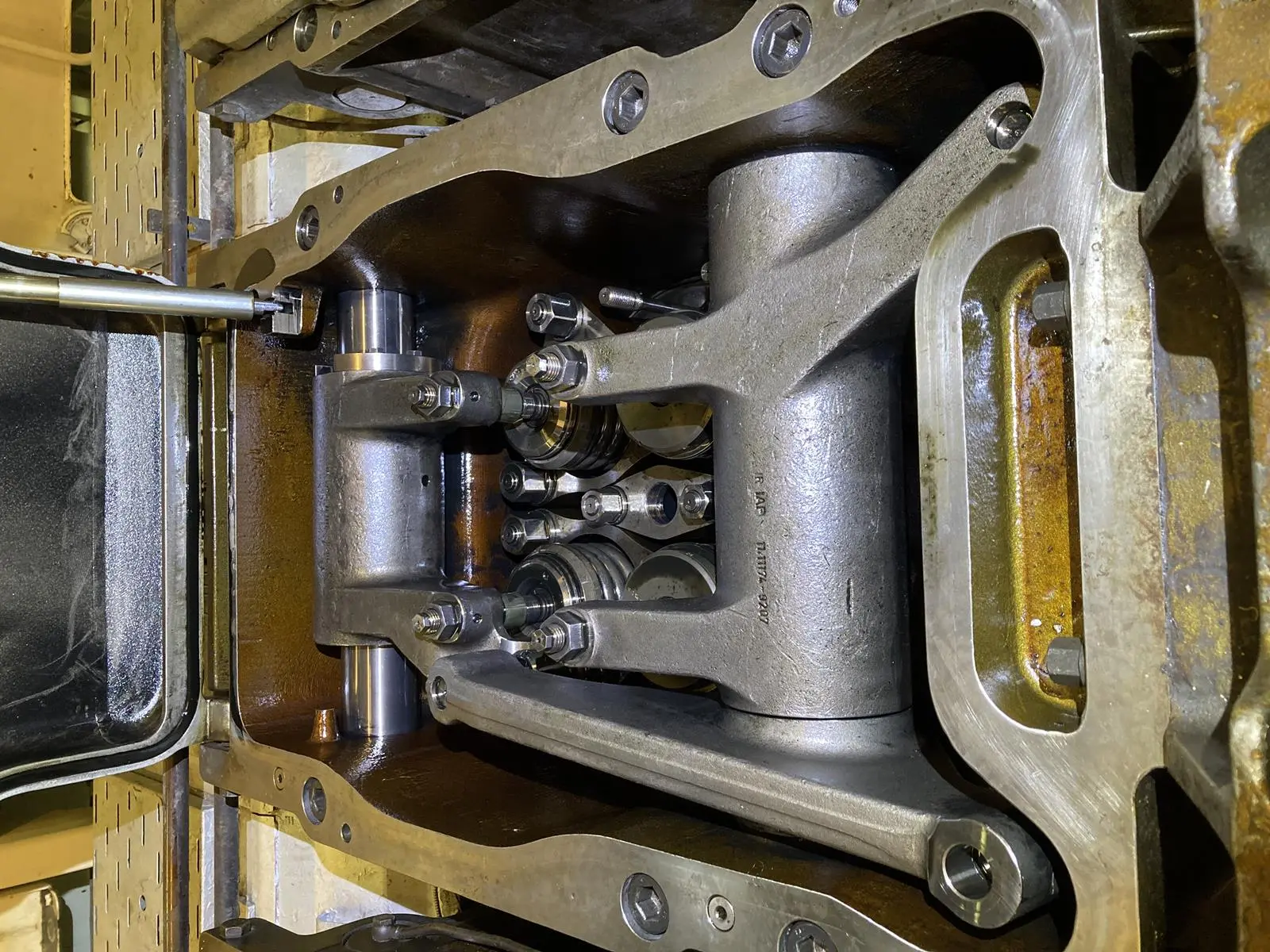
The Lube Oil Field Test (LOFT) was conducted upon a MAN 48/60 engine installed on a vessel operating worldwide, using two different lubricating oils supplied by Castrol.
The miscibility test, which was conducted using two different Castrol lubricating oils, was the first to demonstrate that lubricating oils from different API Classification groups (Group I and Group II in this case) can be used together successfully. The new oil formulation from Castrol will have the flexibility to be blended from either Gp I or Gp II base oils using the identical additive package.
A number of other field tests are underway with lubricating oil supplied by other lube oil suppliers, Gehring noted. He added that some suppliers were seeking to conduct the field tests for the Gp I and Gp II oils on separate vessels concurrently, before conducting the miscibility test on the first engine in order to shorten the duration of the LOFT test cycle by up to 10 months.
Altering Lube Oil World
Dr Gehring discussed structural changes in the world of lubricant oil production during the interview. Alterations in base oil production at refineries in response to structural shifts in the automobile and light passenger vehicle segments were likely to lead to changes in the base oils being offered to the maritime market. There is a risk that the availability of Gp I base oils may become highly constrained in some regional markets.
As a result, lubricant producers are seeking the flexibility to market lubricant oils under the same brand name with different base oil formulations in different regions. From MAN ES’s perspective, Dr Gehring noted that the performance of each oil, as well as their potential miscibility (if oils from different Groups are marketed under the same brand name in different regions) must be validated.
Dr Gehring added that alterations were also occurring in the additive market, where some additive suppliers were seeking to alter or withdraw additives from the market in response to the introduction of new technologies, as well as the impact of regional legislative requirements, such as the EU’s REACH regulations.
Alternative fuel implications
In addition to upstream changes to base oil supply, Dr Gehring noted that the introduction of dual-fuel engine technology into the four-stroke market was also leading to a significant increase in demand for performance tests.
The steady increase in the number of vessels operating on distillate oil or LNG was leading to an increase in demand for low BN lubricating oils. Meanwhile, the introduction of alternative fuels, such as methanol, into the four-stroke fuel mix, would also require intensive testing to ensure that performance could be validated.
Miscibility test

The field test was conducted after lab-based analysis of the base oil and the finished lube oil were concluded at MAN PrimeServ’s in-house chemical laboratory, PrimeServLab.
During the field test, the first Gp I lube oil was tested for 6,000 running hours, during which period MAN engineers made three inspections.
The two lube oils were subsequently tested together for 2,000 running hours, during which period engineers paid three inspections. As the second Gp II lube oil was progressively added during the test, the test also demonstrated the miscibility of the lubes across the full range of blending ratios.
After the successful conclusion of the test of the Gp I based formulation, the oil sump was topped up with the Gp II-based formulation. One inspection was paid after 1,000 running hours operating on mixed oil, and a second inspection was made after 2,000 running hours.
The field test will conclude with a final test of the Gp II lube oil for 4,500 running hours, with a further three inspections. Including the preceding 2,000 running hour miscibility test, the Gp II lube oil was subjected to tests over 6,500 running hours.
Outcome of test
The result of the test was good engine cleanliness and no compatibility issues were reported. The oil performed fully even after mixing the two formulations.
“We have for the first time proved that it’s possible to mix lubricants with the same additive package based on two different base oil groups group one and group two,” Dr Gehring added, noting that “this opens the door for all providers to blend lubricants with a broader base of base oils.”
Importantly, this will ensure future availability of marine lubricants for our engines, even if there is a further transition from Gp I to Gp II lubricants, Dr Gehring concluded.
Related Articles
 2-STROKE & 4-STROKE
 2-STROKE & 4-STROKE
 2-STROKE & 4-STROKE