



Marine lubricants’ transition from commodity to speciality
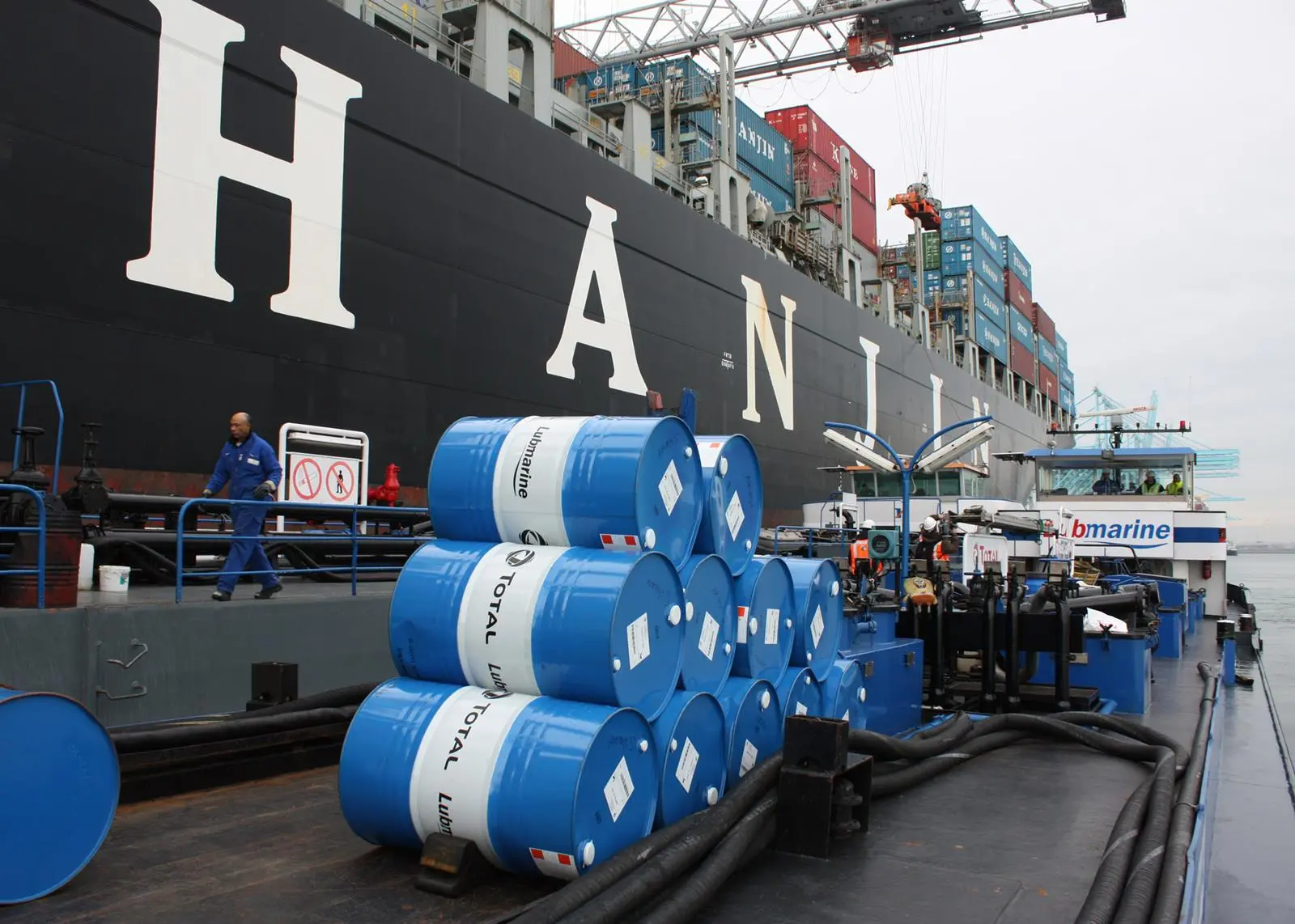
The challenging economic climate, new engine designs, alternative fuels such as LNG and sulphur capping regulations are all driving change within the shipping industry and impacting operations, including the application of marine lubricants.
Historically, the risks associated with lubricant selection were simple to manage for ship owners and operators, who were required only to choose between either a high or low BN product. In 2007 Total Lubmarine launched Talusia Universal, the first single-oil solution to incorporate new chemistry that enabled the cylinder oil to be used when transitioning between low and high sulphur fuels. Since then Talusia Universal has demonstrated reliability on many vessels, under various running conditions, using a range of sulphur content fuels, accumulating over 60 million running hours. The majority of Total’s two-stroke customers are using Talusia Universal, while and two-stroke engine manufacturers continue to recommend its use in engines where it is already in use with good results.
NEW TECHNICAL CHALLENGES
However additional factors such as new engine design, engine layout and low load operations now need to be taken into consideration when selecting the right lubricant and this makes the selection process more complex. Although cost and engine performance have always been important considerations, lubricants were previously considered a commodity item. Now lubricants are increasingly offering a specialised solution to vital issues such as the severely costly issue of cold corrosion in new engine designs and some modified engines. OEM’s confirm this view, stating in a recent communication to major oil providers that cylinder oils and combined close engine monitoring are of “uttermost importance” in influencing operating costs, cylinder condition and overall condition of engines. Indeed, in addition to cold corrosion, customers tell us they are facing increasing issues with substandard fuel quality impacting on engine operation, and this makes the challenge of providing effective lubrication greater than ever. Amid this challenge, the right lubricant ensures optimal protection, cleanliness and performance. It also assures thorough neutralisation of acidic formations.
COMBATING COLD CORROSION
Such is the significance of the cold corrosion challenge, major oil providers are working to bring new products to market specifically to overcome the issue. Total Lubmarine launched its cold corrosion solution, Talusia Universal 100 (TU100), in December 2013. The product is already available in all major ports. Furthermore, OEMs recently recommended TU100 as a specific product to counter cold corrosion and confirmed the lubricant’s compliance with all major OEM requirements. TU100 is a sister product to Talusia Universal and part of the family of Talusia products. The chemistry of the Talusia range was pioneered by Total Lubmarine, which introduced the importance of neutralisation efficiency, over and above BN, which we maintain is a physico-chemical characteristic that cannot be used in isolation to judge the neutralisation performance of a cylinder lubricant. It is now understood that it is speed and effectiveness of the neutralisation reaction that counts; i.e. the oil’s ability to fight acids rapidly and prevent wear, irrespective of simply BN.
MARKET-BASED CHALLENGES
Aside from cold corrosion, ship owners and operators have to overcome market-based challenges such as the IMO’s 0.1% ECA sulphur limit, set to be enforced from 2015.
For the marine lubricants market, such environmental legislation highlights the criticality of developing new cylinder oils for new circumstances. We believe in using the latest chemistry to create a new generation of lubricants with flexibility in use and compatibility with a range of fuels including distillates and LNG. It is important to bear in mind that the maritime industry’s energy efficiency policies also apply to medium sized vessels such as cruise ships, ferries and ro-ros, operating with four-stroke engines. To support greater fuel efficiency on these vessels, Total Lubmarine is working to implement its knowledge of fuel eco-lubricants – gained from many years’ work in the vehicle and civil engineering industries. The range of four-stroke engine oils includes the Aurelia and Disola products, plus Aurelia LNG, specifically for four stroke engines running on pure LNG.
CEMENTING RELATIONSHIPS
Going from a market environment where the lubricant selection process involved one decision between low and high BN, to a scenario where multiple technical challenges and market-based legislation must be considered, has caused a wave of uncertainty in the sector. Price and engine performance retains an important role when choosing a lubricant, but it is no longer possible to commoditise products when so many complex avenues, unique to each ship owner and operator, must be explored before the right lubricant is selected. Such circumstances mean providers must build strong relationships with customers to ensure requirements can be understood in detail. Total Lubmarine offers technical support in more than 50 locations globally, and keeps abreast of sustainability trends, new engine design features and legislation. Trusted technical advisers will be increasingly relied upon to help navigate ship owners and operators through unprecedented uncertainty and complexity to arrive at an informed decision on lubrication solutions. Historical performance of previous products, logistical capability, operating knowledge and technical support are more important than ever.
Related Articles
 ALTERNATIVE FUELS & LUBRICANTS
 FUELS & LUBRICANTS