



Maritime CCS should play a crucial role in curbing shipping’s CO2 emissions
In the pitched battle to decarbonise, there are few truly ‘quick win’ solutions. Alternative fuels will take years to be deployed at a scale and available worldwide. Clean technologies can chip away at the problem of vessel emissions in 10% chunks and require new vessel designs or extensive retrofit work. And measures like voyage optimisation identify efficiencies that, while critical, will not enable us to meet the IMO’s targets on their own.
Make no mistake: all of these solutions will be required. It is not possible to decarbonise shipping if we don’t optimise voyages, make ships more efficient, and move where we can away from the fossil fuel default. Add carbon capture & storage (CCS) to this list – which will be commercially available next year – and suddenly shipping industry has a compelling mix of technologies to choose from as it works to meet its environmental targets.
CCS is significant because of the level of impact that it can enable in such a short timeframe. Once vessels hit the water with the technology over the next few years, the highest performing systems will be able to capture up to 70% of their carbon emissions before they enter the atmosphere. Add alternative fuels, clean technologies and voyage optimisation back to this mix, and the prospect of net zero shipping doesn’t seem so farfetched.
Making CCS a reality has not been easy. And many have missed the critical role that SOx scrubbers will end up playing as we work to cut shipping’s CO2 emissions. The exciting reality is that scrubbers currently installed in the global fleet can be adapted for onboard CCS in the near future.
The transition from addressing sulphur to carbon didn’t happen overnight. Over the past few years, scrubber capabilities have undergone successive upgrades to combat various pollutants in vessel emissions and throughout the propulsion chain. Selective catalytic reduction systems (SCR) and exhaust gas recirculation systems (EGR) have been employed to tackle NOx emissions, meeting MARPOL Tier III requirements. Moreover, these scrubbers can filter particulate matter and black carbon even beyond standard land-based regulations, and they are capable of removing microplastics from scrubber washwater through advanced filtering systems.
For CCS to operate within ship exhaust systems, non-CO2 pollutants must be removed first. The engineering challenge lies in strategically addressing pollutants at the right points in the exhaust, ensuring efficient pre-treatment for CO2 capture. This ensures that once other gases are removed, the remaining exhaust can be scrubbed for carbon, which can be safely stored onboard and disposed of at port.
Wärtsilä’s CCS system operates at the forefront of emission reduction technologies, capturing carbon emissions from ship exhausts to prevent their release into the atmosphere. Designed for efficiency and sustainability, the system addresses the pressing need to reduce greenhouse gas emissions well before 2030.
To ensure compliance with environmental regulations and future-proof vessels, Wärtsilä is already providing ship owners with CCS-ready scrubbers; so-called because of the extra engineering work undertaken to adapt to CCS installation in future. If all ships with a Wärtsilä scrubber adopt CCS, a potential reduction in 30 million tonnes in CO2 emissions at a 70% capture rate could be achieved.
Wärtsilä has advanced its CCS capabilities over several years of testing in Moss, Norway. Operating at a 1 MW scale for two years, the testing process has provided valuable insights and enabled the identification of unique challenges in designing a CCS system for ships.
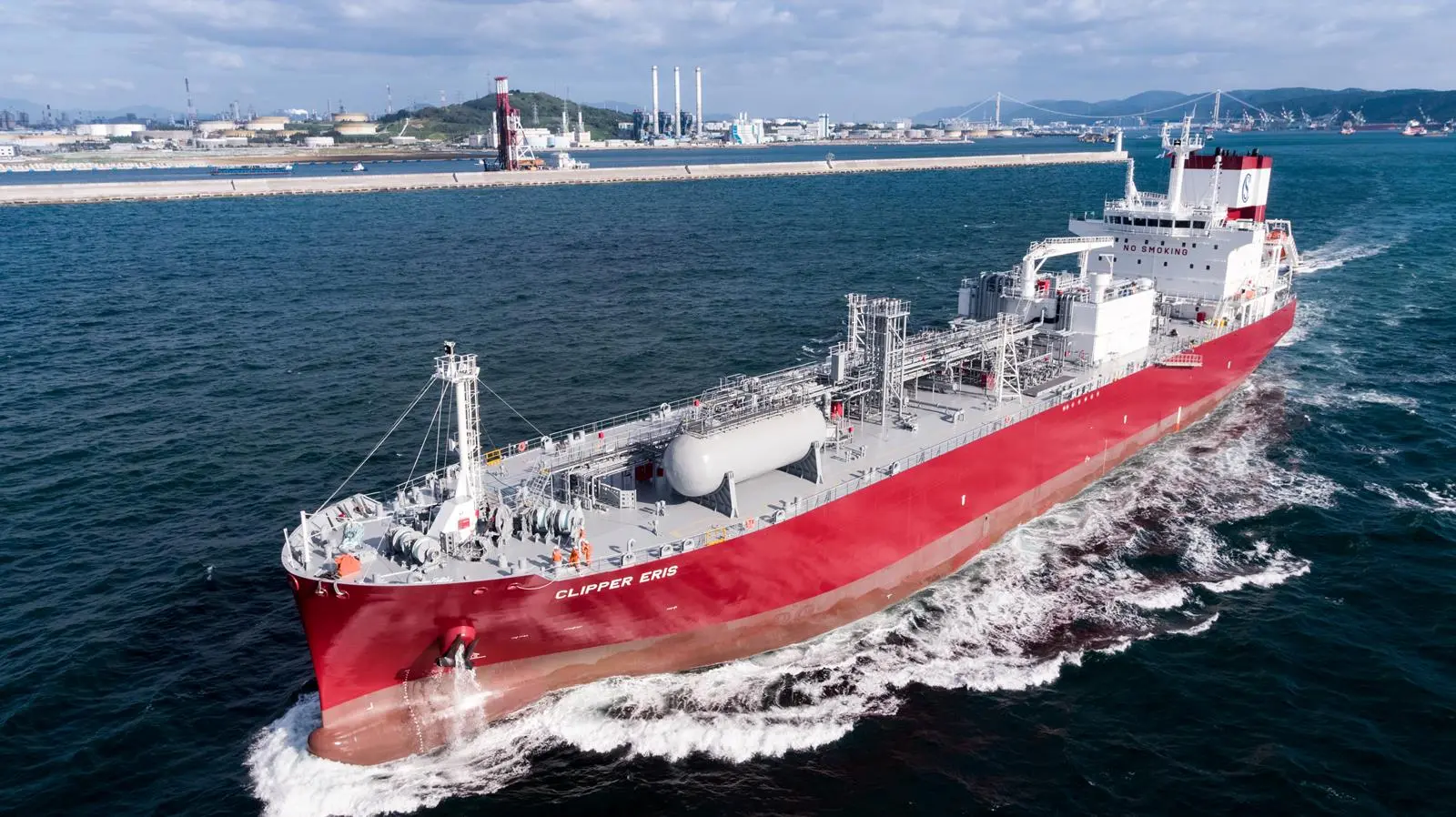
Now, Wärtsilä is advancing to real-world testing on different ship types. A trial installation on Solvang’s ethylene carrier Clipper Eris is scheduled for Summer 2024 to prove technical viability and refine the technology. The success of this pilot is a precursor to the commercial launch in 2025.
Wärtsilä has also expanded its services to offer CCS feasibility studies to shipowners and operators. These studies, spanning four to six months, involve early ship design engagement and engineering work to assess the integration of CCS into existing structures.
Conducting these studies today accelerates the initial phases of CCS integration. Additionally, these studies serve as an educational tool, helping customers understand the advantages and specific factors involved in installing CCS on their vessels. This represents a significant step towards bringing a CCS product to the market by 2024.
Our industry’s path to decarbonisation demands multiple solutions. And, where CCS is concerned, it will require sustained effort if the industry is to move from technology development to supporting technology adoption at scale. With the first installations of full-scale CCS only a matter of years away, it is time that we collectively raised our understanding of the potential of this technology and recognise the critical role that it is poised to play.
Related Articles
 CARBON CAPTURE
 CARBON CAPTURE
 ALTERNATIVE FUELS & LUBRICANTS