



Methanol-to-hydrogen reformers simplify hydrogen delivery
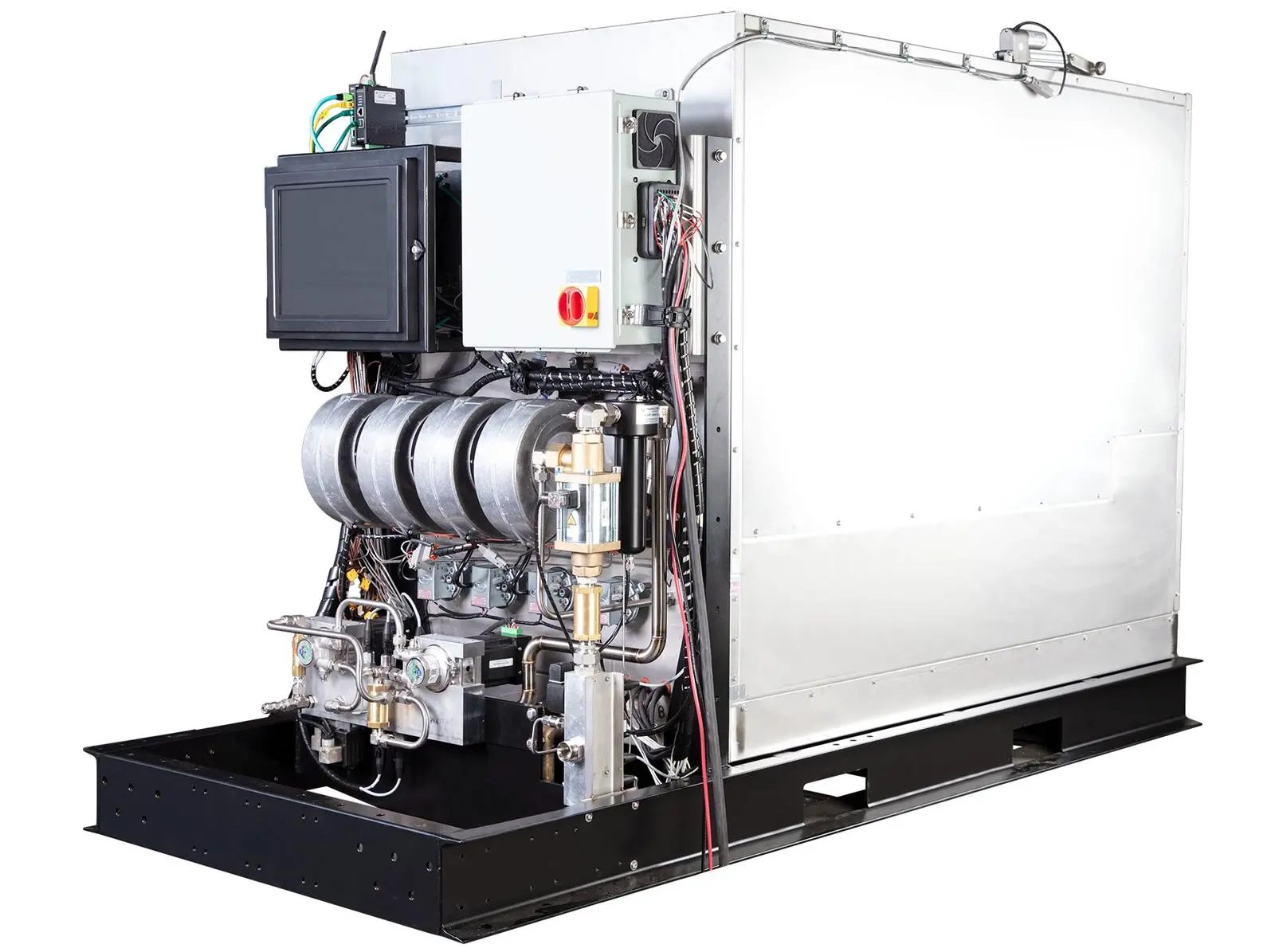
US-based company Element 1 has developed a range of methanol-to-hydrogen generators that it says takes advantage of the relatively low cost of methanol. Mixed with water, it is rich in hydrogen, making it more cost effective than many other feedstocks, with much lower levels of harmful emissions.
The cost of reforming methanol is about one third the cost of reforming natural gas, says the company. It occurs at half the temperature of natural gas reforming, and this lower temperature translates to lower cost materials, less insulation and fewer parts. The cost of methanol is often lower than the cost of compressed hydrogen and in many cases provides the lowest cost of hydrogen at the point of use.
Additionally, a mix of methanol and water has a freezing point of -71°C, so it can be used as a feedstock in cold climates. Its hydrogen generation capacity is not affected by low temperatures and it can be stored indefinitely without degradation in fuel quality. This means storage tanks can be larger, making refuelling costs lower.
Element 1 has joined into a partnership with Maritime Partners and Ardmore Shipping to create a joint venture called e1 Marine, and the company’s M-series methanol to hydrogen generator received Approval in Principle (AiP) for marine applications from Lloyd’s Register in May. Lloyd’s Register has also confirmed that final approval for the technology is possible, including for inland waterways.
Element 1 has also partnered with US-based RIX Industries which has licensed the proprietary M-Series hydrogen generator technology from Element 1. Under the terms of the license agreement, RIX Industries has been granted rights to manufacture and deploy Element 1’s M-Series onboard hydrogen generators for use in fuel cell mobility applications, including marine vessels and off-road vehicles such as mining trucks, tractors, and heavy-lift trucks in both North America and Europe.
RIX Industries highlights that rather than storing hydrogen, the company’s reforming process allows for a methanol-to-hydrogen propulsion strategy that can be distributed across a vessel’s infrastructure. The M2H2 Series is specifically designed to displace stored compressed hydrogen to support primary propulsion, auxiliary power systems, cold ironing and bunkering.
Bryan Reid, Chief Sales Officer at RIX Industries, said: “While hydrogen is an appealing answer industry-wide, its deployment is deeply complicated by cryogenic temperature requirements and/or high-volume, high-pressure storage. However, the ability to generate hydrogen on-demand is breaking through these barriers, tapping into safe, convenient methanol to eliminate complexity and achieve decarbonisation.”
Methanol is available globally, price competitive to MGO, only requires minor modifications to current bunkering infrastructure and does not have the complexity, expense, or safety concerns of ammonia. Additionally, Reid says a pure hydrogen solution would be challenging for ports to offer as tank filling is expensive and requires caution. This could increase expenses from US$1 to US$16 per kg by the time hydrogen gets to the pump.
Related Articles
 ALTERNATIVE FUELS & LUBRICANTS
 ALTERNATIVE FUELS & LUBRICANTS
 ALTERNATIVE FUELS & LUBRICANTS