



METIS brings mythology to technology for an AI future
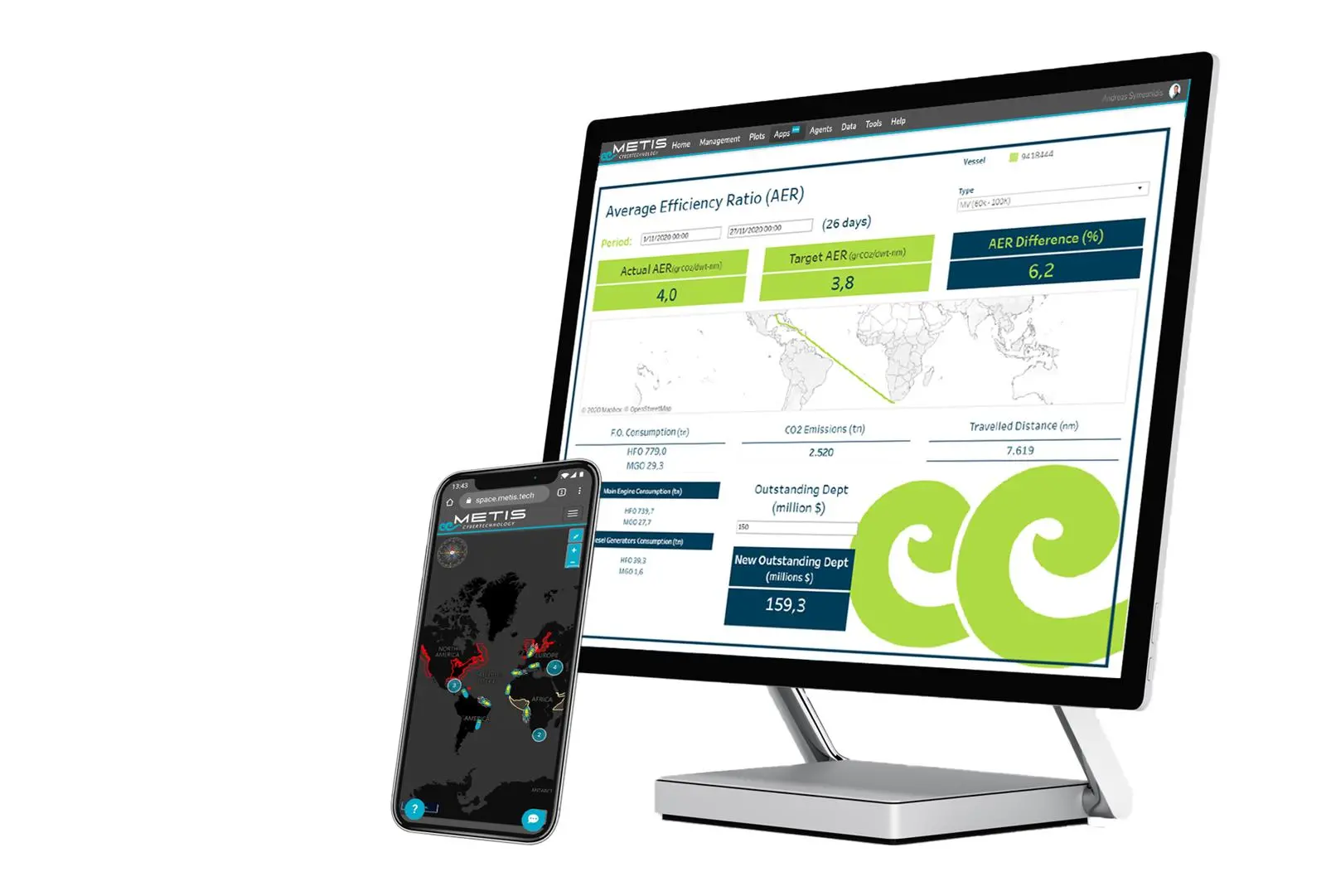

What’s in a name? For METIS Cyberspace Technology’s founders, the Greek goddess Metis – the first wife of Zeus – provided their inspiration. According to Greek mythology, she was goddess of planning, cunning and wisdom or, as METIS co-founder and chief technical officer Serafeim Katsikas put it in conversation with The Motorship, she represents our ability to change things.
It is a concept that reflects the company’s ambition, which he said was “to create the ultimate digital assistant” for technical, operational and commercial departments. By using data from vessels and other sources, it provides forecasts and “gives companies useful insights to understand [how they] should optimise their daily operations.”
More prosaically, “it also means ‘maritime efficiency through intelligent systems’,” he said, a form of words that describes a 21st Century task but was coined to match a millennia-old name.
The words ‘intelligent systems’ are key to METIS’ philosophy, which centres on artificial intelligence (AI) and machine learning to find insights inside the data. And although there is no difference between maritime and shore-based artificial intelligence algorithms, Mr Katsikas said that shipping presents practical differences, not least in “understanding and predicting the performance of an asset [that is] not fixed in one point.”
In fact, many parameters that affect a ship’s performance cannot be completely described in a mathematical model, he said, so “you must use AI”. This is not straightforward; it takes a lot of R&D “to figure out what type of parameters and machine learning should be applied to your model,” he said.
Fortunately, this is not something that the end-user has to do: “all this must be taken into consideration before offering a final solution to companies,” he said. “AI is not just a black box that you can take and use in every situation.”
He shared some examples of the 855 parameters that METIS on-board systems track on a particular vessel and of and the modelling that uses their data. These included a set of equations to describe the behaviour of various main engine parameters while another equation described the reference line of its exhaust gas temperature.
In all, his example vessel has 17 machine learning models, providing, for example, a correlation between the engine’s power and the external weather conditions, such as wind speed, wave height and swell, with each mathematical model updated every month. “We must somehow hide this complexity from the end user”, he said, since they need “only the output of all of this analysis.”
New modules
This output can support both technical and operational decisions. In June, for example, METIS launched an Electrical Power Profile evaluation application, which is intended to provide technical departments with an analysis to support feasibility studies looking at electrical power sources to complement auxiliary generators, such as batteries.
In a statement at the time, Mr Katsikas explained that relevant data would be collected from the ship’s sensors before a statistical analysis is applied to evaluate, for example, “whether its operations within a port or ECA zone would be made more cost effective by installing a power pack.”
Ship performance data is also relevant for ship financing, thanks to the Poseidon Principles, which offer a framework for financial institutions to lend in line with IMO’s GHG reduction strategy. So far, 20 institutions representing more than a third of shipping’s global financing have signed up to the principles.
In February, METIS launched a predictive Poseidon Principles Emissions Index that assesses a ship’s average efficiency ratio (AER), which is the measure that underpins the principles. The index allows owners to predict “whether their ships would benefit more from investment, a change in operating profile or disposal in response to advancing emissions rules,” Mr Katsikas said at the time.
He also commented then that “exact emissions targets have not been forthcoming” from IMO but since then MEPC 76 has adopted amendments to MARPOL relating to EEXI and CII. Mr Katsikas said that this would clarify the trajectory line used in IMO’s calculations and the METIS index will help predict when a ship will achieve that standard. This will support owners decide whether their ships would benefit from investment, a change in operating profile or disposal, the company’s February statement explained.
Chartering departments can also use a METIS module available since last November to check whether a ship is operating within the terms of its charterparty agreement. Using ship speed and fuel consumption data, coupled with weather data, manoeuvring states and any other factors included in the charterparty agreement, users can “continuously monitor all vessels and identify potential deviation with respect to the specified consumption and speed terms,” the company said when it launched the module.
Both ship and shore have access to the analysis and decisions can be made about whether to speed up or slow down, for example. The data could also be valuable in the event of a claim in relation to the CPA, Mr Katsikas said.
With shipping becoming increasingly reliant on data, is there a risk that ships with insufficient sensors to provide data to systems such as those provided by METIS will become ‘stranded assets’ as they reach what is effectively a barrier to access emerging digital technologies?
There is a barrier, Mr Katsikas agreed, but it is not because of the technology; it is built on attitudes. Especially as legislation – such as that around emissions monitoring – demands transparency, there is some reluctance to share data, he said. Even within some companies, “different departments don’t like to share data with each other” and use their own applications. Given the potential commercial benefits that machine learning offers when interrogating large datasets, “I think this is a problem,” he said.
To overcome this, METIS has established a customer support team “to train people in the new concepts to make them understand how best to use all the new information that they have to improve their daily business,” he said.
Related Articles
 ENERGY SAVING DEVICES
 LNG
LNG
 ALTERNATIVE FUELS & LUBRICANTS