



MHI-MME VOC-burning auxiliary boilers for KNOT shuttle tankers
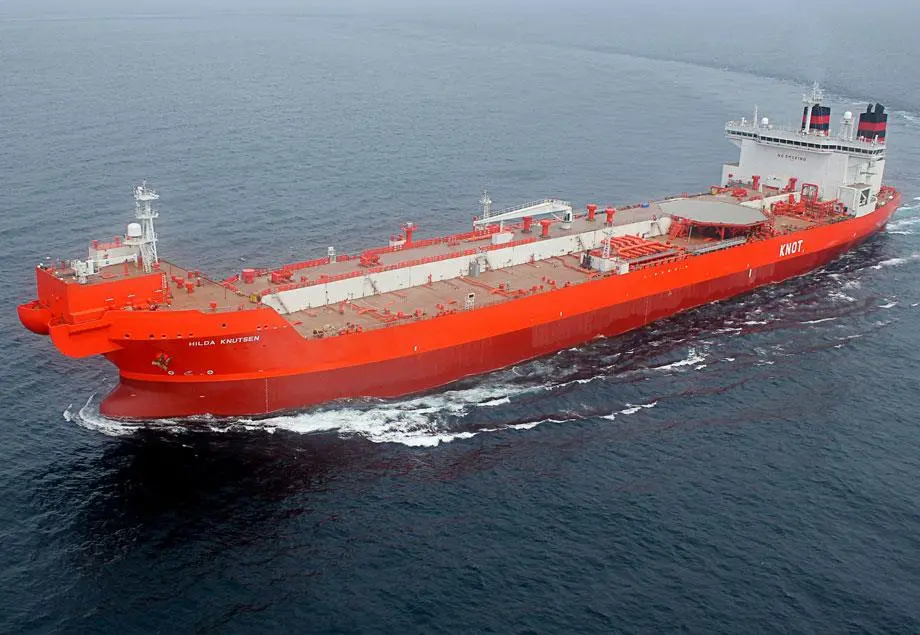
The vessels will be installed in two 124,000dwt LNG-fuelled shuttle tankers under construction for Knutsen NYK Offshore Tankers. The shuttle tankers will be fitted with a Volatile Organic Compounds (VOC) recovery system.
MHI-MME confirmed that the order was the first reference for its VOC-firing auxiliary boilers. The basic design of VOC firing auxiliary boiler has already been completed. As the only supplier that can both design and supply both marine turbines and boilers to original designs, the OEM can design and manufacture boilers that fulfil the required steam conditions on a project by project basis.
MHI-MME added that by using the VOCs captured by the recovery system, these vessels will be able to lower their emissions of greenhouse gas emissions compared with conventional shuttle tankers, and improve fuel efficiency. However, the VOC liquefaction and separation process captures heavier hydrocarbon fractions of the gas, but also produces a lighter hydrocarbon fraction, which is non-condensable.
While the vessels’ VOC Recovery system can process liquefied VOCs, the VOC firing auxiliary boiler can use both types. Especially from an environmental viewpoint, the benefit of VOC-firing boiler is to detoxify lighter VOC fractions which contain concentrations of 80% or more of inert gases such as nitrogen and carbon dioxide, and are difficult to process without the boiler.
In addition, the generator turbine is also effectively used in the ship as an electricity provider, reducing energy generation requirements for the vessel’s gensets, and lowering overall emissions.
The deliveries of equipment to the yard will commence in the middle of 2021. When delivered, the shuttle tankers will operate in the oil fields in the Barents Sea and North Sea.
Related Articles
 2-STROKE & 4-STROKE
 2-STROKE & 4-STROKE
 2-STROKE & 4-STROKE