



Middle East yards prepare for ballast water scrum
Some have specialised in ballast water treatment consultancy, a service which proactive shipping companies have used to prepare for the convention, even in some cases, to install systems ahead of time.
Although it was first thought that the November signing of the Convention by Morocco, Indonesia and Ghana would be sufficient to meet the 35% of world tonnage criterion required for its entry into force, dodgy tonnage data had to be double-checked and finally showed that the threshold had not been met. Now, with Panama and Finland preparing to sign up, the requirements of the Convention are likely to come into force some time in 2017, 12 months after the validation criteria finally have been met.
Ship owners and operators now face some tough decisions. At the first intermediate or special survey after the first anniversary of the Convention entering force, they will have to install ballast water treatment systems which meet not only IMO’s Most Probable Number (MPN) water test requirements but also stricter US rules.
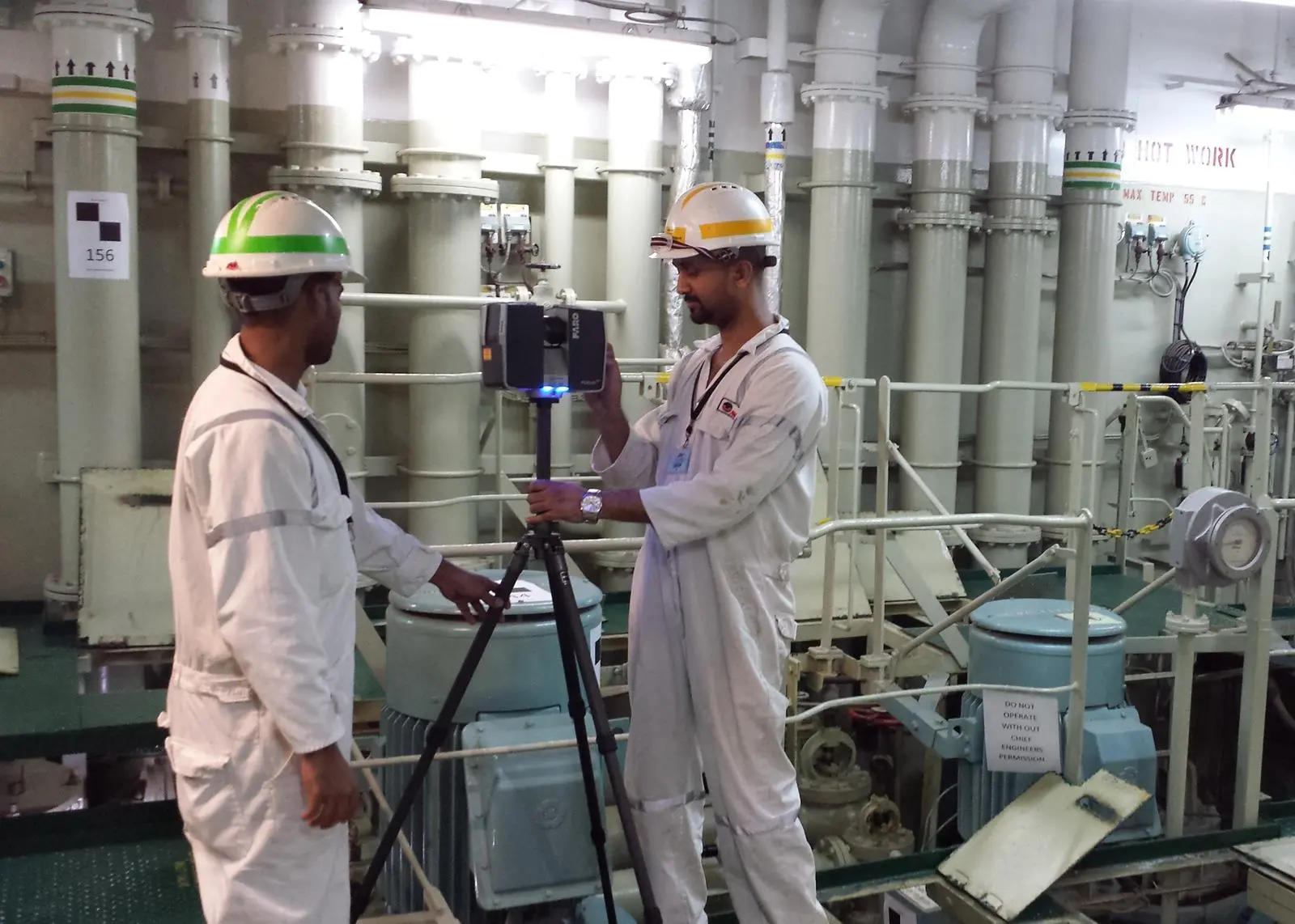
Nils Kristian Berge, Chief Executive as ASRY, revealed late last year that the repair yard has provided engineering consultancy services, including 3D engine room scans, to a number of customers. Although, by the end of November, no physical installations had yet been made, that could be about to change very quickly.
One of the clients for which ASRY has provided consultancy services is the Kuwait Oil Tanker Company (KOTC). ASRY undertook engineering assessments for installing ballast water treatment systems on board 19 KOTC tankers including eight VLCCs, two product tankers, four gas carriers and two bunker tankers.
The work comprised physical inspections and 3D scanning of engine rooms and pump rooms using the shipyard’s own in-house software Cadmatic and Panomap. Pipe and cable routes for connecting treatment systems to existing piping and electrical systems were drawn up whilst an analysis of impact on existing ballast pumps and likely extra power requirements was also undertaken.
A few miles away, in Dubai Maritime City, marine engineering firm Goltens is undertaking similar projects. The privately owned company, which has 24 sites in 14 countries, employs around 400 people in Dubai, the largest facility in the group. Tom Boyle is Managing Director of Goltens Dubai and Vice President of Goltens UAE. He warns of a potential logjam.
“Things will really move in the second year [after the Convention enters force]. Shipyard capacity will become a constraint,” Boyle says.
Installation constraints
Space at repair yards will not be the only challenge, he predicts. System manufacturers are unlikely to be able to keep up with demand for hardware while ship operators who have not made preparations will meet a shortage of engineering and installation expertise and higher prices.
Boyle points out that Goltens Green Technology, based near Rotterdam, has undertaken preparatory work including engineering studies and 3D engine-room scans, as well as a significant number of installations at various repair yards.
A key element of Goltens’ strategy is to minimise downtime. There is much that can be done to prepare vessels for system installations. “You can do almost everything afloat provided you are gas-free,” comments Boyle.
Although Goltens has no exclusive relationships with system makers – it wants to be able to provide impartial advice – it has established a non-exclusive tie-up with Norway’s Optimarin. This could turn out to be an astute move.
The combination brings together one of the most successful system providers for ships up to about 60,000 dwt and an engineering firm well versed in modelling, prefabrication and installation. The two firms have already worked on a wide range of projects.
However, Optimarin’s ultraviolet (UV) ballast water treatment solution is one of only a couple of systems so far to have met the US Coast Guard’s FDA/CMFDA test, which establishes whether an organism is alive or dead. Since January 1 this year, the US Coast Guard does not want any living organisms discharged into its waters, even if they are not capable of reproduction. This follows a decision in mid-December that the ‘most probable number’ (MPN) test, previously the standard for the majority of UV systems, failed to meet US requirements by showing only whether organisms are non-reproducing, not alive or dead.
Optimarin boss Tore Andersen paints a bleak picture for some. “The USCG wants absolute certainty with regard to standards,” he says, “They do not want living organisms desposited in their territory. “MPN is acceptable for IMO, but that won’t be any consolation to shipowners with global fleets that want the flexibility of sailing in and out of US waters.”
Related Articles
 PROPULSION
 GENERAL NEWS
 HYDROGEN