



Modular approach central to MAN’s Triton ECS
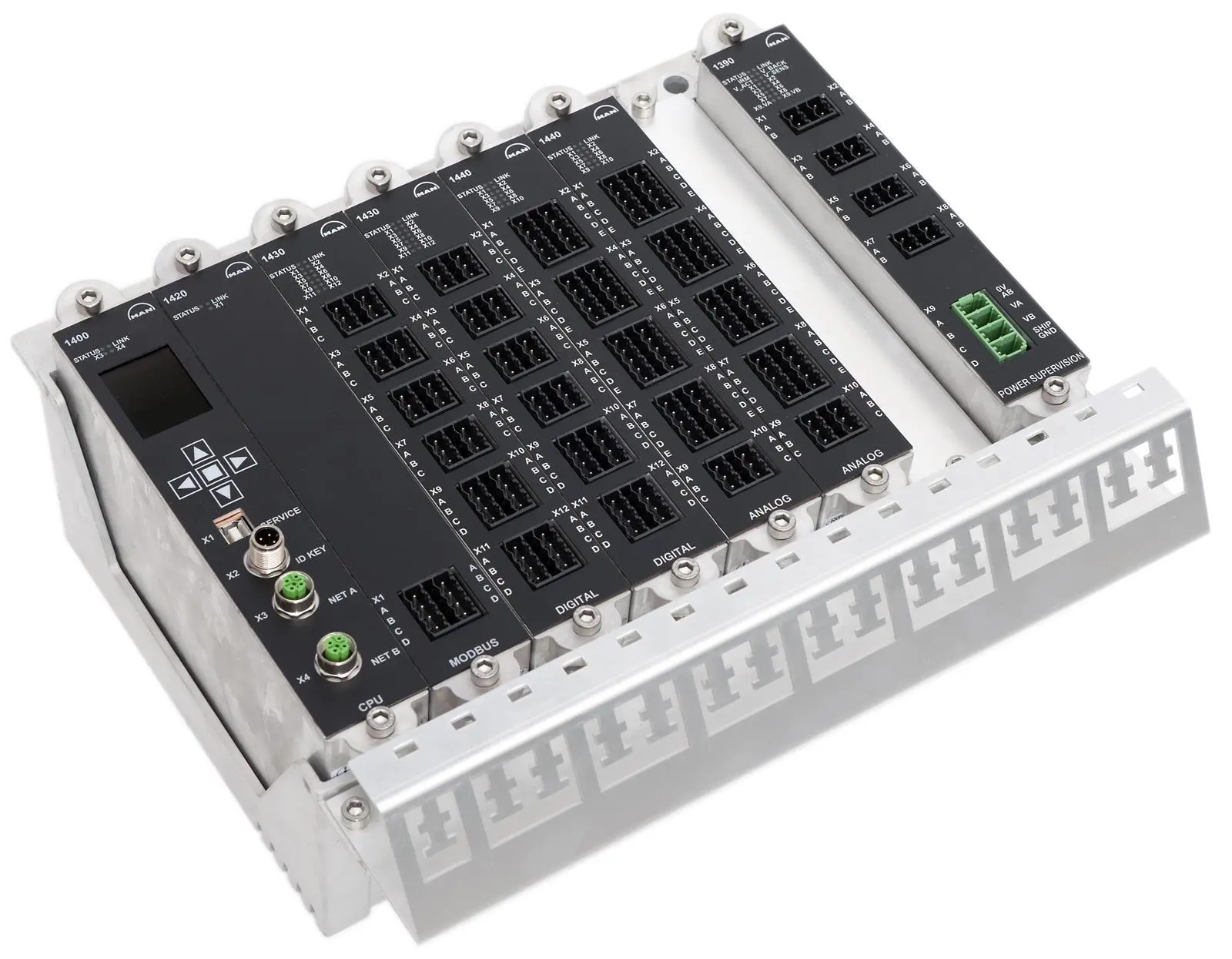
The new ECS was introduced in 2020 and is the new controller platform for its entire, two-stroke engine portfolio.
The controller is a solution characterised by its modularity, flexibility and scalability. These features offer increased engine flexibility for improved performance, advanced controls for increased fuel flexibility and emission reduction in the future, a modular architecture for future scalability, and interfaces for other ship automation systems.
Compared to the existing Multi Purpose Controller, that will remain supported for existing engines, Triton delivers extra computing power, a faster network and I/O flexibility. It also encompasses cyber security by design.
Automation department manager Lars Fox says the new Triton platform enables better maintenance capabilities during the entire product life cycle.
“There are many new features that engines must have in the future. So, in the light of upcoming requirements, such as better emissions control and the demand for multi-fuel flexibility, we now have a system that can accommodate them.”
Ammonia as a fuel is one example of a fuel type that will require sophisticated injection and safety controls.
“With Triton, we can easily develop a new module that can be plugged in either as a retrofit project or as a new standard feature for future engines. This modular architecture gives us the ability to adapt as market demands change and the possibility of adding new functionality remotely such as predictive maintenance.”
MAN ES has fully localised the new controller which makes it available from manufacturers in Japan, South Korea and China, and development is on-going. The system has the capacity to handle many more sensors, so the amount of data that the controller can handle and analyse is also much higher than MAN ES’ legacy system.
MAN ES is preparing for further upgrades. For instance, new types of third-party sensors will be able to be accommodated with the new IO module MAN ES is currently developing. “We expect it to be available next year, and it will be particularly relevant to the increasing cylinder pressures being introduced,” says Lars Fox.
Related Articles
 2-STROKE & 4-STROKE
 2-STROKE & 4-STROKE
 2-STROKE & 4-STROKE