



Navigating a world of changing fuels
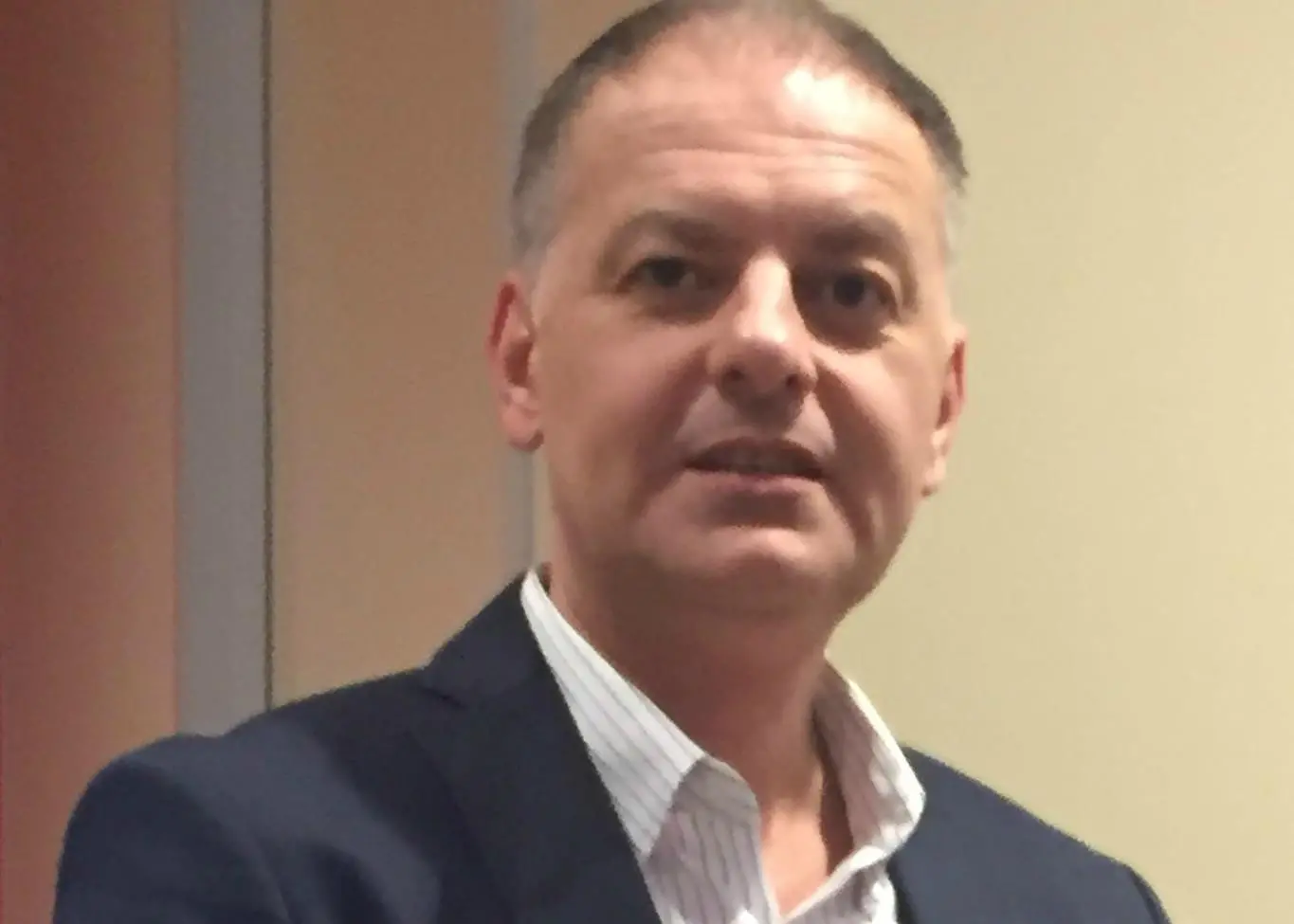
The Motorship: Turning to the supply of fuel to the market and modern lubricants, what do you consider the most important technological innovation during your professional career, Luca?
R&D has been part of ExxonMobil’s DNA since our company began more than 135 years ago. Our innovations have helped provide the energy fundamental to modern life – from the more efficient fuels that power today’s transportation, to the natural gas that provides light and heat to homes and businesses. However, looking at the industry closest to our hearts, international shipping has seen a seismic shift with this year’s introduction of the 0.50% sulphur cap. This is just the latest in a line of regulation changes I’ve seen throughout my career, which have all called for innovation.
We have developed a number of new products and services in relation to these shifts, including Mobil Serv℠ Cylinder Condition Monitoring, ExxonMobil Premium HDME 50™ for use in Emission Control Areas, EMF.5™ – our 0.50% range of sulphur fuels, and the associated lubricants, such as Mobilgard™ 540 and Mobilgard™ 5100. However, I should explain how we’ve done that. It’s not just through technology, it’s also in partnership with our customers. We respond to, and some instances anticipating, industry trends – it’s not just what ship owners’ want, it’s also about what they need.
The Motorship: As a chemist by training, with a strong record in technological innovation, how will the industry be affected by the transformation of fuel production from refining to formulation?
This is a complete shift. As regulations become more complex, the ability to meet their requirements needs an ever-deeper understanding of the physical and chemical properties and compositions of streams and products. A successful fuel needs to demonstrate fundamental features, ranging from affordability and technical readiness to scalability. Achieving all of this is reliant on one common factor: good research and development, in the short, medium and longer term.
The Motorship: Looking at the market shortly after the IMO global sulphur cap came into force on 1 January 2020, the initial response has been cautiously positive. Have you had any feedback from customers following the changeover?
Currently, it does seem as if the response has been relatively positive but there have been a number of publicised issues, including five reported violations in China at the ports of Qingdao, Dalian, Ningbo, Xiamen and Weihai. There have also been a number of alerts from testing agencies, mainly on sediment, across a number of ports such as Singapore and Rotterdam. We continue to work with ship owners around the world and it’s fair to say that they have privately highlighted experiencing a number of additional issues. I would caution that it’s still very early days and I expect it will take at least three months to gather a clearer view of the post-IMO 2020 landscape. This is dependent of course on the vessels themselves and the rotations they are on.
The Motorship: How do you see the effect of regulatory developments impacting lubricant production for the marine sector?
The last few years have seen also a tremendous change in the marine lubricants field. The switch to 0.50% sulphur fuel means that there needs to be a more balanced approach to the formulation of cylinder lubricant: they need to be able to combat deposits and scuffing, while still maintaining engine cleanliness in a wide range of operating conditions.
Lubricants and services also have a part to play in reducing emissions. For example, lowering cylinder oil feed rates can help a vessel cut CO2 production. Our Mobilgard™ 540 cylinder oil and Mobil Serv™ Cylinder Condition Monitoring can help vessel operators optimise cylinder oil feed rates while also improving engine protection.
Going forward, the industry is likely to move to a mix of 0.50% sulphur fuels, distillate and LNG. We therefore need to continue to closely work with our lubricants colleagues, and with our customers, in order to produce high-performance lubricants that are fit for use.
The Motorship: As a key supplier to the market, what is ExxonMobil’s perspective on discussions about short and medium term efficiency targets at the IMO’s MEPC?
Let’s spell out the basics: There are very few challenges more important than meeting the world’s growing demands for energy while reducing environmental impacts and the risks of climate change. This is the task in front of us and at ExxonMobil we have a long-standing commitment to do our part, across all the industries and sectors we serve, including marine.
The technology and the products that will be required to meet the IMO’s ambition targets are not there yet and many new solutions will need to be developed. This will require a rigorous scientific approach; a methodology that considers and evaluates the lifecycle benefits and impacts related to activities and products across the value chain. In other words – a thorough and methodical life cycle analysis.
The Motorship: ExxonMobil has made a number of significant investments in LNG. What is your perspective about LNG’s medium term role as a fuel for the market?
ExxonMobil’s ‘The Outlook for Energy: A View to 2040’ report forecasts a significant increase in LNG demand, relative to today. We believe that LNG will be a growing part of the marine bunkering mix, augmenting rather than replacing the current fuels line-up. It will sit alongside scrubbers, distillates and other 0.50% sulphur compliant fuels as a way of helping to comply with emissions regulations. Our report predicts that LNG will form 10% of the overall marine energy mix by 2040.
ExxonMobil is a founding signatory of the Society for Gas as a Marine Fuel and a member of the Society of Internal Gas Tanker and Terminal Operators. We have multiple projects in development to meet future demands.
The Motorship: Finally, taking a longer-term perspective on measures to help shipping meet the IMO’s decarbonisation objectives, can you talk about ExxonMobil’s wider research programme?
ExxonMobil is engaged in a number of research programmes, both internally and in cooperation with leading academic organisations and technology companies, that are aimed at tackling the ‘dual challenge’. This is clearly demonstrated by the significant amount of R&D investment that has been committed to the development of low emission solutions; more than $10 billion since 2000.
When I think about the marine industry, I specifically think about an ‘ecosystem’ made of a number of components: the engine, the ship, the operations and the fuel. Technology remains the key enabler across each and every one of these components as they are all required to drive this industry forward. Fuels of the future will need to play their part in this ecosystem. First and foremost, they will need to be safe. They will also need to be scalable, from laboratory to deep sea, and reliable, as this is the industry that still moves the majority of the goods and product worldwide. Finally, last, but not least, these fuels will need to be economically viable.
Related Articles
 INTERVIEWS
 CONVENTIONAL FUELS & OILS
 GENERAL NEWS