



New more accurate pressure sensor
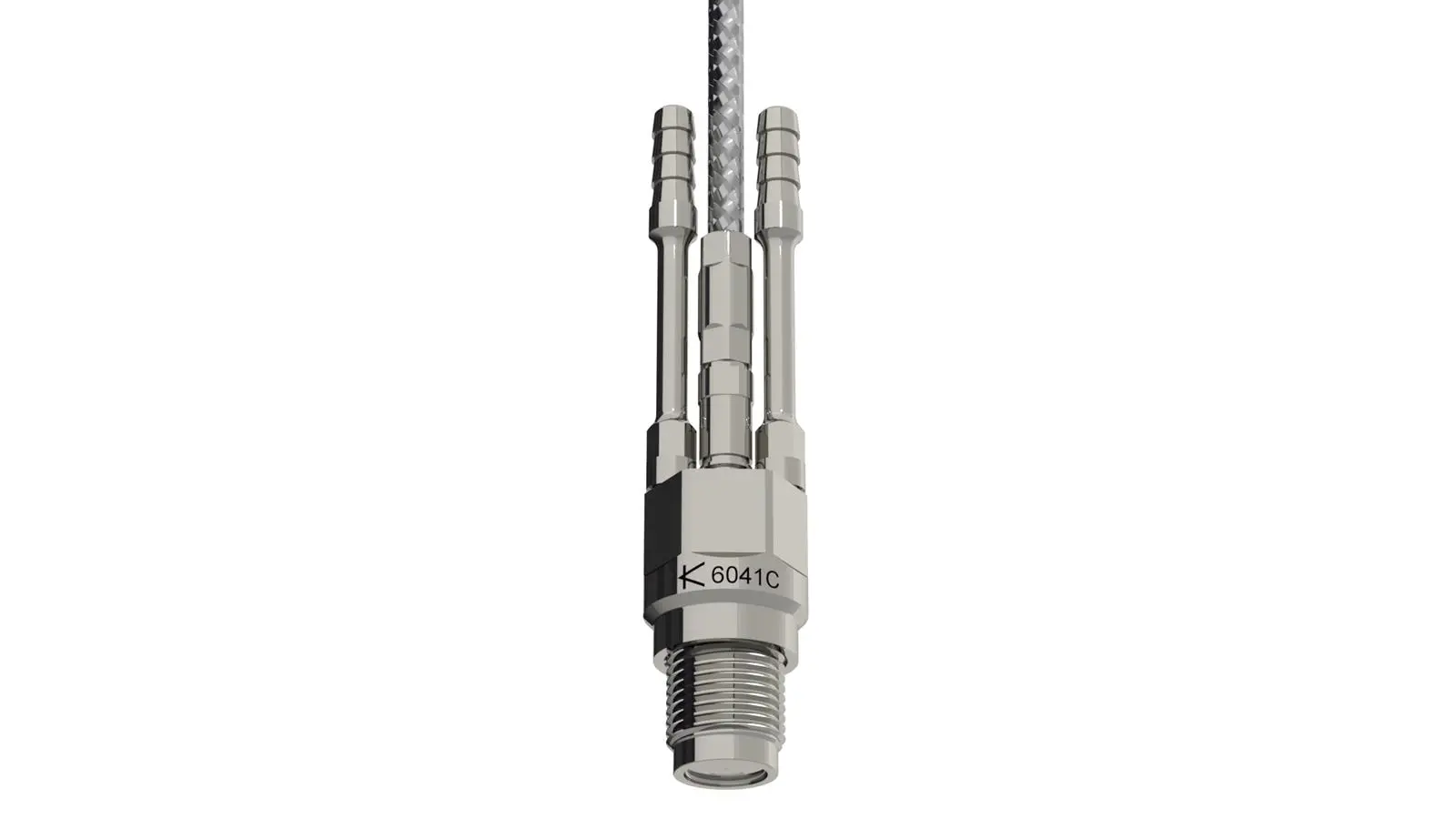
It incorporates state-of-the-art PiezoStar crystals and yields precise measurement results thanks to improvements to its design and manufacturing process. This versatile, reliable cylinder pressure sensor is the solution of choice for thermodynamic investigations in the engine development process, where overall accuracy is of highest priority.
Combustion engines are set to maintain a position in future propulsion concepts for many years to come, but new alternative fuels will challenge engine developers. Kistler has launched a portfolio of highly advanced sensors that provide maximum support for the development process in order to meet this challenge.
Precise and stable measurement
The new 6041C miniature cylinder pressure sensor is the third generation of Kistler’s smallest water-cooled sensor (size: M8) and features minimal sensor-to-sensor deviation during combustion pressure measurements. Thanks to the small linearity deviation, engineers are able to yield accurate measurement data at all loads.
Improved thermodynamic behavior creates more stable measurements within the operating temperature range of -20 to 350°C, with the sensor recording a sensitivity shift of under 0.2% 50 ± 30°C, even during thermal changes in the combustion chamber. Moreover, its thermal shock error is minimal, ensuring mean effective pressure (MEP) accuracy under all conditions. The miniature sensor features an optimised cooling flow around the measuring element to enhance its stability over long-term measurements and grants a longer service life without losing thermodynamic accuracy over time.
The use of PiezoStar crystals, which are grown specially by Kistler, also contribute to the pressure sensor’s reliability. They offer exceptional measurement stability and minimal temperature dependence in demanding environments. The sensors function reliably at temperatures of up to 350°C.
A robust sensor for diverse applications
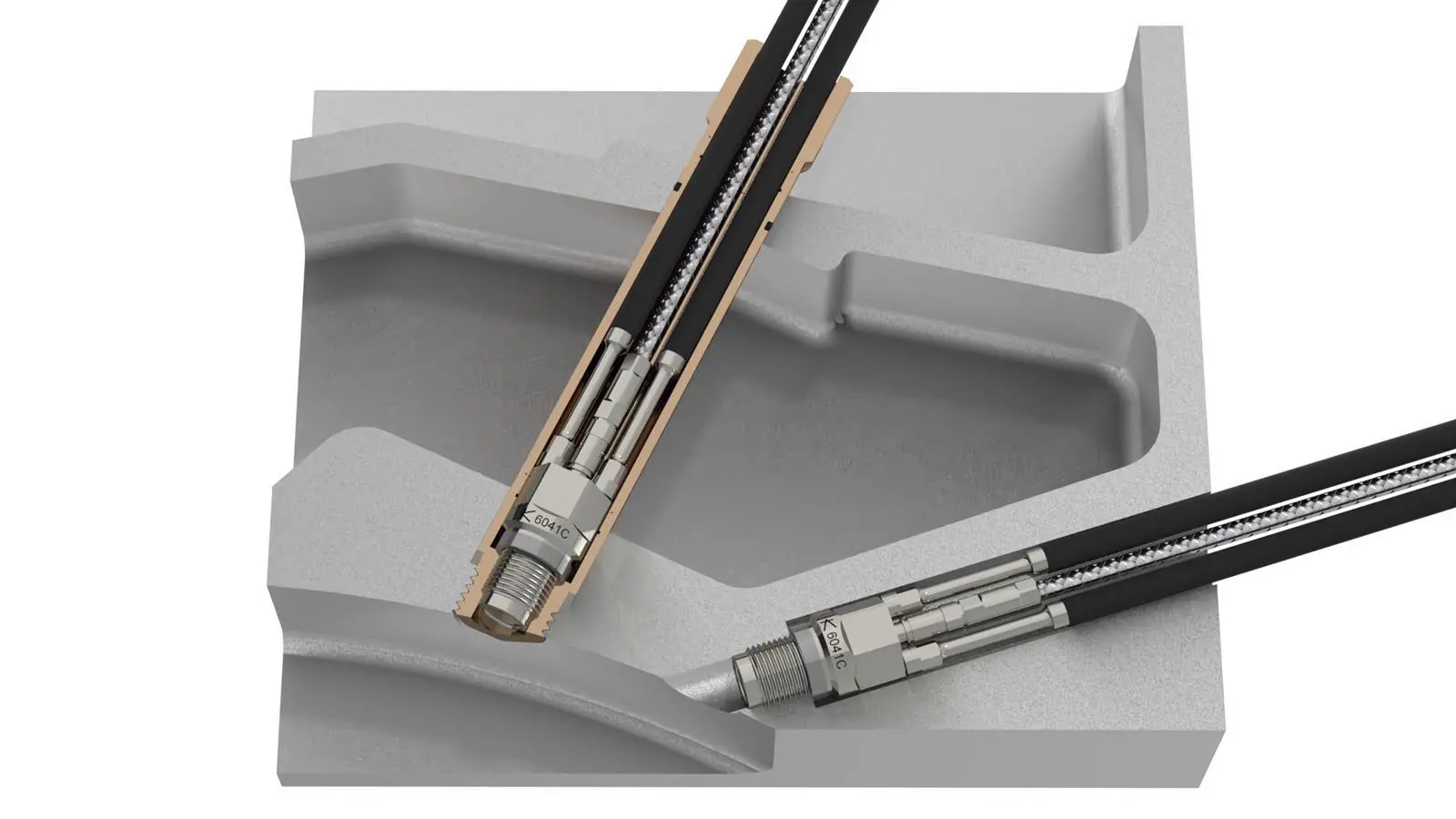
Compared to uncooled sensors, water-cooled sensors have the advantage that they can be either recess-mounted or flush-mounted, even when subjected to high thermal loads. Thanks to an advanced measuring element coupled with improvements to the production process, they provide measurement results with maximum accuracy. These advances also give the 6041C miniature cylinder pressure sensor higher natural frequency and excellent thermal stability so the sensor is optimized for gas exchange analysis tasks.
Like its predecessors, the 6041C cylinder pressure sensor requires only little space and can be mounted in a sleeve or directly into bore holes starting from 12mm diameter. The sensor is compatible for mounting with its predecessors 6041B and 6041A, and the uncooled variants 6045A, 6045B and 6044A. The sensor comes with a mounted cable, and optional PiezoSmart sensor detection.
Kistler notes that flush mounted installation is recommended to avoid pipe oscillations, while a reduction of the thermal load can be achieved with an up to 2 mm recessed mounting position. The further recessed mounting, with a small gas channel in front of the diaphragm offers excellent thermal-shock protection but can be prone to pipe oscillations. If the sensor must be mounted through the water jacket of the cylinder head, it is recommended to use a mounting sleeve.
Highest precision for engine developers
Roger Leutwyler, Product Manager for piezoelectric cylinder pressure sensors at Kistler, comments: “High sensitivity, high natural frequency, a low thermal shock error and outstanding zero-point stability: these advantages make our new 6041C cylinder pressure sensor deliver measurement results with the highest accuracy. As a miniature sensor with an M8 mounting thread, it is particularly suitable for compact multi-valve engines where space is limited – and obviously, its benefits also come into play whenever precision and long-term stability are critical factors.” The
Related Articles
 2-STROKE & 4-STROKE
 2-STROKE & 4-STROKE
 2-STROKE & 4-STROKE