



New UK H2 partnership launches
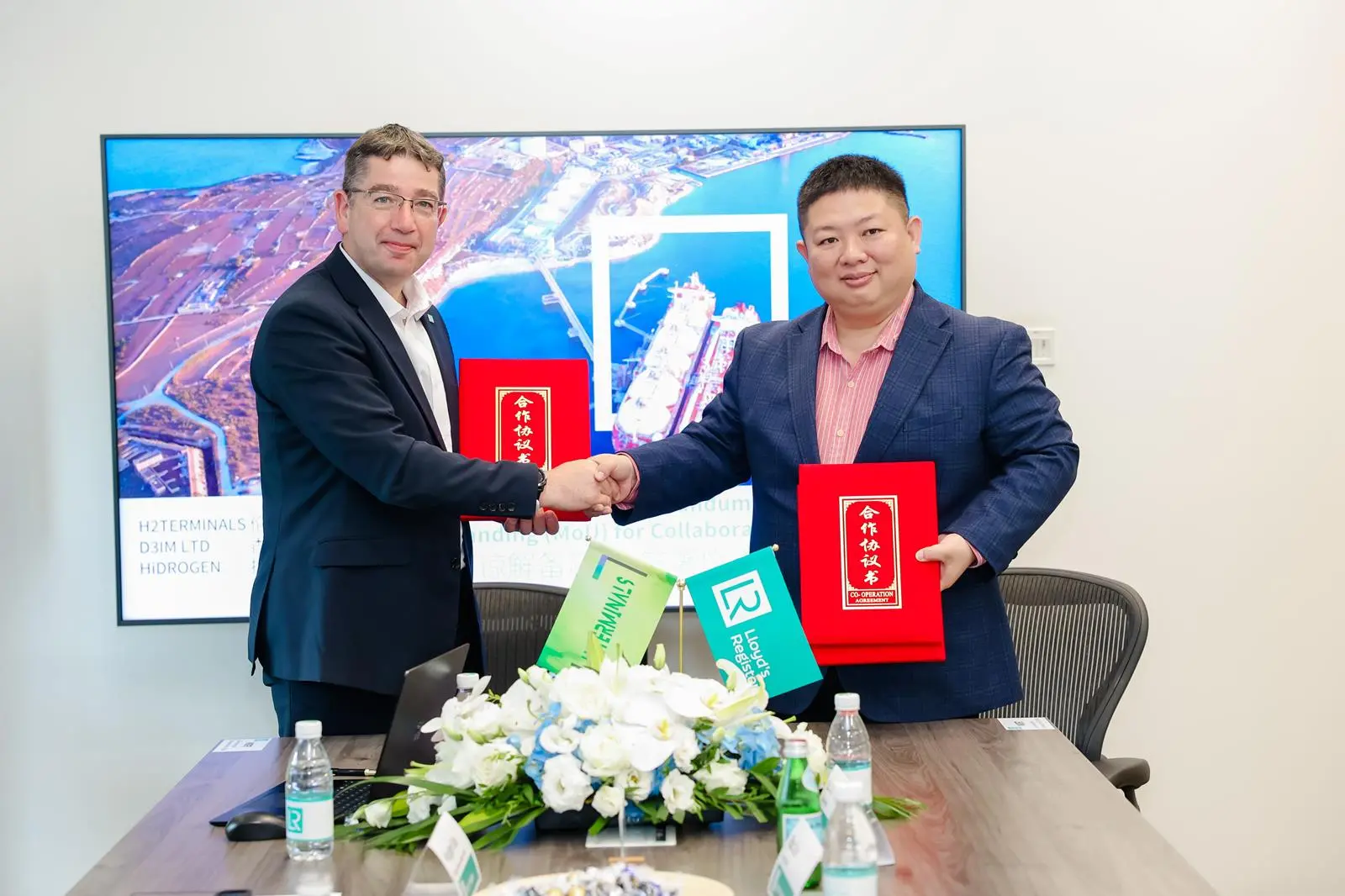
Lloyd’s Register, H2Terminals and its supply chain partners HiDROGEN and D3IM have agreed to collaborate on all necessary steps to develop an offshore island and supply chain providing clean power to businesses on the River Thames and Estuary.
“This project is an example of how shipping can support governments’ ambitions to decarbonise their supply chains and generate growth for their regional and national economies,” said Mark Tipping, Power to X director at LR.
“This ambitious green hydrogen project will help create a sustainable logistics network along the River Thames and lay the foundations for industry to develop.”
The project is part of the private sector-led Thames Estuary Growth Board action plan which aims to attract investment into and develop the area.
Offshore renewables park
Plans include the development of a wind, wave and solar energy plant located 100 km offshore. Green hydrogen generated on this floating island will be converted into liquid state and transported to a terminal on the Thames Estuary. From there, it will be transferred to floating barges to be converted to electricity. Batteries installed on the barges will store the electricity whilst it travels to its point of use.
The memorandum of understanding also includes a formal assessment of technology, including the development of asset designs, qualification of containment systems, and floating hydrogen production and floating energy export systems.
The MoU will also define an assurance programme for floating hydrogen production, hydrogen ships, classification and energy export systems.
“The demand for green hydrogen is projected to increase significantly in the next few years and we applaud the Thames Estuary Growth Board for committing to the alternative fuel to deliver jobs and investment opportunity to the Thames Estuary region,” said Gerry Wilkinson, chief executive at H2Terminals.
“We will be offering thirty-year power purchasing agreements direct to industry and utility companies as well as participating in the trading and capacity markets.”
Related Articles
 AMMONIA
 HYDROGEN
 HYDROGEN