



Nor-Shipping 2011: next generation shipping
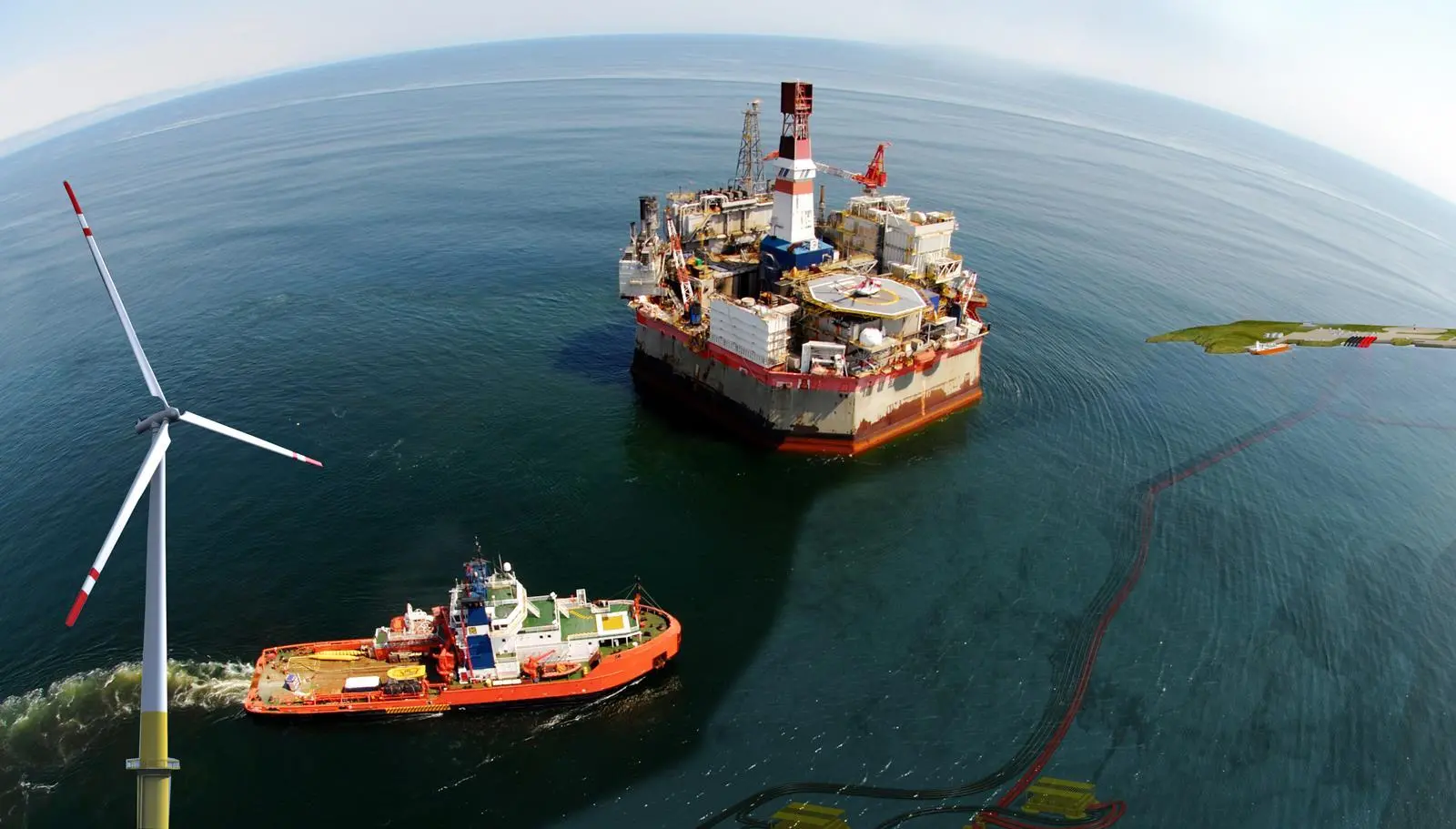
The theme for Nor-Shipping 2011 is ‘Next Generation Shipping’, which is described as “looking at both the way maritime business is run and the latest advancements in technology”. Although the traditional focus of Nor-Shipping is deep-sea merchant vessels, the 2011 event has bowed to the inevitable, looking at the way shipping is progressing, particularly in Norway, and the offshore sector is now officially recognised as a vital part of Nor-Shipping.
In fact, everybody we have spoken to in Norway is looking towards the offshore market as an area of great growth which will benefit the whole maritime cluster. And Norway is very serious about its ‘cluster’ philosophy, which it sees as fostering cooperation for healthy growth even though the individual participants are often competing for the same business.
The total number of exhibitors booked in to Nor-Shipping for 2011 is very slightly lower that the last show, at 1,100, but the organising team tell us that the individual exhibits are getting larger, with 22,500m2 floor space occupied, an increase of almost 1,000m2. This, says the organisers, represents a renewed confidence in the industry and the event. The official figures show that 80% of the exhibitors are repeat visitors, which means 20% are new. This again, says the organiser, is a positive sign. Although some of the 20% are probably former exhibitors which have consolidated or realigned themselves to operate more efficiently in harder times, a lot will be new companies promoting themselves in the maritime sector.
Nor-Shipping returns to its now-customary home at Lillestrøm, some distance outside Oslo. Although being away from the city centre was seen by some as a retrograde step, the event simply outgrew the old exhibition halls. Communication to both Oslo centre and Oslo airport are excellent – Lillestrøm is very approximately half way between the two, so the airport can offer a further choice of late-availabilty hotel accommodation, as the city hotels invariably fill up in advance of Nor-Shippng.
As usual, there is a programme of conferences alongside the exhibition. The opening morning will see various speakers and two round table discussions, following the ‘Next Generation Shipping’ theme, in which representatives of prominent Norwegian shipowners will look at both next generation business and next generation leaders. Another feature of the opening day will be the presentation of the Nor-Shipping Awards 2011, the Clean Ship Award and the Next Generation Ship Award.
The Clean Ship Award is to recognise the ship that has contributed to the greatest reduction of emissions to air or discharges to sea in relation to its function and operation. Only ships delivered after the previous Nor-Shipping in June 2009 are eligible. The Next Generation Ship Award is given for innovative design of ships that will be at sea in the coming decade. It will be awarded to the project demonstrating the greatest advances in design with respect to energy efficiency, innovation, suitability and flexibility, technology utilization, safety and security and environmental sustainability. It is open to projects where building has either started, or is very likely to commence, within the next 10 years. The entries will be judged by an independent jury led by DNV – whether or not this excludes DNV’s own concepts such as Triality or Quantum – both likely candidates – remains to be seen.
The second day of Nor-Shipping, May 25, sees the now-familiar Nor-Shipping conference, which takes on a rather different guise for 2011. This time it recognises the importance of the offshore industry to shipping in general and Norway in particular. The important and rapidly-emerging areas are regarded as particularly relevant, an example being the giant oil and gas discoveries in deep and ultra-deep waters off Brazil. For this reason, the keynote speech, followed by an interview, will be given by Petrobras CEO José Sergio Gabrielli.
The technological challenges posed by Brazil’s pre-salt oil and gas discoveries are expected to provide unique opportunities for foreign offshore service suppliers to help develop fields in a developing country. The Nor-Shipping team says that similar challenges are being identified in Malaysia, China, Australia, India and West Africa, so the outlook is bright for offshore specialists from Norway and elsewhere.
Further conference discussions will look at next generation technology – the conference programme says that offshore and maritime technologies are dependent on each other, so the safety and economical issues will impact on all maritime sectors. The impact of the Deepwater Horizon explosion in the Gulf of Mexico will come under scrutiny.
In case there are any doubts about the importance of South America, Nor-Shipping points out that Norwegian exports of goods to Brazil rose 80% in 2010, with around 120 Norwegian companies currently operating in Brazil, a number that has doubled over the last five years. Most of these companies are involved in the offshore and maritime sectors, and a quarter of the ships serving the Brazilian continental shelf are Norwegian owned. Although the general shipbuilding industry in Europe, including Norway, has declined as orders move East, the specialised, high-technology sector provides plenty of opportunities, in equipment and supplies as well as vessels themselves. But other countries like Korea are gaining in expertise so the established industry cannot afford complacency.
There should be plenty of innovations on display in the five so-called ‘theme parks’ in the four halls. These comprise: shipbuilding and repair; propulsion and machinery; IT and navigation; safety and rescue; and maritime services and logistics. According to the organisers, this branding of industry segments will allow visitors to quickly find exhibitors that are most relevant to their business.
The innovations that had been notified to us as we closed for press included the following:
OceanSaver
OceanSaver will be showcasing its next generation ballast water management technology, which the Norwegian company thinks will appeal to a wider range of ship types than the current model, which targets the largest ship sizes. The Mark II technology, in its greatly simplified format, should be particularly suited to retrofit installations. OceanSaver’s Mark II ballast water treatment system is a specifically tailored version of its type-approved Mark I model, but with the most ‘energy demanding’ features of the original removed. The Mark II model introduces better performing filtration technology for the customer, which translates to less pipework and capability to use the existing ship’s ballast pumps. Sales and Marketing Director Tor Atle Eiken said; “we are sharpening the already proven OceanSaver technology with our new Mark II ballast water treatment system, this will widen our core market segments, reduce installation time and complexity for retrofit and newbuilding projects and at the same time continue to be a high quality supplier”.
Raytheon Anschütz
German navigation system supplier Raytheon Anschütz will be introducing a new series of radar, ECDIS and conning systems. The Synapsis consoles feature a new system architecture which, the company says, makes them an integral part of the recently launched Synapsis Bridge Control series. The new generation of wide-screen, task-orientated Synapsis workstations use standard hardware and software, while a standardised PC with solid-state disk and passive cooling is expected to increase reliability and lifetime. The units can be configured as stand-alone radar or ECDIS, or as a fully-integrated multifunction workstation.
The new ECDIS features integrated weather data and weather forecast symbols for route and voyage planning with regard to fuel efficiency and safety. The new system architecture allows the Synapsis ECDIS to interface with a DP system, and includes features such as AIS own ship data input, Navtex display, automatic route planning and online chart update. The radar includes a new video merging mode to improve detection capabilities, and the SeaScout collision avoidance function. The Synapsis Conning includes Raytheon Anschütz’s Voyage Efficiency Monitor for the joint display of navigation data with engine automation data and loadmaster computer data.
Alu Design
Alu Design & Services is a comparatively new Norwegian company, having been established in 2008. It specialises in marine pilot seats, mounting tracks and rails. All products are manufactured in Norway, and the company believes it can offer very high quality at competitive pricing. It has built up an impressive reference list,supplying, among others, Aker, Astilleros Zamacona, Austal Ships, Farstad Shipping, Fjord1, Fugro, Havila Shipping, Kockums, Kongsberg, ‘K’ Line Offshore, Island Offshore, Simon Møkster Shipping, STX Europe and Vroon Offshore Services. It will feature a range of its standard and custom products at Nor-Shipping
Current Corporation
Canadian company Current Corporation offers a range of night vision aids for marine use, and its Nor-Shipping exhibit will feature its Night Navigator 3, which the company says can detect whale spouts at great distances, night and day, through high-resolution thermal imaging. This allows ships to avoid collisions with marine mammals. The systems feature image-intensified night vision and high-definition day cameras.
Kaeser
Kaeser Kompressorer will show its new SK rotary screw compressor series, which it says can deliver up to 2.5 m³/min of compressed air at 7.5 bar (11 and 15 kW versions), which represents an increase of 11% to 14% over older models, and at the same time design improvements and efficient electric motors provide a 5% reduction in specific power. The new units are designed for seamless connectivity with master control systems, and feature energy-saving air-end rotors and an internal compressor controller as standard. Modular design, compact footprint, ease of service, low noise levels and optimised cooling are further claimed benefits.
Green Ship of the Future
The private Danish industry initiative, Green Ship of the Future, will be at Nor-Shipping to present its study on finding technologies to meet the IMO emission levels for ships sailing in ECAs. A group of companies is working together to compare various abatement technologies, to set up practical solutions and explore the financial aspects regarding installation, operation and maintenance of: low-sulphur fuel/distillate; LNG fuel; and scrubber technology. The basis for the project is a newly built 38,500 dwt tanker from the Norden fleet. The group comprises Aalborg Industries, Norden, Danish Shipowners’ Association, Lloyd’s Register, Maersk Maritime Technology, Maersk Tankers, MAN Diesel & Turbo, Schmidt Maritime and with the Green Ship of the Future secretariat as coordinators. The project is jointly funded by the Danish Maritime Fund and the participating companies.
Saint-Gobain
Saint-Gobain will present its Isover Ultimate Marine wired mat, described as a new product which combines high performance thermal, acoustic and fire protection with weight savings up to 50%. The company says the high thermal conductivity helps to save energy and thus to reduce emissions, while saving logistic and installation costs.
NorSap
NorSap is another Norwegian manufacturer of marine seating, and the company’s recently-introduced concept chair will be on show. The company says that there are many nautical navigation apps available for the Apple iPhone and iPad, as well as applications which can be integrated with vessel control systems. NorSap has developed a pilot chair which enables the operator to dock two iPads or iPhones.
Heinzmann
Heinzmann is launching a new product range including oil mist detection and hydraulic cranking.
It says that oil mist explosions are amongst the worst accidents that can occur with large engines and mechanical equipment, and oil mist monitoring systems are required by SOLAS on ships with engines of more than 2,250 kW or a piston diameter above 300 mm. The new oil mist detection system is based on internal detection inside the engine, through a sensor is fitted in each crank chamber and each additional area to be monitored within the engine, such as the gear housing. Alarm messages specify the exact location at which oil mist has developed and at which there is an imminent risk of damage/failure that could lead to an explosion. Up to 16 independent sensors can be connected.
The company is also offering what it sees as another essential item – it says many engine applications require a safe, independent or redundant and self-contain cranking system. Among these are main propulsion engines, emergency power generators, fire-fighting and cargo pump applications, compressor drives, and rescue boats. Heinzmann offers hydraulic powered cranking systems, designed to provide instant high crank speeds for fast start up under harsh environmental conditions. The systems are based on a hydraulic accumulator, and can be operated down to -40°C independent of the ship’s electrical systems.
Desmi
Danish pump manufacturer Desmi will show its Ocean Guard modular ballast water treatment system that employs combined approach of mechanical filtration (Boll & Kirch), followed by disinfection using ozone injection and UV lamps. The filters are only used to strain incoming ballast water, with water for de-ballasting by-passing the filters to be treated once again by ozone and UV before leaving the vessel.
The system is intended for both newbuild and retrofit applications, which use different particle filter configurations. The final stage in either process directs the water flow to the combined UV reactor, which also generates the ozone. The company says its system is designed for cost-effectiveness, reliability, simplicity in operation and installation, small footprint, to need no chemicals, have low sediment build-up, and long lifetime. The system has IMO basic type-approval.
Desmi says that it will also feature its OptiSave process for checking the energy efficiency of marine pump installations and seawater cooling systems. This was developed as part of the ‘Green Ship of the Future’ project and provides real-time performance data for existing and new ship systems, delivering recommendations on how best to optimise the installation.
Related Articles
 ALTERNATIVE FUELS & LUBRICANTS
 ALTERNATIVE FUELS & LUBRICANTS
 OPINION