



Norsepower’s Rotor Sail delivers fuel savings
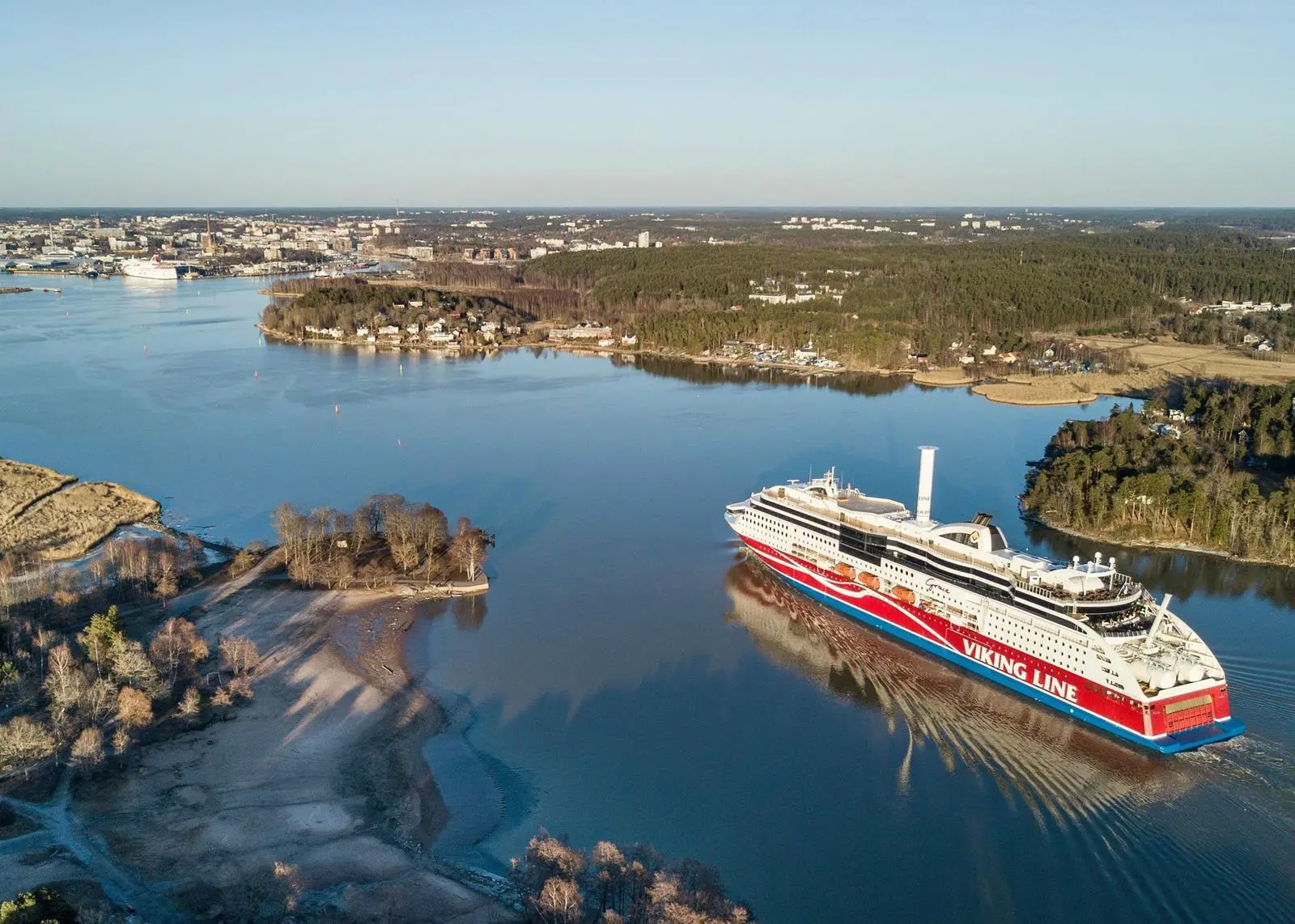
Analysis companies NAPA and ABB reviewed the data and were able to isolate an evident change in the propulsion power breakdown of Viking Grace, caused by the Rotor Sail. The same conclusion was confirmed with a strain gauge analysis, where forward thrust of the Rotor Sail was measured and converted into propulsion power.
Tuomas Riski, chief executive of Norsepower, said that initial challenges were overcome and since the end of September 2018, the technical availability of the Rotor Sail has been around 97%. “We are pleased to see that independent testing from respected, independent companies NAPA and ABB has shown impressive fuel savings potential on the M/S Viking Grace,” he said.
“This project has confirmed, that our technology works also with high-speed cruise ferries and that favourable results can be achieved with a service speed of 21 knots,” he added.
The 57,565 tonne Viking Grace was retrofitted with one medium-sized Norsepower Rotor Sail unit in April 2018, making it the first-ever global LNG/wind electric propulsion ship.
Based on the different analyses, the expected long-term change in Viking Grace’s annual fuel consumption has been verified to be between 231 and 315 tonnes per year, equalling an average propulsion power of between 207kW and 282kW.
According to the analysis results, the Rotor Sail delivers more forward thrust on the open sea legs of the route for the Viking Grace, but because the route is located mostly in the archipelago, the annual fuel savings potential is the same in both areas.
Related Articles
 ENERGY SAVING DEVICES
 ENERGY SAVING DEVICES
 AMMONIA