



Norwegian autonomous ship trials benefit from green drive of industries

The exact time needed to complete the trials is difficult to estimate, but they are expected last for at least two more years, said Nils Haktor Bua, Head of Section at the Norwegian Maritime Administration. Each system needs to be entered in the testing regime after another and once the projects have been completed, the ships in questions are planned to not have crew onboard, but their performance would be monitored from a control room on land, he said.
A container vessel called Yara Birkeland that was delivered in late 2020 is probably the best known of these, but two other cargo vessels are being tested in the same waters in southern Norway as well.
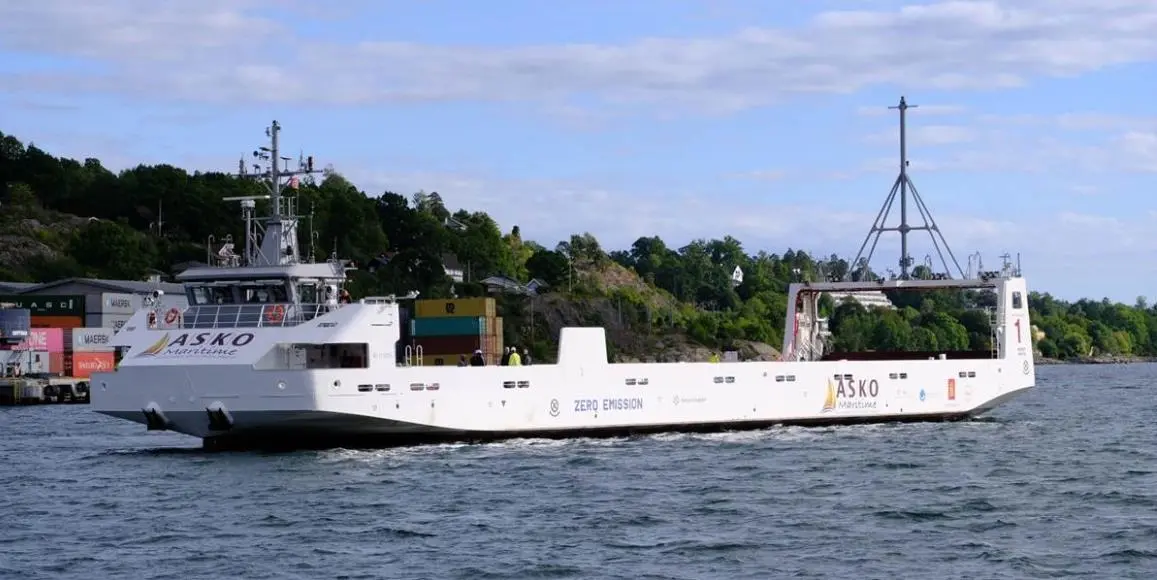
Asko Maritime, which serves the Norwegian grocery retail industry, took delivery of two battery powered “sea drones,” as it calls them, in the autumn of last year. Each one is capable of carrying 16 trailers of 29 tonnes and they are estimated to cut 5,000 tonnes of CO2 emissions per year from the company’s carbon footprint.
Norway is also partner in a project called Autoship that is funded by the European Union and involves two vessels, a Norwegian fish carrier and cargo vessel used in the inland waterways of Belgium. Testing of these vessels is also taking place during the spring of this year, Bua said.
In the near future at least, the operations of autonomous ships in Norway would be restricted to domestic trades as using such vessels in international trades would require IMO rules to cover them, which are not in place at the moment. As the first step to broaden the scope of operations of autonomous ships to international trades could involve a bilateral agreement between Norway and another country, such as possibly Denmark or the UK, on the principles of how such vessels could be employed, he said.
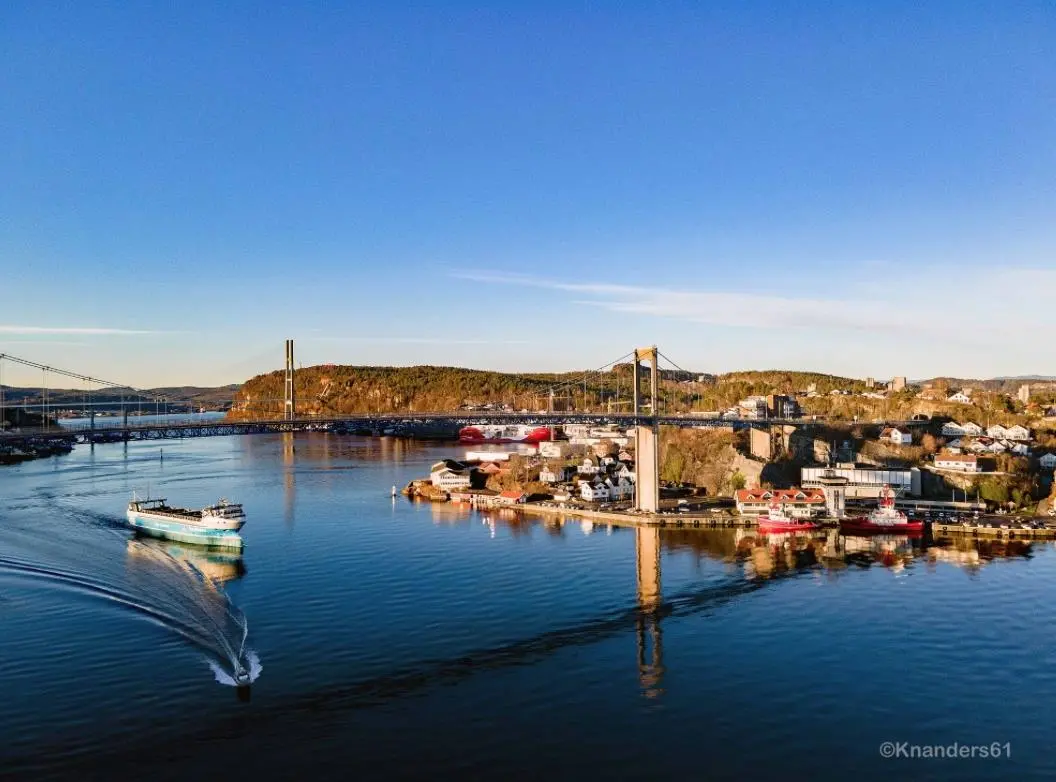
Meanwhile testing of Yara Birkeland, the battery powered container ship that will eventually become autonomous, is progressing well and the number of crew onboard has been reduced to three from the original five, said Marius Madsen, communications officer at the Norwegian chemicals group Yara that owns the 120 teu capacity vessel.
Yara Birkeland, which is operated on the seven mile service between Yara’s plant at Heroya and the port of Breivik, is an 80 metre long ship that has a 6.8MWh battery pack, which will give it a service speed of six knots, although its top speed is twice that figure.
AI needs to be trained further
“We still have crew onboard to train the AI (artificial intelligence). We are also implementing new technologies and adding features to the operations,” Madsen told The Motorship. The ship is learning to dock itself at each end of the crossing, but crew still needs to be on board to ensure that this and other operations of the vessel go according to plan.
However, a remote operations centre has been built at Horten and the plan is that Yara Birkeland and a number of other autonomous vessels would be monitored from there in the future. The centre has been built in cooperation with Yara and the Norwegian technology group Kongsberg and Asko that also plans to operate an autonomous vessel from there, Madsen said.
At least one autonomous vessel project that has not reached materialisation yet is under planning in Norway. This entails the furniture maker Ekornes, which has tamed up with the logistics group DB Schenker to carry its products from its own dock to the port of Alensund on the west coast of Norway.
A team that also includes Kongsberg, Massterly and consultant naval architects Naval Dynamics, has chosen the last named company’s NDS Auto Barge 250 design as the platform on which to base the concept. A 50 metre long vessel with a deadweight tonnage of 300, the projected ship would make 7.7 knots in service. The vessel and the remote operations centre would be fitted with a two- way data communication solution, the partners said.
DNV and its industry partners are running a research project called SAFE Maritime Autonomous Technology (SAFEMATE) that is being tested on Bastø VI, a ferry owned by there Torghatten group and which operates in the Oslo Fjord.
The system has three main elements: the first one to detect objects around the ship, the second to provide collision avoidance advice for the navigation system operator, and the third one to give a visualisation of the marine environment with the suggested route on the human–machine interface, or HMI.
One step at time
“Rather than starting with a fully automated ship, we are narrowing the scope by focusing on a relatively small aspect of vessel autonomy to verify the reliability of automated navigation with this system,” Grunde Løvoll, SAFEMATE project manager at DNV, said in a statement. “This means we can develop trust in the product without taking big risks and give the operator confidence that automated navigation works within the boundaries of safety,” he added.
Torghatten’s Chief Technology Officer Jan-Egil Wagnild continued: “The SAFEMATE project is an important proving ground for newly developed technology and processes that will ultimately be able to support safe automated navigation. Torghatten is taking a proactive role to facilitate adoption of this technology as part of its efforts to achieve autonomous shipping.”

SAFEMATE is a three-year research programme, which includes the Norwegian University of Science and Technology (NTNU) in addition to DNV.
“So far, the project has provided valuable insights into the challenges of and possible solutions to the introduction of smarter navigational decision- supporting systems. This is an important step towards autonomous functionality for the maritime industry,” Wagnhild concluded.
There is a lot of momentum behind one step at a time approach to automation, said Oystein Engelhardtsen, Group Leader Ship Autonomy at DNV in Oslo. Various companies around the world are involved in R&D projects that aim at using artificial intelligence and other forms of automation to help the bridge team in decision making, rather that performing tasks autonomously be themselves.
“We observe two clear development trends in the industry currently – systems to help humans in decision making on regular manned vessels and small unmanned, specialist vessels that are operated or at least monitored from a land based remote control centre,” he told The Motorship.
Two main uses for AI, gathering experience key
Artificial intelligence plays a significant role in both cases as it can be used directly to learn to perform actual tasks onboard the ship, or to provide material for use by engineers to produce more traditional software. Navigation, propulsion, steering etc. are among the functions that need to be addressed to and therefore, autonomous ships are actually a wide range of tasks rather than a single challenge that developers face, Engelhardtsen pointed out.
A situation when data link between the ship and the control centre ashore is lost is a crucial consideration for the development of autonomous ships. “This can happen together with something else unexpectedly happening onboard the vessel, such as propulsion or steering being lost,” he continued. In such an event, the system needs to be able to compensate for the lack of human presence onboard.
In the 2018 Class Guideline for Autonomous and Remotely Operated Ships, DNV introduced a notion called Minimum Risk Conditions, which looks at situations like this. It requires that in case that the data connection is lost, a vessel must still be able take appropriate action should anything critical occur, to ensure the safety of operation is not compromised.
Moving to the various projects to test autonomous ships in Norway, Engelhardtsen said that SAFEMATE benefits from the fact that it was installed on a commercial vessel already in service, which means that experience could be gathered much faster compared to a new building, which would have to be built first.
Projects such as Yara Birkeland or the two vessels of ASKO have their foundations in their owners’ drive to remove CO2 emissions from their operations. As the country’s coastline features many fjords and inlets, the use of ships in at least part of the transport chain is attractive. None of the projects currently in progress are about replacing existing vessels, but a modal shift to sea from land.
Gathering experience from operations is a key element in the development of autonomous shipping in all its variations to the theme, Engelhardtsen said, adding that given the complex and wide range of matters that need to be addressed, particularly for unmanned vessels, the major industry impact is likely to be related to manned ships for many years to come.
Related Articles
 ENERGY SAVING DEVICES
 LNG
LNG
 ALTERNATIVE FUELS & LUBRICANTS