



Not just batteries: models key to ropax efficiency savings
Broader trends in Ro-Pax
Tirelli noted that interest in battery hybridisation among operators in the passenger ferry has picked up within the Ro-Ro and Ro-Pax segment. “We have seen a radical change in appetite for new systems in the last ten years,” he said.
Tirelli suggested that shifts in the Ro-Ro and Ro-Pax segment were being pushed by regulatory changes, including IMO Tier III environmental regulations, as well as concerns about how EEDI regulations will be applied to existing tonnage.
“It will not be easy [for Ro-Pax vessels] to achieve the standards because of the way in which the formulas apply to passenger and vehicle shipping,” Tirelli noted.
Looking further ahead, shipowners are looking at solutions that ensure the continuity of their company and services, given concern about upcoming environmental regulations, as well as how to meet their demands.
Reconciling regulatory pressures with economics was more complicated in public-facing vessel segments, such as passenger ferries, than in other segments, such as tankers or bulkers. “Environmental considerations are likely to play a part in owner considerations in the Ro-Pax market, along with underlying economics,” Tirelli said.
Popular attitudes towards environmental emissions from vessels in port were becoming an increasingly relevant issue in a number of countries worldwide. “Because passenger ferries and Ro-Pax vessels often berth in or close to major population centres, and especially in Europe , emissions are coming under closer scrutiny. Particularly as some urban centres, both in US and Asia, are following the example set by the EU and are developing plans to reduce overall emissions in their urban centres.”
Finally, The Motorship notes that the expansion of shoreside power connections in some regional markets was also likely to have encourage shipowners to consider diesel-electric configurations in Ro-Pax vessel design. One of the principle benefits of the application of battery systems was the possibility of eliminating environmental emissions in port if shoreside connections supplied green electricity to the vessel.
More than components
However, Tirelli noted that the creation of a detailed use case was necessary to accurately assess the potential benefits of adopting battery hybridisation for any given vessel.
This systemic approach was key to understanding the potential benefits of integrating energy storage systems into diesel-mechanic, diesel-electric (or even potential full-electric) configurations for newbuildings, rather than narrowly focusing on component level advances in battery power density, life span and weight and footprint reductions.
Before embarking on a new project, Wärtsilä develops highly sophisticated models of the energy consumption of individual ships, based on integrating ship system level data with wider ship navigation data and wider route-specific data on sea state, current and weather conditions.
As few ship owners are able to supply such data at the once per second frequency upon which Wärtsilä’s analysis team prefers to work, Wärtsilä is able to offer a proprietary Wärtsilä Data Collection Unit (WDCU) that can retrieve operational data from a given vessel, retrieving everything from load ramps to the start up and shut down of equipment.
The extraction of meaningful data from these extensive data sets draws on Wärtsilä’s advanced digital capabilities. Tirelli noted that “this step was impossible before”.
One of the main focuses of Wärtsilä’s analytical tool was on the impact of fuel types on overall vessel performance. “The introduction of LNG-fuelled engines often coincides with wider changes, as LNG impacts vessel design, operation and fuel availability,” Tirelli noted.
The analytical tool also allowed shipowners to accurately gauge how investments would impact operational performance, and ultimately the bottom line. “Through our simulation tool, we are able to demonstrate whether a new energy source, such as a PV panels, or an energy consumer, such as enlarged tunnel thrusters, would make economic sense or not,” Tirelli added.
The process of data collection and analysis did not stop once an HY system was installed. The system continued to collect data during operation. “The last vessel becomes the starting point for planning the next vessel,” Tirelli said simply.
Ro-Ro/Ro-Pax benefits
Turning to the Ro-Pax and Ro-Ro sectors, Tirelli noted that while there was a difference between short-haul ferries and longer distance vessels, the difference between the two types of vessel did not reflect hotel load so much as the proportion of the voyage which was spent operating at normal operating speeds, rather than slowing before port, manoeuvring or loading alongside.
“The economics of an installation is not related to the size of the vessel, but rather according to its specific operational patterns.”
However, while the operational fuel efficiencies were clear for smaller short-haul ferries, the additional CAPEX cost of installing ESS, EMS and electrical systems is proportionately greater, Tirelli admitted.
Turning to older tonnage, Tirelli noted that the collecting data from a WDCU on operational vessels offered significant efficiency savings: in fact, the potential for efficiency savings offered by hybrid solutions for older vessels greatly exceeded those offered for newbuildings.
“For retrofits, the potential is huge: while newbuildings are designed with efficiencies in mind, some older vessels were not designed with the same perspective,” Tirelli explained.
Tirelli noted that the optimisation analysis offered of the highly detailed second-by-second data collected from Wärtsilä’s WDCU was likely to be more detailed than that currently collected by older vessels’ systems, and route optimisation solutions.
A further consideration for owners of older tonnage was the potential payback period for HY solutions. Once again, Tirelli noted that the payback period varied – and that there may well be a variation between short-haul ferries and larger Ro-Pax ferries with a greater number of cabins, and a correspondingly higher hotel load.
“Speaking very generally, I would confidently predict that the payback period would be less than five years, and lower than that in some specific cases.”
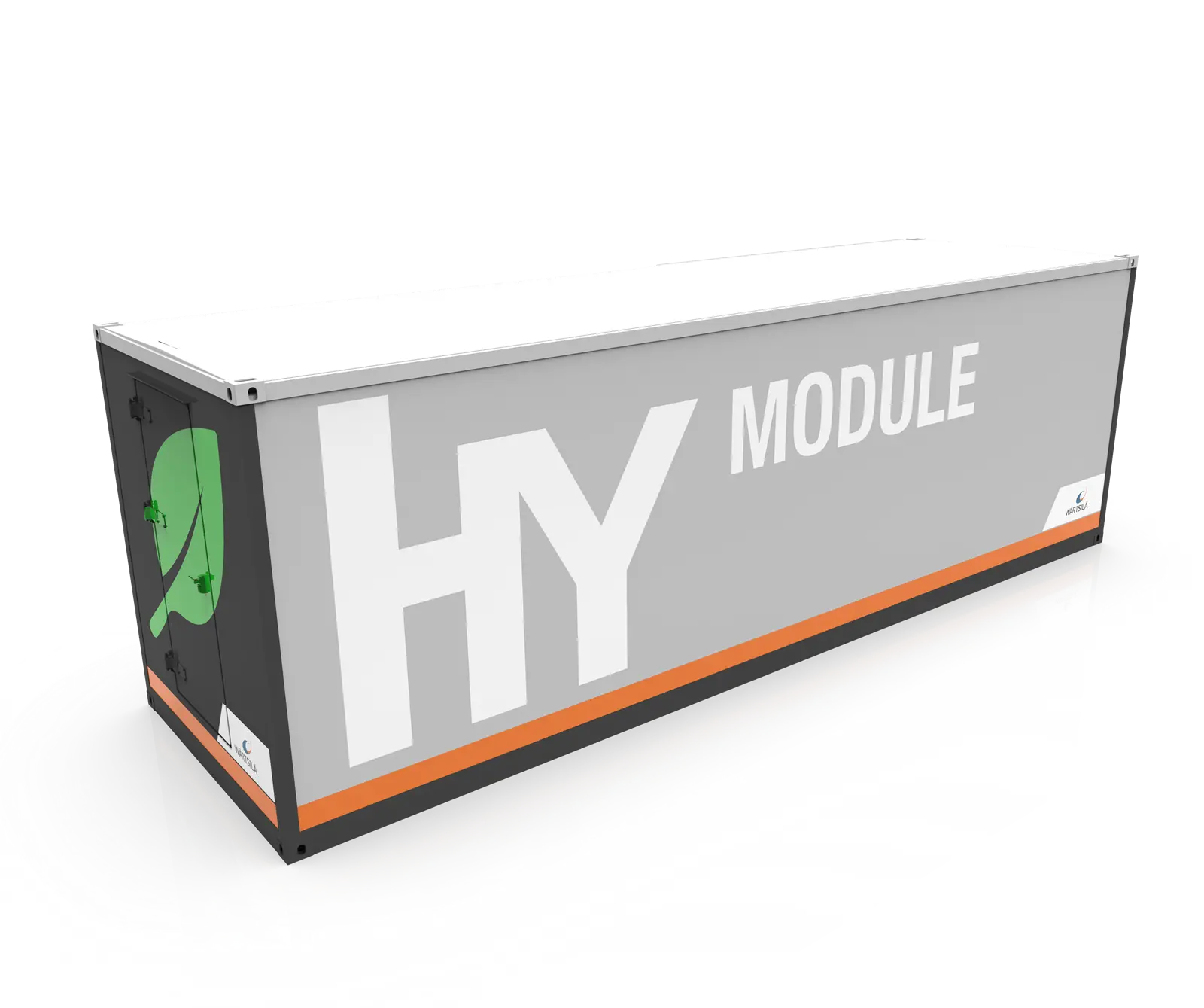
One of the reasons for the confidence is that Wärtsilä is offering a modularised energy storage system solution, the “HY Module”, that importantly limits the amount of lost cargo capacity. “It occupies the same space of a TEU, and many operators are looking at installing it on the truck deck of a Ro-Pax,” Tirelli said.
The containerised solution is also an elegant solution to both classification society requirements and space limitations aboard some vessels that were not designed with separate battery rooms, Tirelli concluded.
Related Articles
 INTERVIEWS
 CONVENTIONAL FUELS & OILS
 GENERAL NEWS