



Nuclear ships – what has been achieved to date?
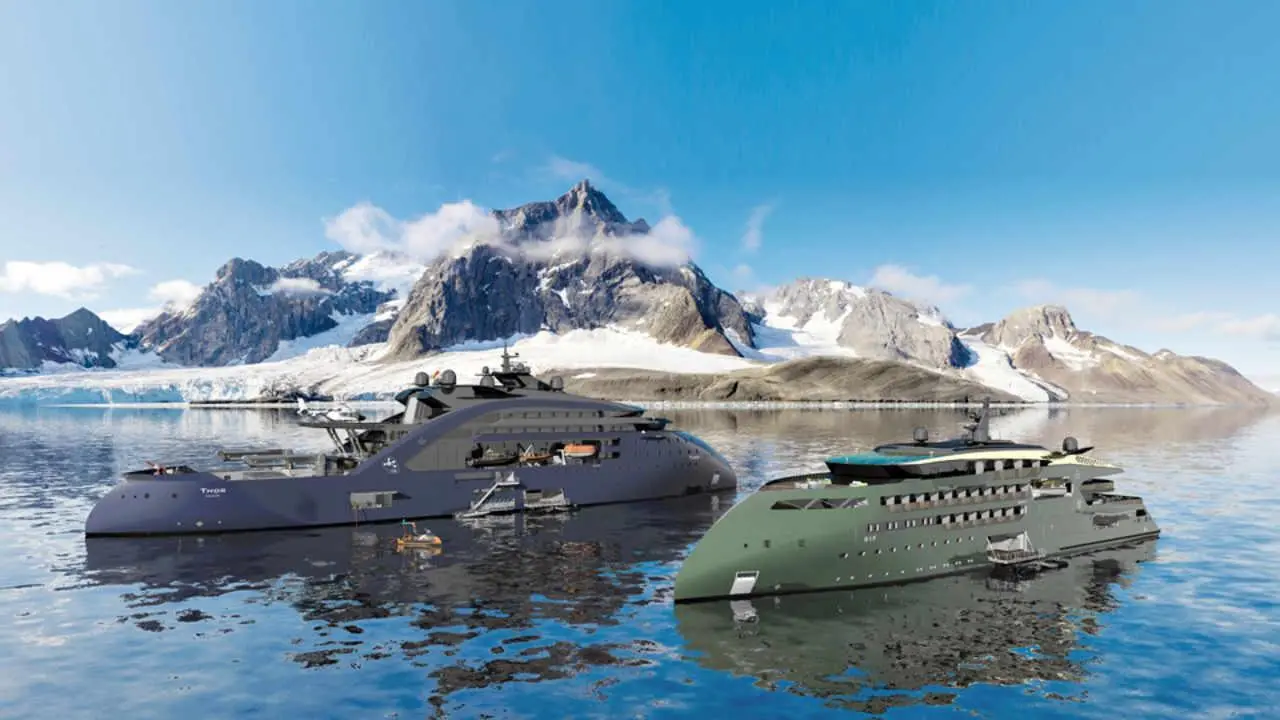
Exactly why that should be the case is open to conjecture, but there have been a very few attempts to bring shipping into the nuclear age. Before exploring those, it is important to understand a little about the history of nuclear physics.
Mankind has had an understanding of elements dating back to ancient times, but atomic theory was by all accounts the brainchild of the Greek philosopher Democritus in around 400BC. For most of the next 2,000 years scientific interest was in categorising elements and searching for means to convert one into another. At the beginning of the 20th Century, Albert Einstein suggested that breaking down the nucleus of an atom would release energy.
Not all were convinced but some where and in 1932, physicists John Cockcroft and Ernest Walton split the atom for the first time and confirmed the theory. The focus of attention had by now moved from transmuting or creating new elements to harnessing the energy of the atom. As with many innovations, military use was one of significant interest. HG Wells had even predicted this as early as 1914 in the novel The World Set Free where the plot includes description of atomic warfare that renders cities unliveable for years.
Scientists may have made other uses of nuclear energy, but it was the atomic bombs dropped on Japan towards the end of WW11 in 1945 that grabbed public attention and likely concentrated minds on the extreme hazard of nuclear energy. From 1945 onwards, four nations, Great Britain, USA, USSR and France – ironically the four permanent members of the UN Security Council – all involved themselves in developing nuclear weapons. After the Cold War began in 1947 a whole generation was to grow up under the cloud of a nuclear Armageddon.
After his election as President of the USA in 1952, Dwight D Eisenhower delivered a speech at the UN which has become known as Atoms for Peace. It was an attempt to move nuclear development away from purely military purposes to more peaceful aims although without much planning for how this could be practically achieved.
By 1955, the year in which USS Nautilus, the first ever nuclear submarine, was launched, US officials were well aware that nuclear power would not be a tool of economic development for years, if not decades, to come, and the remainder of the Eisenhower administration was marked by experimentation in how civilian nuclear technology could be used as a tool of foreign policy.
Which is where the first civilian nuclear ship, Savannah, had its genesis. Eisenhower wanted to showcase peaceful uses for nuclear energy and hit upon the idea of a ship which could take a nuclear reactor around the world allowing people and foreign governments to witness a demonstration of nuclear power that they might not otherwise understand the potential for.
It took four years to build and cost almost $50 million. Launched in 1959, Savannah did not follow the development of nuclear warships and featured a civilian standard reactor using low-enriched uranium and with considerable emphasis on safety and reliability. It would be another three years before the reactor was installed and declared fit for service.
Although the ship had a small cargo capacity it was more of a propaganda platform with luxurious passenger accommodation and public spaces. It sailed for three years in this configuration before being converted entirely to cargo carriage.
The 13,599GRT Savannah was 181.66m in length and with a beam of 23.77m. The reactor was a pressurised water type rated at 74MW and operating at 120 Bar. All nuclear reactors are nothing more than a source of heat. The heat is used to produce steam by means of heat exchangers to drive a turbine which in turn produces electricity. On a ship, the turbine could be used through a gearbox to give direct mechanical drive in the same way that conventional steam turbine powered ships were configured. Savannah had a 15.1MW propulsion turbine driving the single mechanical linked propeller. The vessel had a top speed of 24kt and a service speed of 21kt.
The high pressure needed for the cooling water system in Savannah and later ships is considered a hazard. By contrast a modern gas carrier operates at pressures up to a maximum of around 20bar but much lower if refrigerated as well.
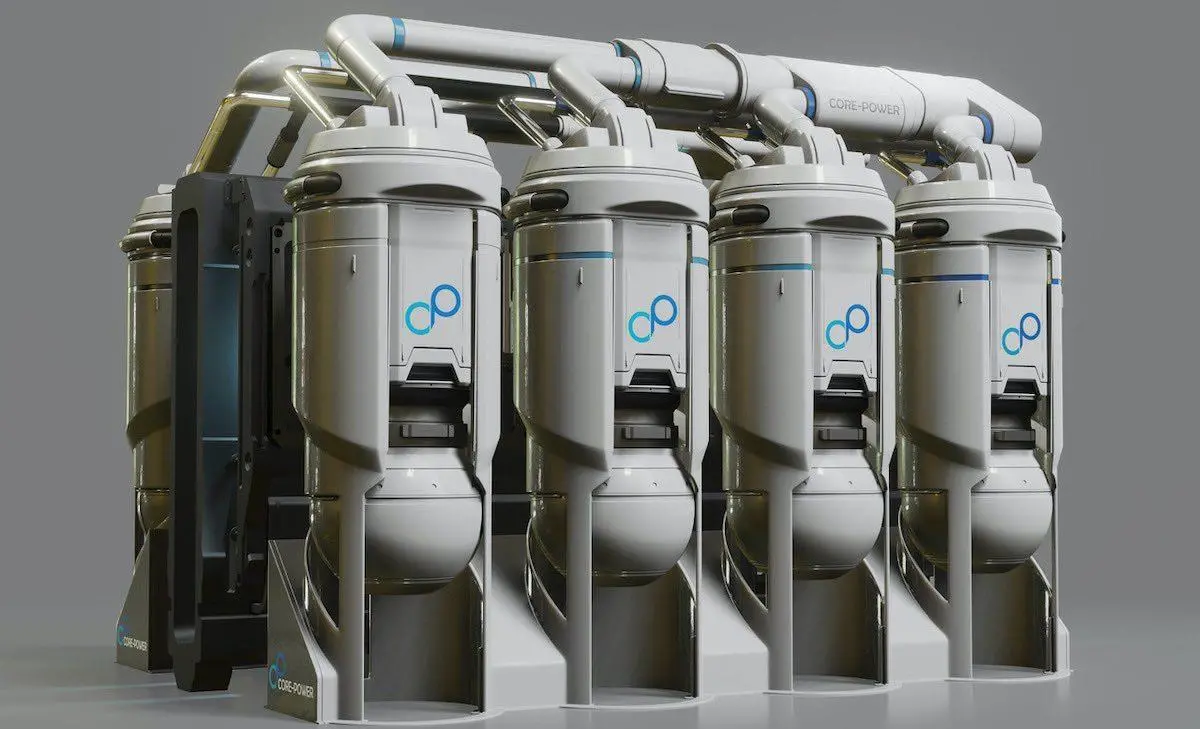
Between 1965 and 1968, Savannah demonstrated one of the prime benefits of nuclear power for commercial vessels. In that period, it sailed over 300,000 nautical miles without any need to refuel. It was eventually refuelled in 1978 and continued to sail for another three years before being laid up.
The ship has been shifted several times since and undergone needed repairs but has never sailed commercially. There have been several proposals for its future use as a museum or hotel. In 2023 MARAD announced in would finally fully decommission the ship and remove the reactor after which proposals for future use would be considered.
The next nuclear cargo ship was the 14,000dwt bulk carrier Otto Hahn commenced in 1963 by Howaldtswerke Deutsche Werft in Kiel, Germany. After being launched the in 1964 it was 1968 before the ship’s 38MW nuclear reactor which operated at 80 Bar was taken critical and sea trials began. In October 1968 the ship was certified for trading but did not load its first cargo until 1970 having been used in the intervening period for research purposes. Between 1968 and 1972 the ship covered 250,000 nautical miles using just 22kg of Uranium fuel.
In 1979 the ship’s nuclear service ended having clocked up 650,000 nautical miles. After the reactor was removed and conventional diesel power installed, the ship began a second career in 1983 as a container carrier. Otto Hahn ended its life on the beach at Aland in 2009.
Leaving aside the nuclear icebreakers built by the USSR and later Russia, only two other non-military nuclear ships were ever built. The Japanese vessel Mutsu and the USSR ship Sevmorput. Mutsu was built as a general cargo ship but never traded. She was completed in 1972 but after a minor incident during her testing phases was effectively laid up before being converted to the diesel electric research vessel Mirai in 1996 after the reactor was removed. The vessel is still operational in this form.
Sevmorput can perhaps claim to have the most successful career as a commercial vessel. Built originally at the very end of 1988 as a LASH carrier the ship has more recently been operated as a container ship. At 260.3m in length and with a deadweight of 34,615 it is the largest of all the four commercial vessels built. It is also the most powerful with a 135MW reactor operating at 40bar. .
The vessel operated mostly in the Russian Arctic although it did make several international voyages to Vietnam and more recently from the Russian arctic around to St. Petersburg. The ship had a near nine year break in operations between 2007 and 2016 when it was variously reported as to be decommissioned or converted to a nuclear drill ship for use in Russian Arctic waters. However, on its return to service in 2016 it was used for transport of containers and has continued in this service since. In December 2023, when the vessel was almost 35 years old it suffered a small fire when in port although this was said not to have been nuclear related and no safety issues were raised. It has been rumoured that the ship will be decommissioned in 2024 but this has not been confirmed. Information about the ship’s operational distance covered is not available but it has been said that refuelling has only taken place three times in the vessel’s lifespan to date.
The four vessels mention above the only ones with a non-military purpose. Their record is not particularly impressive beyond the distances sailed and number of refuelling operations but then they were conceived and constructed when operational demands on ships and ship sizes were very different from today.
Far more military nuclear vessels have been built with over 700 surface vessels and submarines having been constructed. Their safety record is generally good although eight nuclear submarines have sunk, and one was scuttled. The last incident involving a nuclear submarine was in 2003 and involved a decommissioned craft under tow. No surface vessels have been lost.
Overall, it would be fair to say that even though all of the vessels employed pressurised water reactors, the safety record has been very good. For the proposed new generation of commercial vessels, the technology used will likely be different and with an ever lower level of risk.
The next chapter looks to be opening soon but is probably a decade away yet. If Sevmorput is indeed decommissioned, the time between its retirement and the first of the next generation nuclear commercial vessels will be the only time since 1965 that no commercial nuclear vessels have been in existence if not fully operational.
Related Articles
 AMMONIA
 AMMONIA
 OTHER ALTERNATIVE FUELS