



Oil viscosity key in EAL choice for stern tube bearing installations
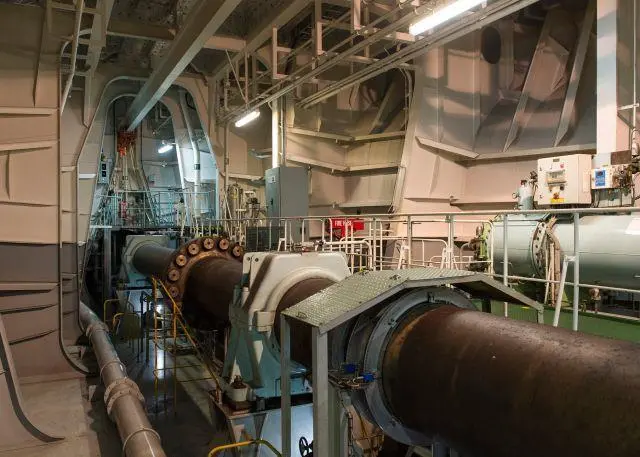
ABS’ Joint Development Project (JDP) with Vickers Oil and Imperial College London identified key characteristics of EALs compared to mineral oil lubricants. Findings included that the viscosity of EALs is more stable than that of mineral oils, with respect to changes in temperature; and EALs demonstrated relatively lower pressure-viscosity coefficients than mineral oils, indicating EALs may form thinner oil films, potentially insufficient to protect surfaces from wear under edge loading conditions.
Derek Novak, ABS senior vice president of global engineering and technology, said: “Working closely with our project partners in an extensive study of EAL properties, we found oil viscosity is the main determinant in choosing the optimal EAL for normally operating stern tube bearing installations.”
Safety benefit
The project also found that using EALs with higher pressure-viscosity coefficients, compared to other EALs of the same viscosity, may provide some safety margin in shaft-alignment sensitive installations; EALs may offer less margin in shaft misalignment conditions, therefore particular attention should be taken for correct shaft alignment; and using EALs with higher viscosity, compared to a mineral oil of lower viscosity, may provide additional tolerance for edge loading wear.
Vickers Oil technical director Chris Wholley said the project team were “able to develop a deeper understanding of lubricant behavior in a journal bearing, operating both normally and under edge loading conditions, which will help us to give the best advice to owners and operators wishing to reduce the adverse effects of shaft misalignment, and inform our product development process.”
Interest in EAL performance has grown following an increase in the number of new build stern tube bearing failures in 2014.
Related Articles
 ALTERNATIVE FUELS & LUBRICANTS
 FUELS & LUBRICANTS