



On-line measurement of catalytic fines in HFO systems
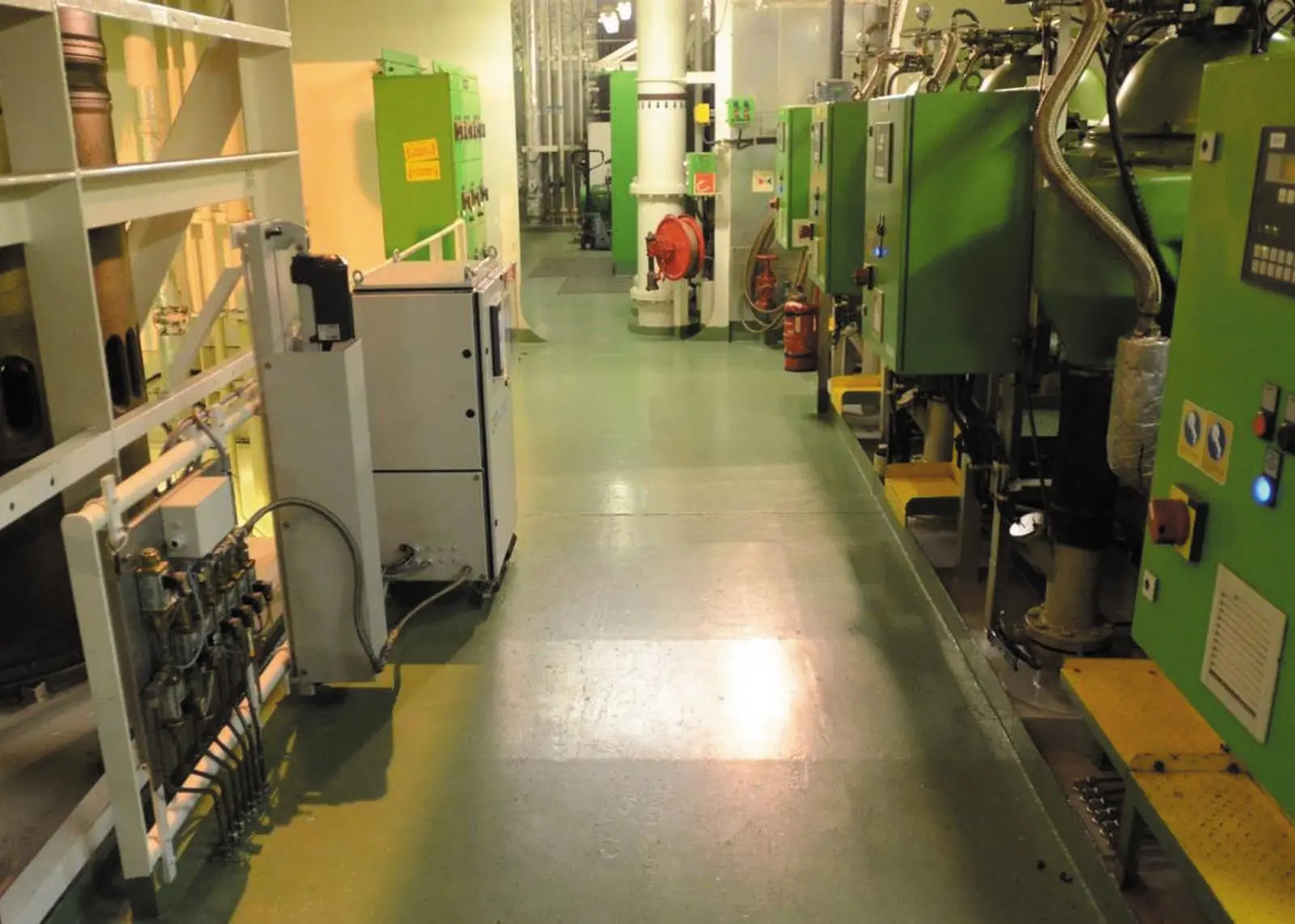
Cat fines (catalytic fines) are hard aluminium and silicon oxide particles that are normally present in heavy fuel oil. For refineries relying on catalytic cracking, cat fines are added to the crude oil to enhance low temperature fuel cracking. Therefore, heavy fuel oil contains non-vaporised residual oil and will naturally contain cat fines that have not been recycled or filtered out at the refinery. The maximum concentration of aluminium plus silicon according to ISO 8217:2012 is set to 60ppm. This means that 60mg Al + Si is allowed for each kg of fuel. However, many ship owners still purchase fuel oil according to the previous standard allowing 80ppm cat fines. Major engine manufacturers recommend less than 15ppm cat fines at the engine inlet, meaning that there is a need for an efficient onboard fuel oil treatment system.
Cat fine wear
Recent MAN Diesel & Turbo statistics based on replica impressions of cylinder liners shows that cat fines where present in a great majority of high cylinder and piston ring wear damage cases in low-speed engines.
When an engine fails due to excessive wear, the overhaul will normally require new cylinder liners or, in some cases, reconditioning of damaged liners in addition to new piston rings. Consequential damage of pistons and turbochargers is not unusual. However, the most expensive cost is often the resulting off-hire period for the vessel.
Hence, it is important to keep the onboard fuel treatment system in good condition. Previously, there was no on-line measurement tool for cat fines on the market. This changed when Chris-Marine introduced ‘Fuel Analyzer’ at SMM in 2012. The device monitors the cat fine level continuously in the fuel treatment system and the result may be reviewed from the superintendent’s office.
System Management
In a typical on-board fuel treatment system fuel oil is pumped from the bunker tank to a settling tank (once per day at 100% load). Each purifier is normally capable of feeding the day tank with a sufficient amount of fuel and the feed rate through each separator is controlled by a feeder pump. A second purifier is installed for redundancy. After purification, fuel is fed to a day tank (or service tank). A vessel operating on HFO normally has two day tanks: one for high-sulphur HFO for use outside ECAs and one for low-sulphur HFO for use inside ECAs. When a day tank is full, there is normally a return line allowing overflow back to the settling tank.
Root causes
The Fuel Analyzer will continuously measure the cat fine level at different sample points. If a pre-set alarm level is reached at the engine inlet, it is possible to switch to cleaner fuel from the second day tank as an emergency action. More importantly, it is possible to analyse what caused the level to rise and implement counter-measures preventing similar events.
With the typical configuration, it is possible to trace a problem to a) settling tank; b) purifier or c) day tank by comparing the measurements from the different sampling locations. Cat fines have a higher density than fuel oil and therefore tend to settle at the bottom of the tanks. In rough sea, accumulated cat fines could stir up and suddenly generate a high concentration at the tank’s outlet. This may be circumvented by cleaning the tank as soon as the measurement device picks up an elevated cat fine level at the tank’s outlet (purifier inlet or engine inlet).
Further, if the purifier efficiency is too low (also monitored by the device), then the cat fine level will unavoidably rise at the engine inlet. The back-up purifier system may then be used while cleaning or repairing the poorly-performing purifier.
The different counter-measures will result in cleaner fuel being fed to the engine and therefore less engine wear and less risk for serious damage.
Technology Review
The Fuel Analyzer is based on NMR technology capable of accurately measuring aluminum content in fuel oil.
The device monitors up to seven automatic sampling points and one off-line point at 1-10bar and 25-140°C. The off-line point may be used for analysing manual samples taken during bunkering or samples from settling and storage tanks during trouble-shooting.
The system is designed for engine/separator room conditions and the only consumable component inside is an air conditioning unit with an expected life time of five years. Additionally, a maintenance scheme is recommended every four months (managed by crew).
The device takes 90-264V/1,000W (average 300W) single phase electricity and may optionally be connected to the Internet through an Ethernet connection. Measurement data may then be reviewed remotely (e.g. from the superintendent’s office) over the Internet.
The complete system weighs around 200kg and needs 2m x 1.5m x 0.4m installation space in the separator room.
Product Development
The technology behind the Fuel Analyzer was developed in close cooperation between NanoNord and Aarhus University, one of the leading institutes in Europe for NMR researches. Lloyd’s Register FOBAS has supported the development of the device since its conception back in early 2006. The product is marketed and sold by Chris-Marine.
Related Articles
 ALTERNATIVE FUELS & LUBRICANTS
 FUELS & LUBRICANTS