



Oshima Shipbuilding plans environmental super fuel
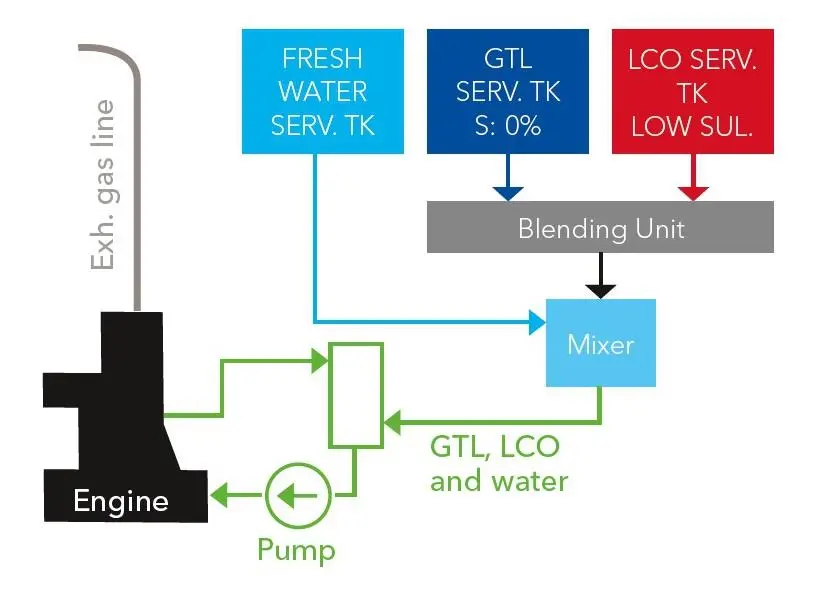
The fuel – a mix of gas-to-liquid (GTL), a secondary refinery product called lightcycle oil (LCO) and water – would enable compliance without the capital expense of onboard equipment to reduce NOx and SOx emissions.
LCO and GTL can be stored separately in normal fuel tanks. The fuel can be used in existing engines without modifications and is blended on board by a mixing unit.
When mixed in the right quantities, GTL and LCO create a fuel that meets the requirements of the 2020 0.5% global sulphur cap. Adding water and adjusting the fuel mix results in a fuel that satisfies both the 0.1% sulphur limit in emission control areas and Tier III NOx limits. Specific fuel oil consumption, CO2 emissions and soot formation are also reduced.
Oshima Shipbuilding and class society DNV GL noted that preliminary tests of fuel characteristics, engine performance and reliability have yielded satisfactory results. Further tests are planned.
The companies noted that the biggest challenges are the supply and bunkering of the individual fuel components. Similar to other fuels there are uncertainties with price fluctuations over time.
The cost of the new fuel mix is expected to be higher than standard heavy fuel oil at current rates but lower than for other low-sulphur options, making it an attractive potential fuel alternative with marginal additional investment costs.
Related Articles
 ALTERNATIVE FUELS & LUBRICANTS
 FUELS & LUBRICANTS