



P&O Maritime Logistics to convert MCV to MeOH-fuelled hybrid Cable Layer
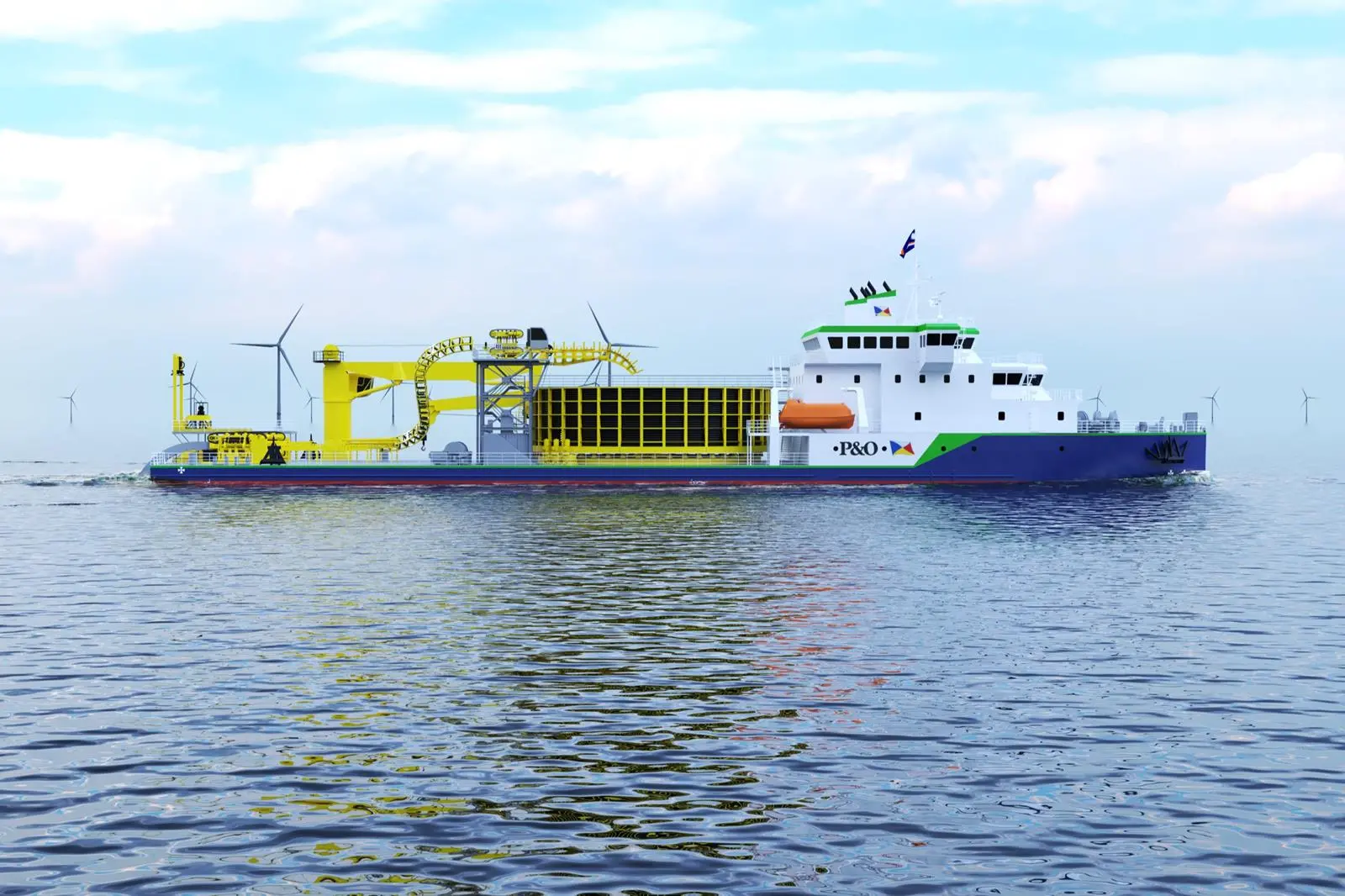
The new MCV, which has been is designed by C-JOB Naval Architects, is expected to start operations in the third quarter of 2024. The company anticipates that one of the main use of the vessel will be to connect offshore wind farms with the mainland.
The newly converted vessel will feature a single basket cable carousel with an outside diameter of 24 metres. With this astounding span, a core height of 5.5 metres, as well as a 30 tons SWL AHC subsea crane, the newly converted vessel is a testament to P&O Maritime Logistics commitment to adapt its portfolio for future energy needs.
Marc van der Zwaluw, Project Manager at C-Job Naval Architects, commented: “We are pleased to support P&O Maritime Logistics with the design of a cable-laying vessel by repurposing an existing module carrier vessel. With the increasing demand in the offshore wind sector, this vessel will be able to meet the operational demands for the installation of next-generation windmill infrastructure thanks to its optimised deck layout.
“Furthermore, in close cooperation with P&O Maritime Logistics, we were able to create a design that was best suited to their operational profile. The design focused on optimised vessel performance and features a DP-2 positioning system and a low fuel consumption propulsion layout that is ready for green methanol fuel and zero emission operations.”
Martin Helweg, CEO of P&O Maritime Logistics said: “The conversion of our vessel is a real step change. It means, apart from expanding our existing services and products into a more specialised offering, that we can also make a positive contribution to the decarbonisation of our industry. One way of doing this is by using alternative energy to power the converted vessel. The other important contribution is that the Cable Laying Vessel will predominately support the construction, development, and maintenance of existing and prospective wind farms. Lastly, and by repurposing an existing vessel, we are able to extend the lifetime of this particular product quite significantly to keep up with the increasing demand in the sector.”
Related Articles
 METHANOL
 METHANOL
 2-STROKE & 4-STROKE