



Prince Madog H2 retrofit certified
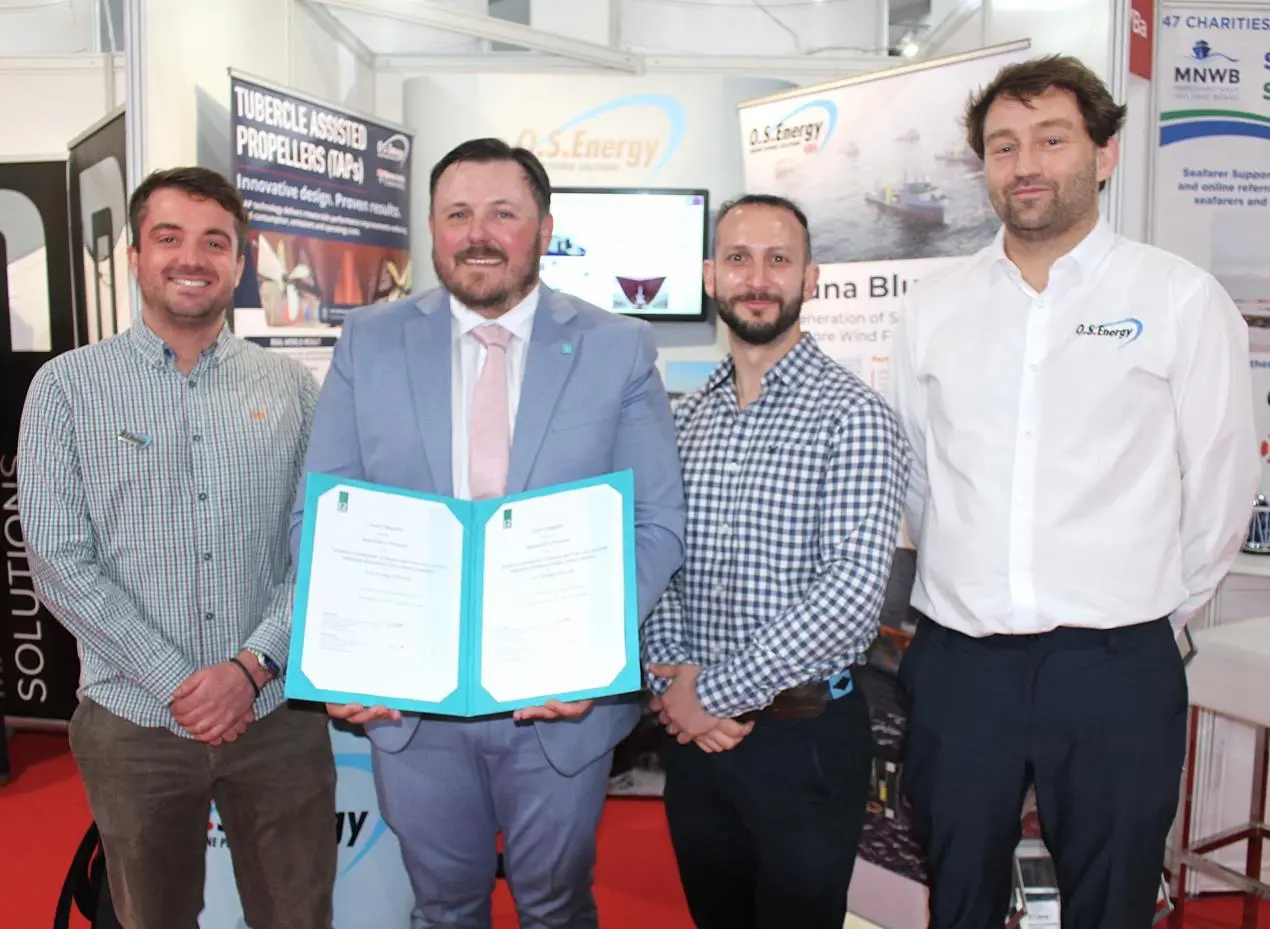
The certification, presented at Seawork 2026 in Southampton, covers the vessel’s hydrogen propulsion retrofit under LR’s ShipRight risk based certification framework, which provides an assurance pathway for innovative technologies that fall outside conventional regulatory standards.
“Through our ShipRight risk based certification framework, we are helping innovators bring new technologies to market while maintaining the highest standards of safety and assurance,” said Mark Nijhoff, lead specialist Piping & Decarbonisation Systems at Lloyd’s Register.
“Projects such as the Prince Madog ‘TransShip II’ project are important because they demonstrate that hydrogen technologies can be implemented safely and pragmatically across the maritime sector.”
The project has been led by vessel owner O.S. Energy’s naval architecture and R&D office in partnership with hydrogen and clean energy systems specialist Ecomar Propulsion. Work included the development of a gaseous hydrogen storage system and the detailed integration of fuel cells, batteries and supporting onboard systems.
The certification follows LR’s earlier approval in principle for the design and confirms the safe integration of the hydrogen system in line with class requirements. The project has also received support through the UK Government’s Clean Maritime Demonstration Competition.
Oliver Cornforth, head of projects at O.S. Energy, said: “This significant milestone reflects the hard work and dedication of the entire project team over the last 3 years. We now look forward to completing the hydrogen-battery retrofit and demonstrating the zero-emission operation of the Prince Madog.
“The Prince Madog will be the first sea-going, manned hydrogen retrofit of its kind, and the project is helping to establish a pathway for the adoption of hydrogen propulsion on workboats and larger commercial vessels, supporting the maritime industry’s transition towards Net Zero 2050.”
Nik Lekkas, chief technology officer at Ecomar Propulsion, added: “It also demonstrates the growing maturity of hydrogen-powered solutions and gives the industry greater confidence in adopting zero-emission clean energy and propulsion systems.”
Related Articles
 AMMONIA
 HYDROGEN
 HYDROGEN