



Reference list for Hull Vane grows
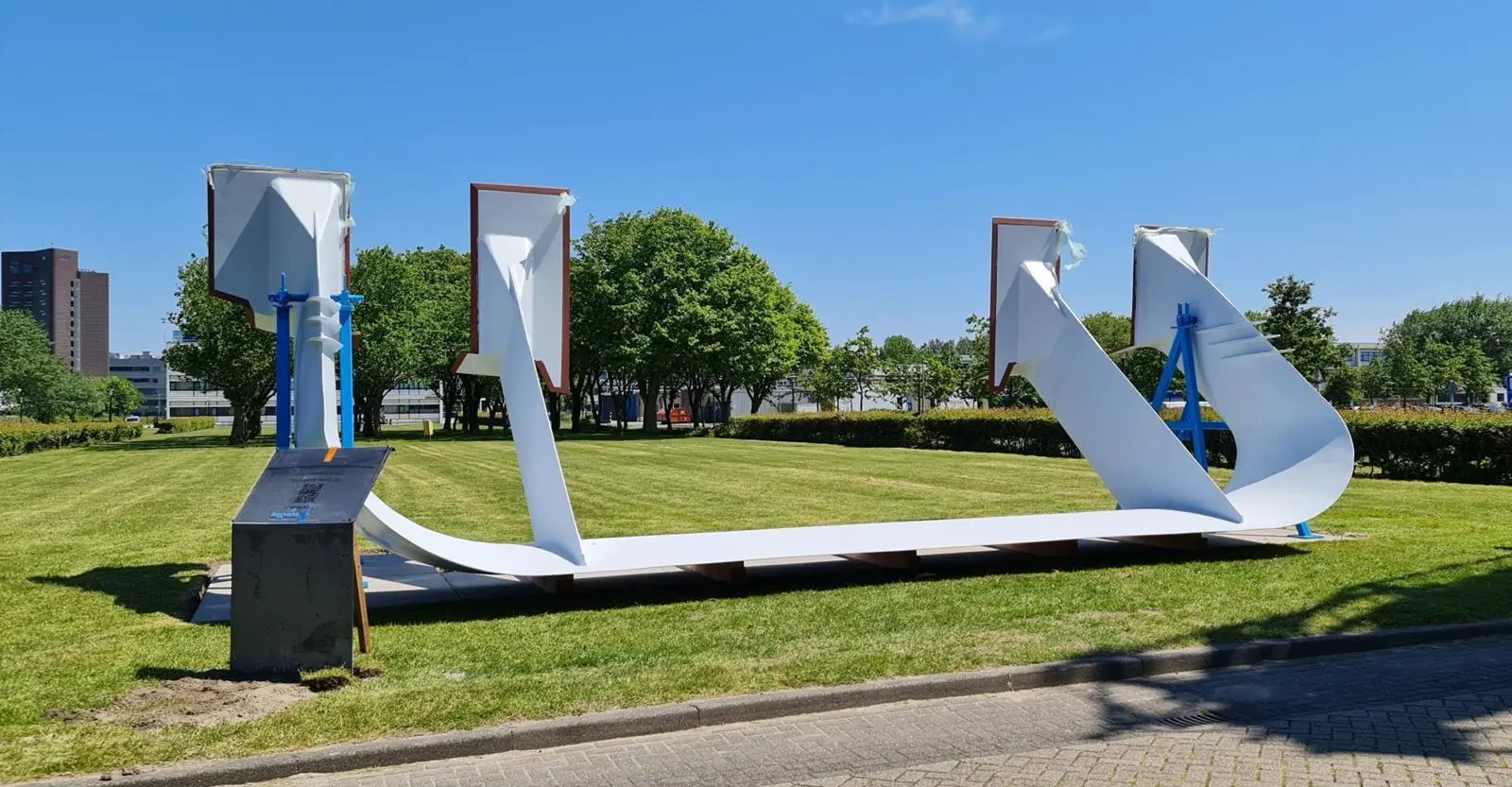
A Dutch invention, Hull Vane, sometimes called an underwater spoiler, consists of a submerged transom wing which renders ships quieter and more efficient, while improving their seakeeping.
Bruno Bouckaert, sales director of Hull Vane BV, explains that Hull Vane works differently to conventional hydrofoils. The purpose of the Hull Vane is not to lift the ship out of the water, but to generate a propulsive force and to reduce the wake. When a ship makes less waves, it is more efficient. The effects are easy to see and hear, he says.
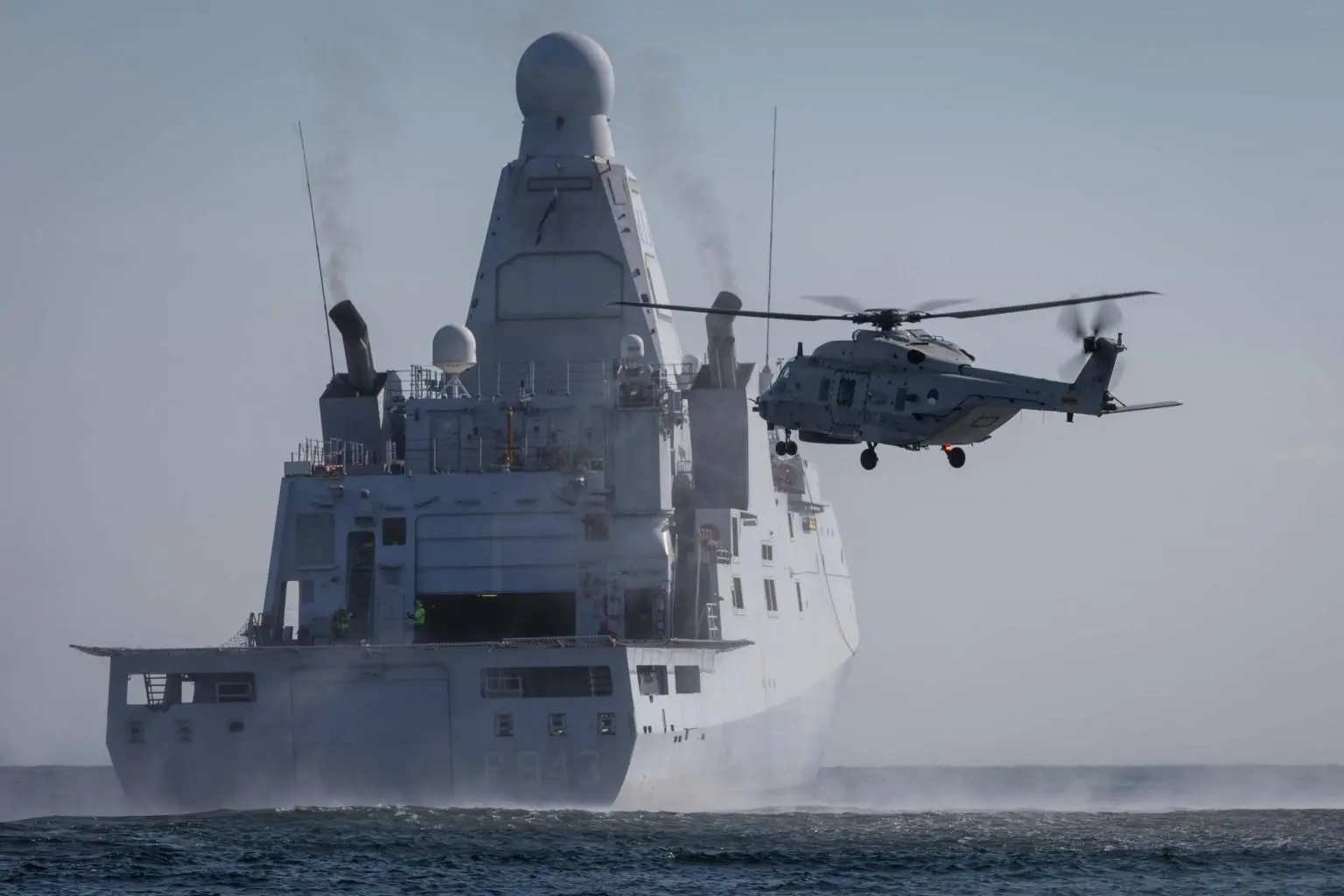
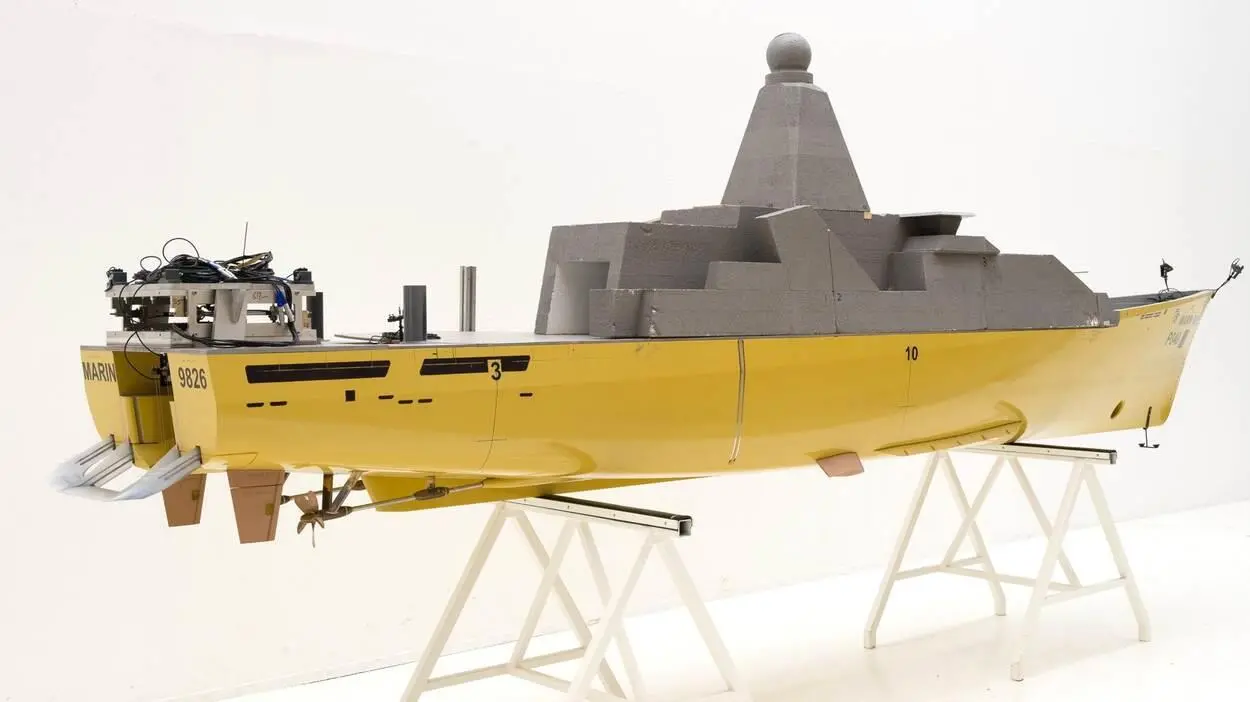
The latest reference for the technology will be installed in early 2023 on HNLMS Groningen, a 108-metre Holland Class ocean-going patrol vessel. It is the largest and heaviest installation to date, and with a span of 12 meters and a chord length of two, it is probably the largest hydrofoil ever built. It is expected to reduce annual fuel costs by 10%.
Besides energy saving, which automatically leads to a reduction of CO2 emissions, the Hull Vane also offers tactical advantages for the ship. Due to the suppressed stern wave, the vessel leaves much less visible wake, making it less visible to satellites, drones and even certain types of torpedoes. Helicopter landings will be safer in rough weather, and it is expected that the slipway in the stern can be used more frequently to launch and recover fast daughter craft. The ship will also have a higher top speed.
Hull Vane is also suitable for offshore support vessels, says Bouckaert. Hull Vanes have been installed on a 55-metre fast supply and intervention vessel named Karina and on a 57-metre seismic research support vessel named Linde-G. The company is currently building Hull Vanes for a 60-metre fast supply vessel and a 42-metre dive support vessel.
Additionally, Hull Vanes have been installed on around 20 motor yachts ranging from nine to 45 metres in length, with larger projects now underway. The company’s references also include patrol vessels, coast guard vessels and fisheries inspection vessels.
“Passenger vessels are also an important market,” says Bouckaert. “We have installations on a 30-metre commuter ferry in Switzerland and on a 30-metre representation vessel in the Netherlands. We are currently working on a project for much larger (over 100-metre) expedition cruise vessels, where the potential is enormous. Due to the current high fuel prices, we receive a lot of inquiries nowadays, in particular from the passenger ship market.
“On all the vessels where we have installed Hull Vane, the savings are over 10% at their operating speed, and in some cases up to around 25%.”
Hull Vane has undertaken CFD studies and model tests on cargo vessels (container, roro, ropax and heavy-lift vessels), and Bouckaert says that there is good potential there as well if the vessels operate at a good speed in relation to their length. “We look first and foremost at the Froude number, which is a ratio between the speed and the square root of the length of the ship.”
(V = ship speed in m/s, L = length on waterline in m, g = 9.81 m/s^2)
“The Froude number defines whether a ship is a full displacement, semi-displacement, fast-displacement or planing vessel. It was invented to find out the right towing speed when doing model tests for large ships (the speed at model scale should be much lower than at full scale). Hull Vane is mainly effective at Froude numbers 0.2 to 0.8. The Froude number can be calculated easily with our configurator. The ships on which Hull Vane is effective are those which have a significant part (30% or more) wave making resistance. Apart from the Froude number, we also look at the hull shape of the ships.”
He sees Hull Vane as an important step towards decarbonisation of ships. “If we can reduce the (diesel) fuel consumption of ships today, it will be much easier and affordable to switch to a different energy carrier (e.g. batteries) tomorrow. In addition, the payback period is very short on ships which sail a lot of hours. We can quantify the performance gain very well at an early stage with CFD. We do both newbuild projects and retrofits.”
Related Articles
 ENERGY SAVING DEVICES
 ENERGY SAVING DEVICES
 AMMONIA