



Remote robotic inspection
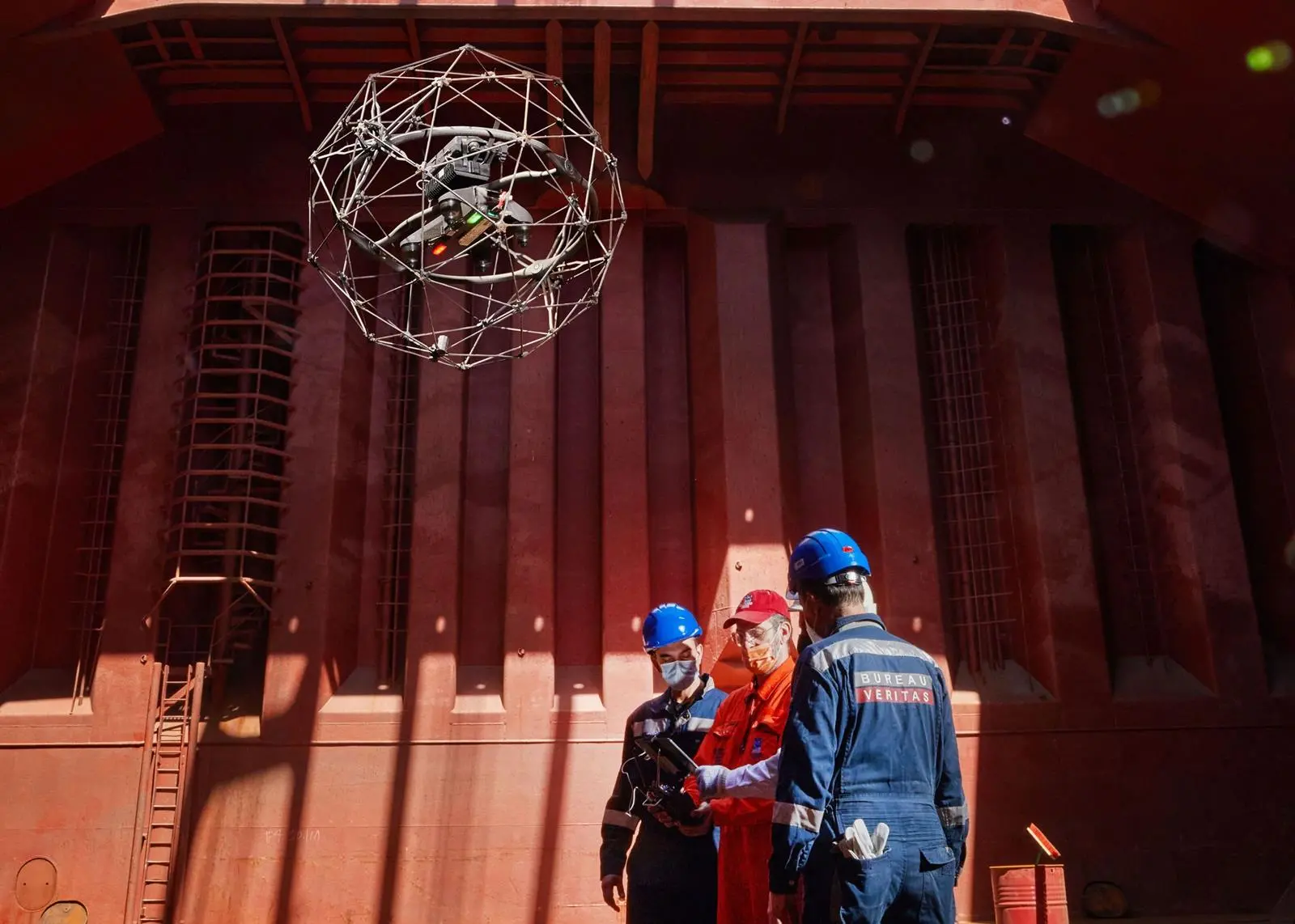
Bureau Veritas (BV) has directed and supervised the testing of different types of robotic remote inspection technologies and techniques (RIT), including an aerial drone, a miniature remotely operated vehicle (ROV) and magnetic crawlers, on a 2008-built Oceanbulk double-skin supramax bulk carrier classed by BV.
Paillette Palaiologou, vice president for the Hellenic and Black Sea Zone for BV, said: “The results were impressive. The quality, resolution and detail of the imagery are excellent.”
She added: “These technologies and techniques are important. They help with accuracy, speed and record-keeping in all conditions. Our surveyors and clients will increasingly be able to focus on analysing the information and data acquired – with greater safety, at greater overall speed and at less expense, rather than the challenges of acquiring what we need to know.”
The remote tools were supplied and operated by Greek technical services specialist Glafcos Marine.
The tests were conducted under the same conditions and, to secure the necessary information, were required at an ‘intermediate’ survey for a bulk carrier of the age of the subject ship, between the second and third class renewal surveys.
The vessel was inspected during a recent call to the Neorion shipyard in Syros, Greece, for work on the stern that required a specific ballasted condition.
Inspections of flooded tanks were achieved by a mini-underwater ROV, eliminating any need for de-ballasting, reducing both time and energy expense implications. Meanwhile, the holds and structure were examined by a drone and magnetic crawlers without the time and expense of cherry pickers, staging or rope access.
The magnetic crawlers were equipped with ultrasonic thickness measurement (UTM) sensors and, moving across vertical and inverted planes, they provided the steadiness required for both close-up pictures and UTM readings.
A current EU funded project called BUGWRIGHT2, under which this endeavour was exercised, aims to bring RIT technologies closer to the market.
The next steps envisaged are the establishment of specific regulations to be employed on board as well the related certification and training of the robotic operators.
Related Articles
 ENERGY SAVING DEVICES
 LNG
LNG
 ALTERNATIVE FUELS & LUBRICANTS