



Report examines methanol and ammonia containership conversions
The technical, environmental, and techno-economic analysis aims to help de-risk shipowners’ decision making. It is based on the recently concluded ‘Green Fuels Optionality Project.’ The report outlines the project results related to converting container ships to methanol or ammonia and is the first of three reports from this project.
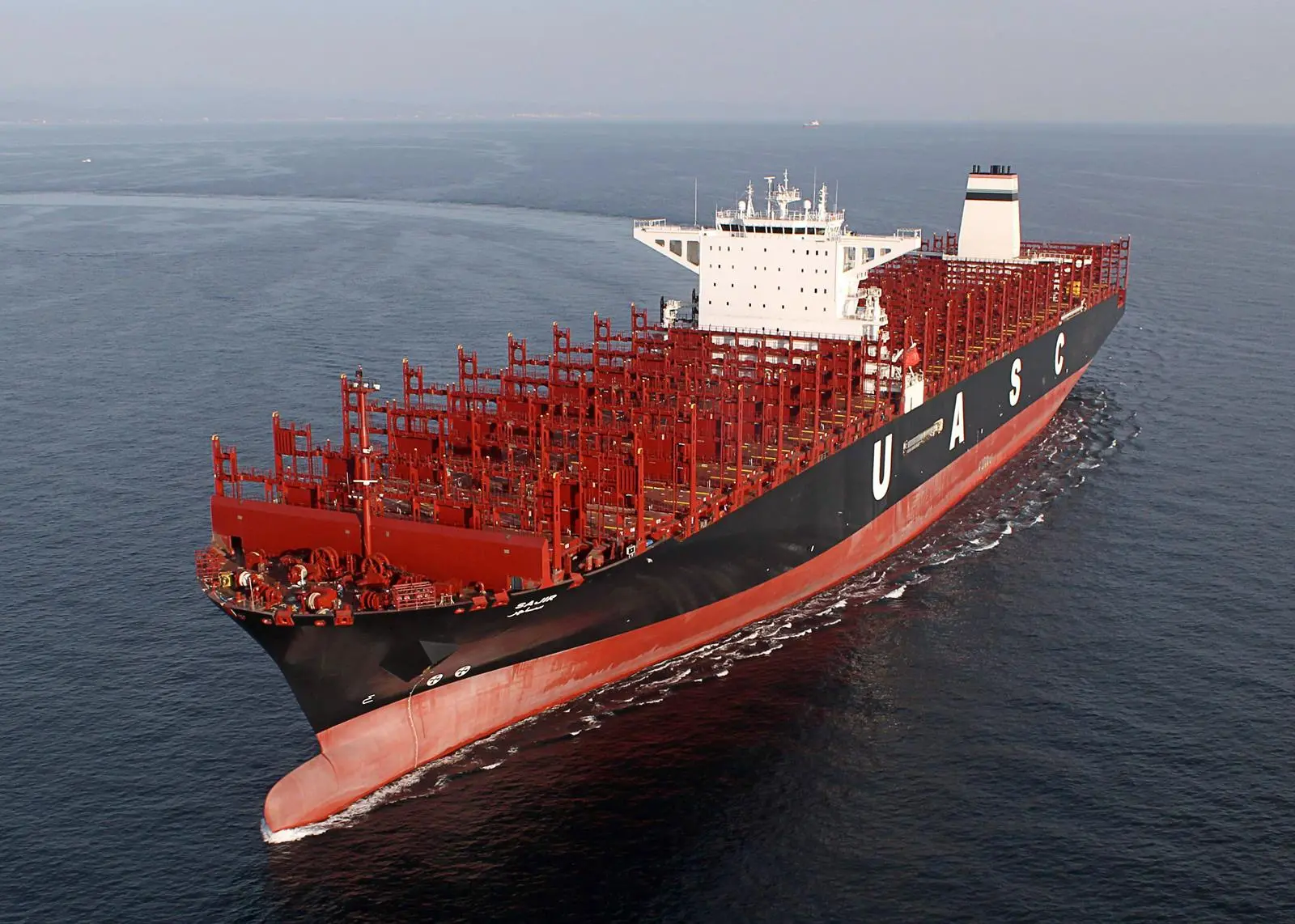
The report examines the general design of methanol-fuel oil and ammonia-fuel oil dual fuel vessels based on a 15,000 TEU twin island reference container vessel. Under the accommodation was the most optimal location for the alternative fuel tanks, as this position has the smallest impact on cargo space. However, tanks cannot be retrofitted in this position due to the existing ship structure, so vessels must be prepared for conversion at newbuild. When ships aren’t prepared, methanol or ammonia tanks must be installed in the cargo space during conversion.
Methanol and ammonia dual fuel newbuilds should cost approximately 11 and 16% of a standard newbuild cost, respectively. Conversion from fuel oil to a full range methanol or ammonia dual fuel vessel costs 10-16 and 19-24% of a standard newbuild cost, respectively, depending on the level of preparation at newbuild.
For dual fuel newbuilds and conversions, converting to methanol is less expensive than converting to ammonia. This is partly because fuel tanks can be sized for methanol, installed at newbuilding and used for fuel oil before conversion. However, this is not possible for ammonia tanks, which are already more expensive than methanol tanks.
Methanol and ammonia have a lower calorific density than fuel oil, so tank volumes of 16,000 m3 were used for methanol and 20,000 m3 for ammonia, compared with 8 000m3 for fuel oil. As a result, converting to full range dual fuel vessels using the designs reduces cargo space by 240-610 and 530-1100 TEU for methanol and ammonia, respectively, with conversion of unprepared ships sacrificing most space.
The significant cargo costs associated with converting unprepared vessels to methanol or ammonia mean that this strategy only makes sense after eight to 10 years of operation when the increased earning potential from using the full cargo space before the conversion can balance out the increased cost of conversion and larger cargo losses after conversion. Conversion costs and cargo losses can be reduced by converting to a reduced alternative fuel range.
Alternative designs with a tank capacity of 10,000 m3 for methanol and 7,800 m3 for ammonia, resulting in a slot loss of around 400 TEU. Although the range is significantly reduced, it should be sufficient for traveling between Singapore and Southern Europe on ammonia. The reduced range conversion reduces conversion Capex to 9-12 and 14-19% of a standard newbuild cost, for methanol and ammonia, respectively. Reduced range conversions also significantly reduce cargo loss and total costs. As a result, converting to reduced range methanol-fuel oil vessels becomes cost effective compared with building a full range dual fuel newbuild after just four years. Furthermore, converting to a reduced range ammonia-fuel oil vessel is cost-effective from year zero.
Converting from LNG to ammonia is less complex than converting from fuel oil to ammonia, as many of the gas related systems required for ammonia are already in place. In cases where the existing LNG tanks cannot be prepared for ammonia, it will not be practically possible to replace the LNG tanks located under the accommodation, so conversion to ammonia would not be feasible.
The report proposes designs for conversion to full range on ammonia (20,000 m3 LNG/ammonia tank) and reduced range (12,000 m3 LNG/ammonia). After conversion, these ships become ammonia-fuel oil dual-fuel vessels and can no longer operate on LNG. These designs, which prepare the vessels for vessel for later conversion, increase the cost of a newbuild by 7% and 2% for full range and reduced range, respectively, compared to a standard LNG-fuel oil newbuild.
Conversion costs were 8% of an LNG newbuild, resulting in total additional costs for newbuild and conversion of 15 and 10% for full and reduced range, respectively. This is 33 and 28%, respectively, of a standard fuel oil newbuild cost.
The additional costs of preparing a vessel for LNG, a larger tank for ammonia operation, and then converting to ammonia make this strategy relatively expensive. However, based on a normalized fuel market situation, operating on LNG rather than fuel oil before conversion offers fuel cost savings.
The report found that LNG-ammonia conversions are cost-effective if conversion takes place after eight years of LNG operation for full range vessels and one year for reduced range vessels.
The report is available here.
Related Articles
 AMMONIA
 AMMONIA
 AMMONIA