



Rotor sails installation on board Valemax
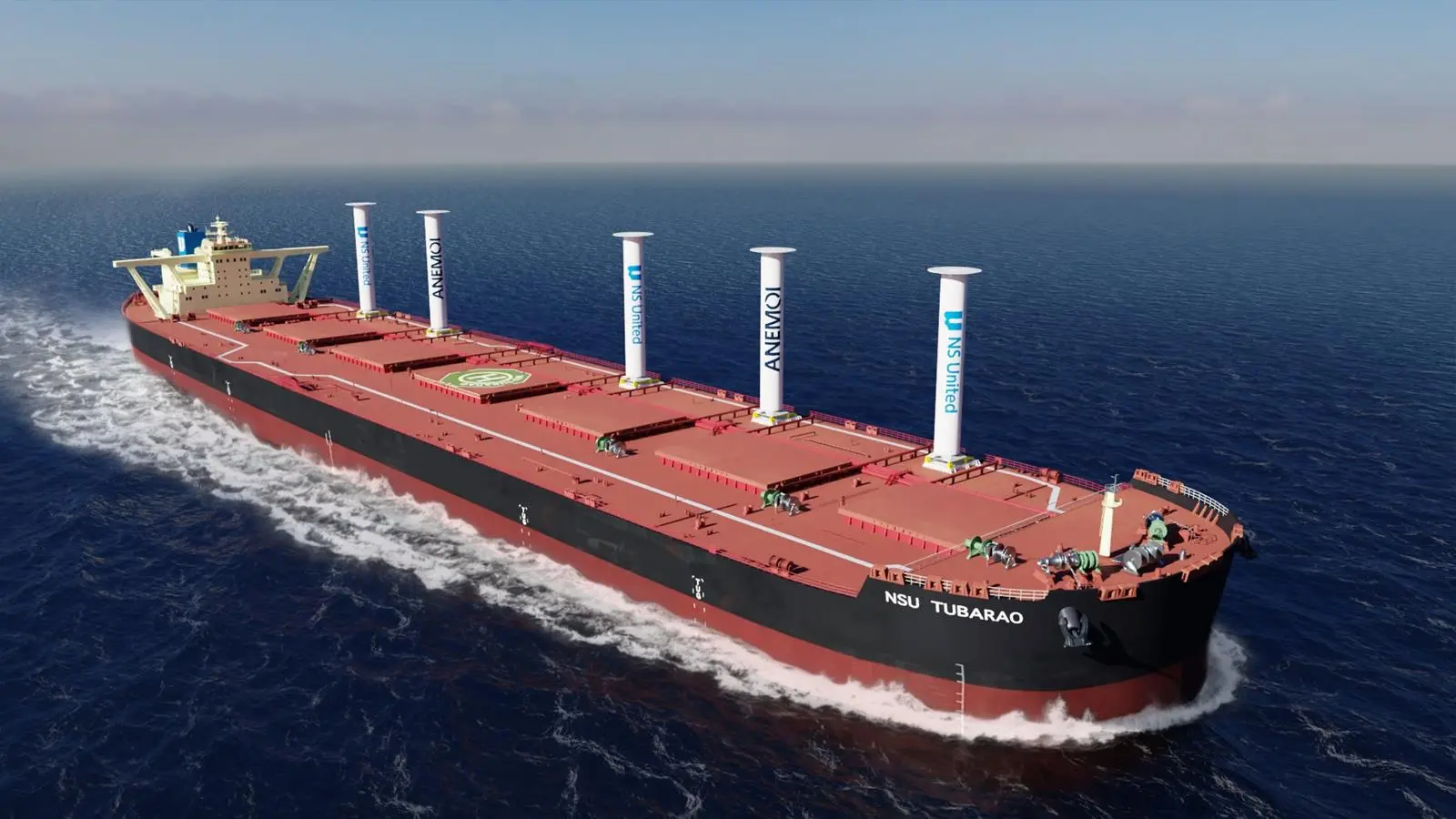
The 361-metre NSU Tubarao has been chartered long-term by Vale since its delivery in September 2020. The rotor sails installation is scheduled for September 2025.
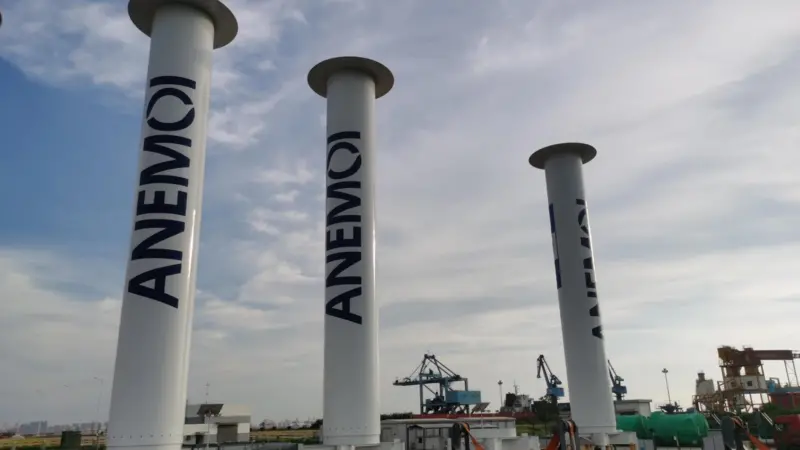
Rotor sails work by using the pressure difference generated by rotating a cylindrical sail on the deck. This latest installation of five 35-metre sails is expected to reduce fuel consumption and CO2 emissions by around 6 to 12%.
This installation is part of NSU’s push to make its more vessels more efficient and meet emissions reduction targets which is also seeing the company increase its use of alternative fuels.
NSU has been actively working to make their vessels more efficient and reduce their greenhouse gas emissions through the introduction of energy-saving devices such as rotor sails and by transitioning to ships powered by next-generation fuels.
Vale says it is committed to decarbonisation and also has a target of reducing scope 3 emissions by 15% by 2035.
As part of this drive, Vale has created the Ecoshipping programme, an R&D initiative working together with shipowners. Since 2018, the company has been operating second-generation Valemaxes (capacity of 400,000 tonnes) and, since 2019, Guaibamaxes (capacity of 325,000 tonnes), said to be among the most efficient vessels in the world.
As part of the Ecoshipping program, Vale has developed innovative energy projects, such as the use of rotor sails and an initiative to incorporate multi-fuel tanks on iron ore carriers.
Anemoi has been nominated for The Motorship Award at this year’s Propulsion and Future Fuels Conference in Hamburg on 19 to 21 November.
Related Articles
 ENERGY SAVING DEVICES
 ENERGY SAVING DEVICES
 AMMONIA